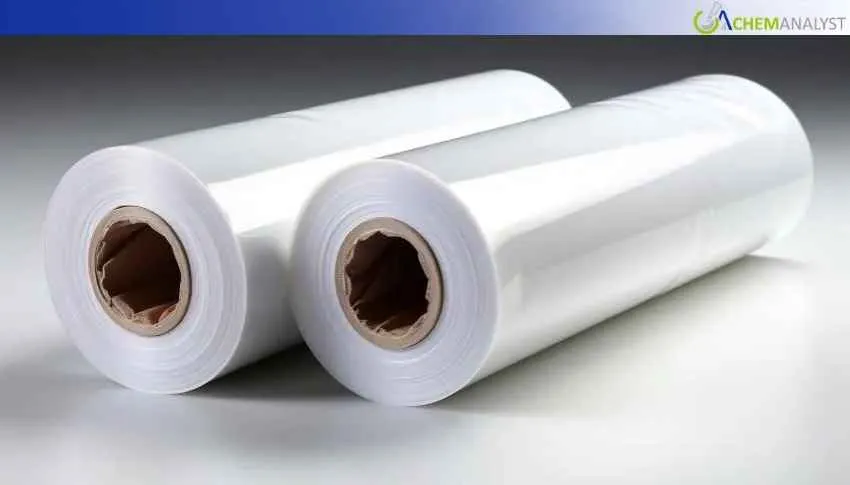
BOPP Film markets in the U.S. recorded a pronounced upward trajectory toward the end of March, driven by strengthening demand fundamentals and rising upstream cost pressures. In the late-March reporting window, BOPP Film prices jumped by 5.32%, contributing to a firm month-on-month increase. Early March saw sellers maintaining firm indications amid constructive trade sentiment, while mid-month order inflows from food and FMCG converters kept BOPP Film production lines operating near capacity. By late March, converters actively secured BOPP Film volumes for high-volume applications, reinforcing a stronger pricing tone despite the presence of ample domestic feedstock, per ChemAnalyst data.
Demand for BOPP Film remained led by the packaging and food sectors, where activity stayed consistently strong. Converters continued to procure BOPP Film for snack food wraps, frozen food packaging, and fresh produce films, while processed food and ready-to-eat segments sustained elevated run rates. Innovation trends such as downgauging and high-performance film development supported increased uptake of premium-grade BOPP Film, particularly for labeling and protective packaging applications. E-commerce and retail restocking added moderate incremental demand, supporting broader consumption. The U.S. supply mix for BOPP Film remained largely domestic-driven, with an estimated 60% domestic and 40% import contribution, as per ChemAnalyst analysis.
On the supply side, feedstock dynamics exerted mixed influence on BOPP Film pricing. Rising propylene and polypropylene costs introduced inflationary pressure on extrusion economics, while polymer-grade propylene availability across the U.S. Gulf Coast remained generally sufficient. However, elevated freight costs—partly linked to geopolitical tensions impacting crude flows through the Strait of Hormuz—added to upstream cost burdens for BOPP Film producers.
Weekly price movements for BOPP Film through March reflected a steady upward trend that accelerated toward the end of the month. Prices increased gradually through early and mid-March before rising sharply in the week ending March 27 with the notable 5.32% gain, driven by strong converter procurement for high-volume packaging needs. The upward trend extended into early April, with a further 1.68% increase, indicating sustained but moderated momentum as market participants adjusted to higher feedstock and freight costs alongside stable domestic resin availability.
Looking ahead, the BOPP Film market is expected to maintain an upward trajectory, albeit at a moderated pace. Continued strong demand from food packaging and FMCG sectors, combined with persistent feedstock and freight cost pressures linked to geopolitical developments, will support pricing. However, ample domestic resin supply and steady production rates are likely to cap excessive volatility. Seasonal retail restocking ahead of peak consumption cycles is expected to sustain demand, while overall price movement will remain sensitive to shifts in upstream logistics and inventory behavior, as per ChemAnalyst analysis.







 About ChemAnalyst
Leave a Comment
Comments (0)