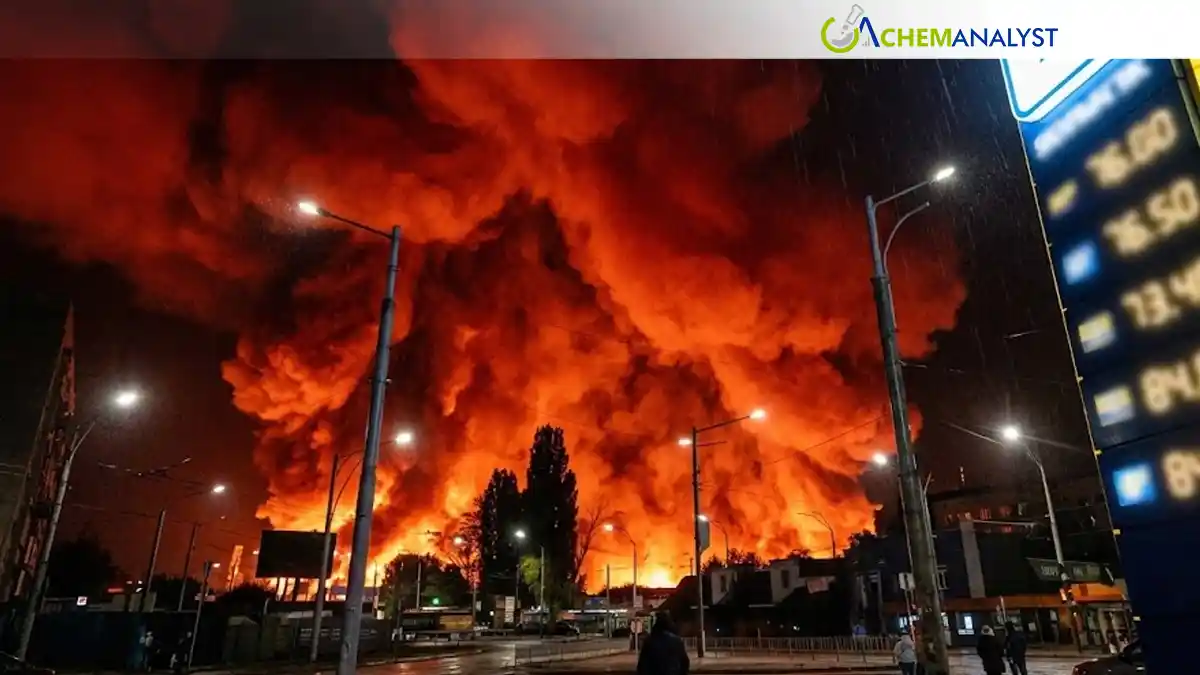
A Russian missile strike damaged ArcelorMittal Kryvyi Rih, one of Ukraine’s largest industrial facilities, on Sunday, August 16, killing two people and injuring more than a dozen workers and contractors. The attack was part of a broader Russian assault on Ukrainian cities and critical infrastructure.
ArcelorMittal Kryvyi Rih is owned by ArcelorMittal, the world’s second-largest steelmaker and Ukraine’s largest steel producer. The company confirmed that the strike hit its mining and metallurgical complex in Kryvyi Rih, a major industrial city in central Ukraine.
Ukrainian President Volodymyr Zelenskyy said two people were killed and 14 others injured at the facility. He also reported another fatality in the northeastern city of Sumy as Russian forces continued attacks across several regions.
According to company information, the blast damaged infrastructure connected to the plant’s energy supply and blast furnace operations. The incident forced engineers to temporarily halt part of the production process. Thirteen workers and contractors were reportedly injured in the strike.
Emergency response teams, including firefighters and medical personnel, remained at the site while rescue and assessment operations continued. ArcelorMittal specialists began evaluating the extent of the damage and determining the repairs required to restore affected operations. The company had not immediately provided a definitive timeline for the resumption of full production.
The attack highlights the continued vulnerability of Ukraine’s industrial sector as Russia maintains its campaign against energy, manufacturing and other critical infrastructure. Disruptions at large industrial facilities can affect both domestic supply and export capabilities, particularly when damage involves energy systems and blast furnace operations.
Kryvyi Rih has faced repeated attacks since the Russia-Ukraine war began. ArcelorMittal’s facility was previously targeted in 2022, when a rolling mill was destroyed and one worker was killed. Sunday’s incident therefore represents another major security threat to the civilian industrial complex.
The latest strike occurred amid a wider wave of Russian attacks across Ukraine. Kyiv also came under fire, with strikes causing several fires and injuring six people. One significant blaze broke out at a large book market near the Pochaina metro station.
The renewed damage to ArcelorMittal Kryvyi Rih could create additional operational challenges for Ukraine’s steel sector. The impact will depend on the severity of infrastructure damage, the availability of replacement equipment and the speed of repairs.
Product Impact and Chemical Commodity Price Outlook
The immediate impact is expected to be negative for ArcelorMittal Kryvyi Rih’s steel production, as damage to energy infrastructure and blast furnace-related facilities could reduce output and create repair-related delays. Lower Ukrainian steel availability may tighten regional supply and provide some support to steel prices, particularly if disruptions persist. For chemical commodities tracked by ChemAnalyst, the effect is likely to be indirect. Reduced steel production could weaken demand for industrial gases, coke-related chemicals, refractories and certain process chemicals used in metallurgical operations. However, prolonged infrastructure disruptions could raise operating and logistics costs, potentially supporting prices for industrial chemicals and energy-linked commodities in affected regional markets.







 About ChemAnalyst
Leave a Comment
Comments (0)