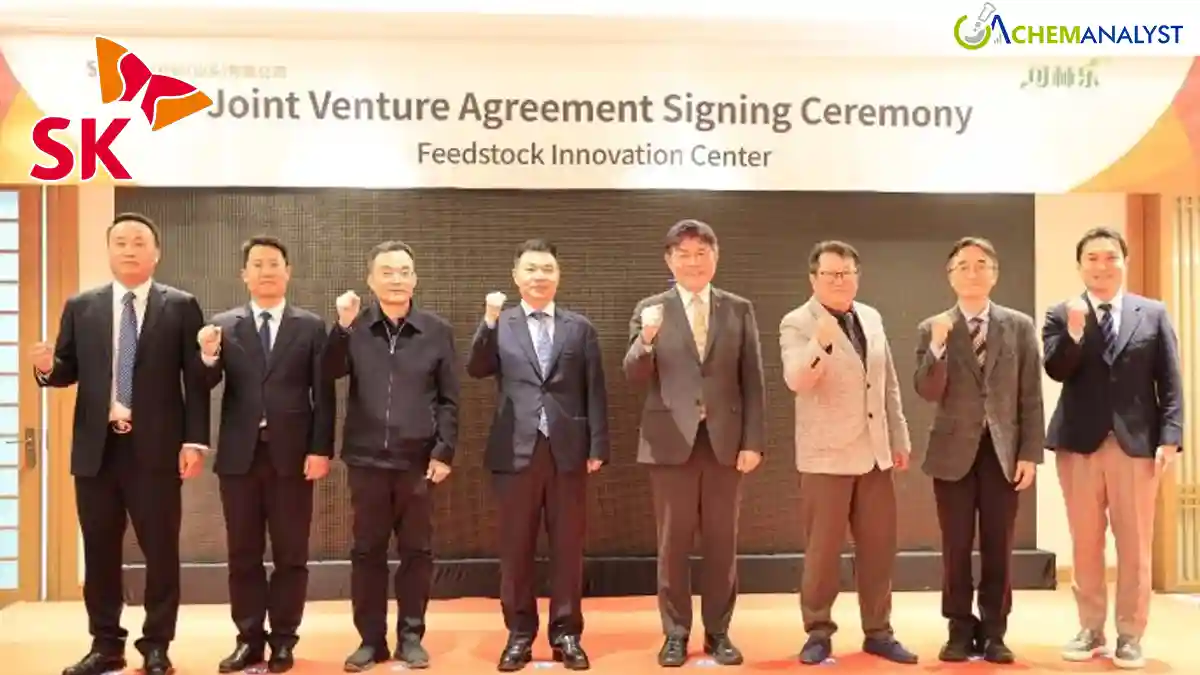
SK Chemicals has entered into a strategic joint venture with Kelinle, a prominent plastics recycling company based in Shaanxi Province, China, to establish a new Feedstock Innovation Center (FIC). This facility will be dedicated to processing waste plastics and converting them into high-quality recycled feedstock, strengthening SK Chemicals’ position across the entire circular recycling value chain.
The new agreement marks a significant milestone for SK Chemicals, as the company will now expand its operations beyond the production of chemically recycled materials to include direct sourcing and processing of waste plastics. Notably, SK Chemicals will become the first Korean chemical company involved in depolymerization-based chemical recycling to set up a dedicated corporate entity equipped with facilities specifically designed for securing waste plastics as feedstock.
The joint venture aims to build this facility on an unused site covering approximately 13,200 square meters, owned by Kelinle in Weinan, Shaanxi Province. The project will involve constructing an end-to-end process that converts various forms of waste into recycled raw materials. Leveraging its decade-long presence in the local plastics recycling industry, Kelinle will source waste feedstock through its established local network. SK Chemicals’ technology will then be used to pretreat these materials, allowing the facility to produce high-quality PET pellets.
What sets the Feedstock Innovation Center apart is its focus on processing difficult-to-recycle waste streams. Instead of relying mainly on PET bottles, like most mechanical recyclers, the center will be capable of converting post-consumer textiles—such as old blankets—and fines generated from PET-bottle shredding into feedstock suitable for chemical recycling. This approach expands the types of waste that can be recycled and addresses categories that typically end up in landfills or incineration.
Initially, the FIC is expected to have an annual production capacity of around 16,000 tons of PET pellets. Over time, this capacity will be increased to approximately 32,000 tons per year. The majority of this output will serve as feedstock for SK Shantou, the company’s chemical recycling production subsidiary in China.
Commenting on the development, Ahn Jae-hyun, CEO of SK Chemicals, emphasized the importance of securing a complete recycling value chain. He noted that the ability to transform hard-to-recycle material, such as used blankets, into valuable feedstock would help lower the cost of recycled plastics. Historically, recycled materials have been more expensive than traditional petroleum-based plastics, and this initiative is expected to help overcome those cost barriers.
SK Chemicals has been actively expanding its global circular recycling infrastructure. In 2023, the company established a chemical recycling production subsidiary in Shantou, China, which has since become a major hub for circular operations, producing r-BHET and CR-PET at commercial scale. Additionally, in Korea, SK Chemicals built the Recycle Innovation Center (RIC) at its Ulsan site. This facility connects depolymerization pilot systems with copolyester production lines, enabling a seamless bridge between research and manufacturing. The company continues to refine its depolymerization and repolymerization technologies, particularly for textile waste streams, including discarded banners and fabric-based waste, further reinforcing its commitment to advancing circular recycling.







Leave a Comment
Comments (0)