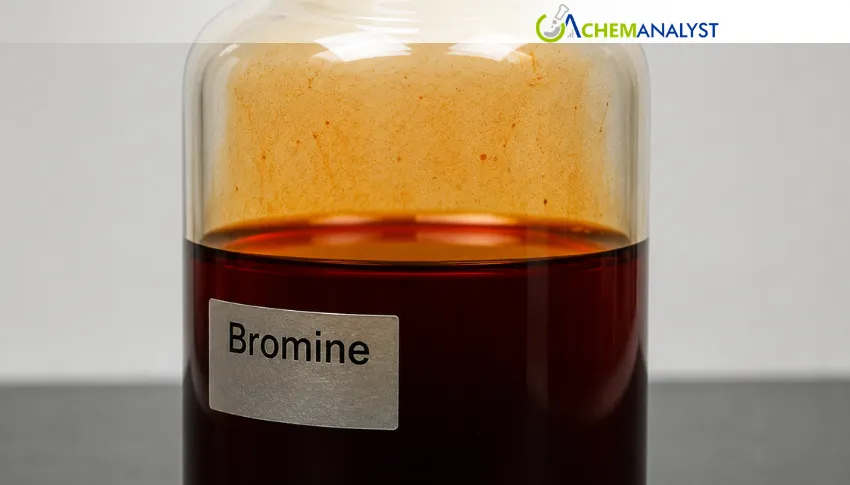
Bromine pricing in the United States was essentially flat during the first half of June 2026, even as monthly figures for May reflected some weakness. ChemAnalyst data indicated that Bromine prices were down 1.00% by June 12, 2026, while most of the June witnessed a stable trend. Early June reflected balanced delivered costs as steady import availability from major overseas suppliers offset muted downstream pull in the U.S. market. By mid-June, sellers trimmed offers in response to softer spot enquiries, but the market then settled into a narrow trading range. Overall, comfortable distributor inventories and adequate supply availability limited upside for Bromine, while uneven downstream demand prevented any meaningful recovery in Bromine pricing momentum.
Demand signals for Bromine across end-use sectors remained mixed during the first half of June. Flame-retardant and construction insulation demand stayed soft after U.S. single-family housing starts declined by 1.9% month on month in May, reducing purchases of brominated insulation foams and flame-retardant additives. In contrast, automotive interiors and water-treatment applications remained broadly steady, supported by a 6.8% month-on-month rise in U.S. new vehicle sales in May 2026. Seat-foam producers maintained normal run rates, encouraging hand-to-mouth Bromine buying, while battery-grade derivative manufacturers showed tentative restocking interest, offering moderate support to Bromine demand. Consumer electronics output remained largely flat, and fertilizer blenders were among the weakest buyers, taking fewer tonnes amid lower bromide salt imports through Gulf ports.
Supply fundamentals for Bromine remained comfortable during the first half of June. High-salinity brine availability was stable, with no immediate feedstock shocks reported, while major overseas producers operated without curtailments and sustained export volumes near typical monthly levels. Merchant inventories on the Gulf Coast remained adequate, providing distributors with comfortable balances and reducing concerns about any near-term shortage. As a result, Bromine sellers had limited room to push offers higher, especially with downstream consumers continuing to procure cautiously and largely on a need-based basis.
Looking ahead, analysts continue to see mild downside risk for Bromine in the near term, with a projected move lower in July 2026 if import availability remains ample, Gulf Coast inventories stay comfortable, and downstream offtake remains subdued. However, the downside is expected to be limited rather than severe, as automotive, water-treatment, and battery-related demand should continue to provide a base level of support. Seasonal improvement in flame-retardant demand, stronger autumn procurement, or disruptions to export flows from key producing regions could tighten market balances later in the year and lift Bromine pricing. For now, Bromine is expected to remain stable to slightly soft, with forecasts highly sensitive to import flows, inventory movements, and downstream restocking behaviour.







Leave a Comment
Comments (0)