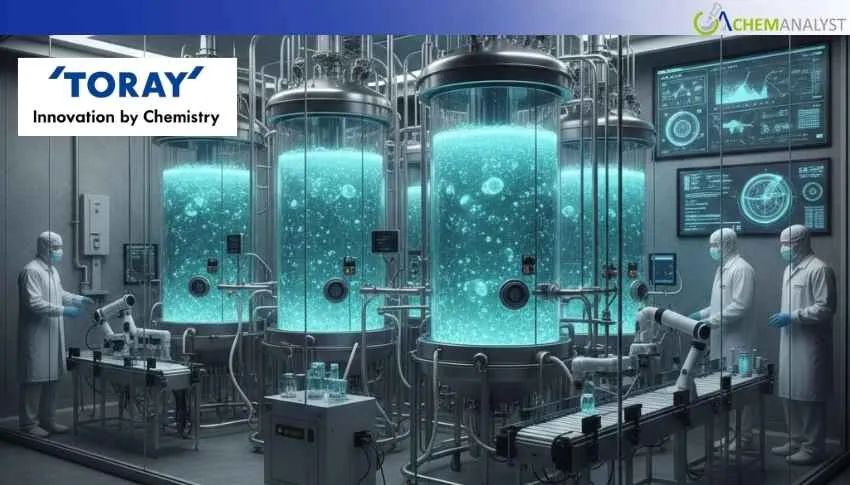
Toray Industries has announced the development of a novel bioreactor technology that could significantly transform energy use in chemical processing. According to the company, its newly created immobilized-microorganism bioreactor has the potential to reduce energy consumption by an estimated 80% to 90% compared with conventional methods. If successfully commercialized, this innovation could lead to substantial reductions in operating costs while simultaneously lowering the environmental footprint of chemical manufacturing processes.
At the core of this technology is a unique approach to harnessing biological reactions more efficiently. The system works by immobilizing selected microorganisms onto carriers made from wood-based materials. These carriers are then densely packed into a reactor, forming what is known as a packed-bed configuration. Within this environment, an aqueous solution containing the target chemical is continuously brought into contact with the immobilized microorganisms. As the solution flows through the packed bed, microbial enzymes catalyze the conversion of the target substance into the desired chemical products with high efficiency.
This design allows for sustained and stable interaction between the microorganisms and the chemical feedstock, overcoming several limitations associated with traditional bioreactors. Conventional systems often require large volumes of water, intensive mixing, and significant energy input to maintain reaction conditions. By contrast, Toray’s immobilized-microorganism approach enables reactions to proceed in a more controlled and concentrated manner, thereby dramatically cutting energy requirements.
The company has already conducted internal trials to validate the performance of the new technology. In one notable in-house experiment involving acrylonitrile as the target substance, the bioreactor reportedly achieved conversion rates exceeding 99.5%. This exceptionally high efficiency resulted in the production of a range of valuable downstream chemicals, including acrylic acid, propionic acid, acetic acid, and other organic acids that are widely used in industrial applications. Such results suggest that the technology could be highly effective not only in reducing energy use but also in maximizing product yield.
Environmental performance is another key advantage highlighted by Toray. When the bioreactor process is combined with conventional activated-sludge treatment, the resulting products can be completely decomposed into carbon dioxide. This ensures that residual organic compounds do not persist in wastewater streams, helping to minimize environmental impact. Additionally, the reactor is designed as a sealed system, which significantly reduces the loss of chemicals through airborne dispersion. This feature enhances operational safety, particularly when handling volatile or hazardous substances, and contributes to improved workplace conditions.
Flexibility and adaptability are central to the technology’s future potential. Toray has emphasized that the bioreactor can be tailored to process a wide variety of chemical substances. By modifying the types of microorganisms used and adjusting the structural design of the reactor, the system can be optimized for different reactions and industrial requirements. This adaptability positions the technology as a versatile platform rather than a single-purpose solution.
Looking ahead, Toray plans to intensify technical validation and refine operational designs through testing at both internal facilities and external production sites. These steps are intended to accelerate the path toward commercialization and establish the bioreactor as a practical, energy-saving solution for the chemical industry. The company views this development as part of its broader commitment to addressing environmental challenges and supporting the transition toward a more sustainable and resource-efficient economy through advanced materials and process technologies.







Leave a Comment
Comments (0)