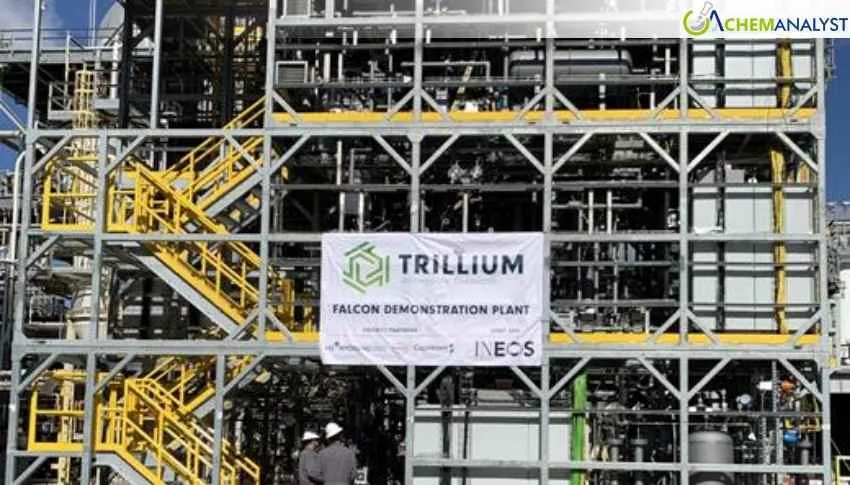
Trillium Renewable Chemicals has successfully secured 13 million in Series B financing, spearheaded by HS Hyosung Advanced Materials with additional participation from Capricorn Partners. This funding builds upon previous investments, including a 10.6 million Series A round and a $2.5 million award from the U.S. Department of Energy. The primary objective of this capital injection is to support the operations of "Project Falcon," the world's inaugural demonstration plant for 100% bio-based acrylonitrile, which has completed construction. Commissioning of the plant is slated for the second quarter of 2026, with product shipments expected to commence later that year. Beyond the demonstration plant, the funds will also fuel ongoing pilot-scale innovation and advance the engineering design for Trillium's first full-scale commercial manufacturing facility.
The initiative addresses a critical need for sustainable alternatives in the chemical industry. Currently, over 6 million metric tons of acrylonitrile are produced globally each year, almost entirely from fossil feedstocks. Traditional production methods are highly energy-intensive, rely on petroleum, and involve toxic and flammable substances, leading to significant environmental concerns and strict regulations. Trillium's innovative process converts plant-based feedstocks, specifically glycerol—a byproduct of converting natural oils and fats into soaps, detergents, and biofuels—into acrylonitrile. This bio-based approach boasts a carbon footprint that is 70% lower than its petroleum-derived counterpart, offering a significant stride towards decarbonizing a wide array of industrial and consumer products.
The successful deployment of Project Falcon marks a pivotal event for the chemical industry. Trillium's technology provides a "drop-in" solution, meaning its bio-based acrylonitrile can be integrated into existing downstream supply chains without requiring modifications. Acrylonitrile is a foundational raw material for numerous high-value products, including carbon fiber, plastics, textiles, flocculants, and synthetic rubber, which are critical for sectors like aerospace, automotive, and performance textiles.
Economically and geopolitically, this development has several impacts. It lessens the industry's reliance on volatile fossil fuel prices and supply chains, contributing to greater resource independence and stability. The growing global demand for sustainable products, driven by eco-conscious consumers and corporate sustainability goals, creates a robust market for bio-based alternatives. Trillium has forged strategic partnerships with key players, including INEOS Nitriles, which is hosting Project Falcon at its Green Lake facility, and Solvay, which will validate the product for carbon fiber manufacturing. These collaborations are crucial for scaling the technology and accelerating its commercialization, positioning Trillium to transform the acrylonitrile market and contribute significantly to green chemistry and sustainable industrial development.







Leave a Comment
Comments (0)