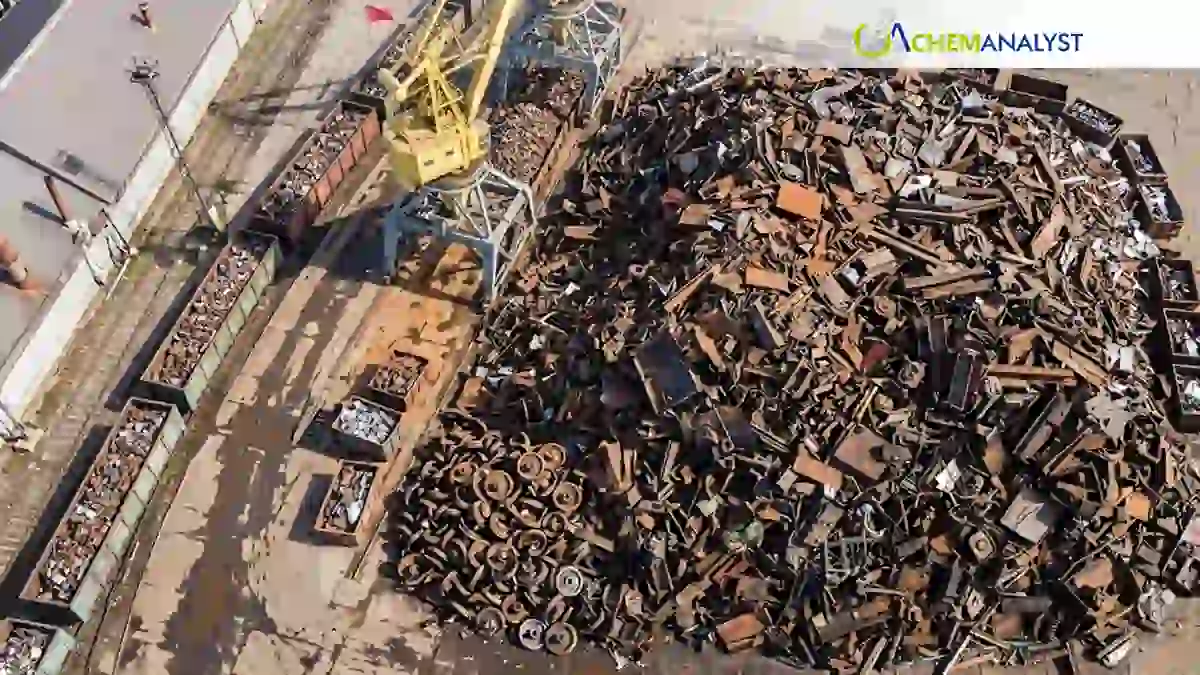
The United Arab Emirates (UAE) has enacted Ministerial Decision No. 105 of 2026, imposing a temporary four-month ban on the export of specific industrial wastes and metal scraps, effective from June 3, 2026. This measure primarily targets iron, aluminum, and copper scrap, with the notable exception of copper ingots, which are exempted to promote higher-value-added exports.
The core objective behind this policy is to retain raw materials within the country, ensuring a stable and sufficient supply of feedstock for domestic industries, particularly UAE steelmakers. This decision follows a history of similar restrictions, with the UAE having previously implemented and consistently extended export bans on ferrous scrap since May 2020 to support its national steel enterprises. Furthermore, the UAE had already levied a fixed export duty of USD 109 per metric ton on copper scrap, which had significantly reduced direct export arbitrage margins for this material.
Economically, the immediate marginal impact on the broader copper scrap market is expected to be limited due to the pre-existing export duty. However, the ban is anticipated to concentrate its effects more heavily on specific copper alloys, such as Honey, Ocean, and Gun metal.
From a geopolitical and trade perspective, the decision holds significant implications for South Asia. The UAE has historically been a major supplier of scrap metal to countries like India and South Korea. In 2019, for instance, the UAE was India's largest single source of ferrous scrap, accounting for 16.35% of its imports, and the second-largest for Pakistan, supplying 18% of its scrap imports. This ban will therefore cut off a crucial source of ferrous scrap for these South Asian nations. While such a move would typically lead to increased ferrous scrap import prices in South Asia and potentially divert global supplies, the article from 2020 notes that the impact could be mitigated by the prevailing demand conditions in the region. The current regulation is not expected to significantly affect China's domestic scrap metal supply due to its stringent import standards and historically low direct shipments from the UAE.
Industrially, this ban reinforces the UAE's strategy to bolster its domestic manufacturing capabilities. The country has seen a 7.1% increase in steel production in 2022 and has plans to construct four new steel plants in Umm Al Quwain, which are intended to utilize scrap in their production processes. This move aligns with the broader goal of strengthening the local steel industry by securing essential raw materials.
Market impact: The UAE’s four-month ban on exports of iron, aluminum, and copper scrap is expected to strengthen domestic metal manufacturing by ensuring greater availability of raw materials for local steel mills, foundries, and metal processors. UAE-based producers may benefit from lower feedstock costs and improved supply security, supporting higher operating rates and production growth.
For international markets, especially India and Pakistan, reduced scrap availability from the UAE could tighten regional supply and increase ferrous and non-ferrous scrap prices. Steel producers dependent on imported scrap may face higher procurement costs, which could translate into elevated steel product prices.
For chemical commodities tracked by ChemAnalyst, the direct impact is likely to be limited because the regulation targets metal scrap rather than petrochemicals or bulk chemicals. However, higher steel and metal input costs could marginally increase production and infrastructure expenses for chemicals packaged, transported, or stored using metal-intensive equipment. Commodities linked to construction, industrial manufacturing, and infrastructure sectors may witness slight cost-push support, while overall chemical price movements are expected to remain largely driven by feedstock, energy, and demand fundamentals.







Leave a Comment
Comments (0)