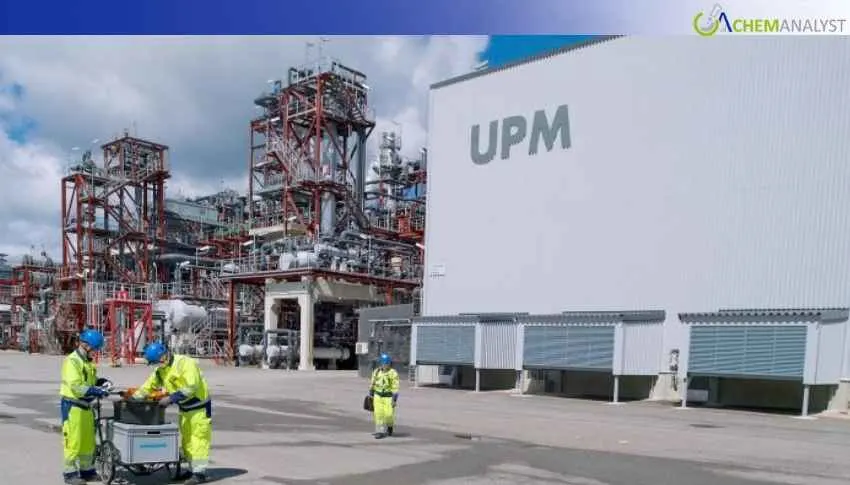
UPM has reached a landmark achievement in its journey toward advancing sustainable, bio-based materials by successfully producing its first commercial products at the Leuna biorefinery in Germany. This development represents a major step forward in the company’s ambition to scale up renewable chemical solutions derived from wood. The facility, recognized as the largest industrial-scale investment in biochemicals in Europe, has now officially begun both production and market commercialization of industrial sugars made from sustainably sourced wood.
Earlier in the year, the biorefinery achieved a significant technical milestone by successfully initiating the hydrothermal processing of wood at full industrial scale. Building on this progress, the plant has now attained stable and continuous operations in the separation of lignin and sugars. This stage is particularly critical, as it forms the foundation for downstream processing: the sugars can be transformed into renewable glycols, while lignin can be refined into renewable functional fillers. Together, these materials open the door to replacing fossil-based raw materials across a wide range of industrial applications.
According to Massimo Reynaudo, President and Chief Executive Officer of UPM, the progress at Leuna clearly demonstrates the company’s long-term commitment to scaling innovative, high-performance bio-based material solutions. He emphasized that these biochemical innovations enable UPM to access new markets, create sustainable long-term value, and further strengthen its leadership position in next-generation materials. Reynaudo described the milestone as a crucial step toward full-scale operations at Leuna, highlighting that the site represents the world’s first commercial-scale biorefinery capable of converting wood directly into bio-based chemicals.
Interest from consumer-facing brands continues to grow, particularly as companies seek renewable materials that deliver meaningful reductions in carbon dioxide emissions compared with traditional fossil-based inputs. In many cases, these bio-based solutions also outperform existing recycled or alternative renewable options in terms of consistency and scalability. Renewable glycols produced at Leuna have applications in areas such as PET packaging, polyester fibers for textiles, and cosmetic formulations. At the same time, lignin-based functional fillers offer a sustainable alternative to widely used materials such as carbon black and silica, particularly in rubber and plastic products.
Looking ahead, UPM plans to introduce additional commercial products from the Leuna biorefinery during the first half of 2026. Once the facility reaches full operational capacity, it is expected to produce approximately 220,000 tonnes of advanced biochemicals each year, all derived from sustainably sourced hardwood. This production scale positions Leuna as a cornerstone of Europe’s emerging bio-based chemical industry.
Beyond its commercial importance, the Leuna biorefinery plays a strategic role in supporting the broader transition away from fossil-based materials across multiple sectors. The project aligns closely with the objectives of the European Union, particularly in relation to decarbonization, industrial resilience, and long-term competitiveness. By turning renewable wood resources into high-value chemicals, UPM is helping establish bio-based innovation as a key driver of sustainable industrial growth in Europe.







Leave a Comment
Comments (0)