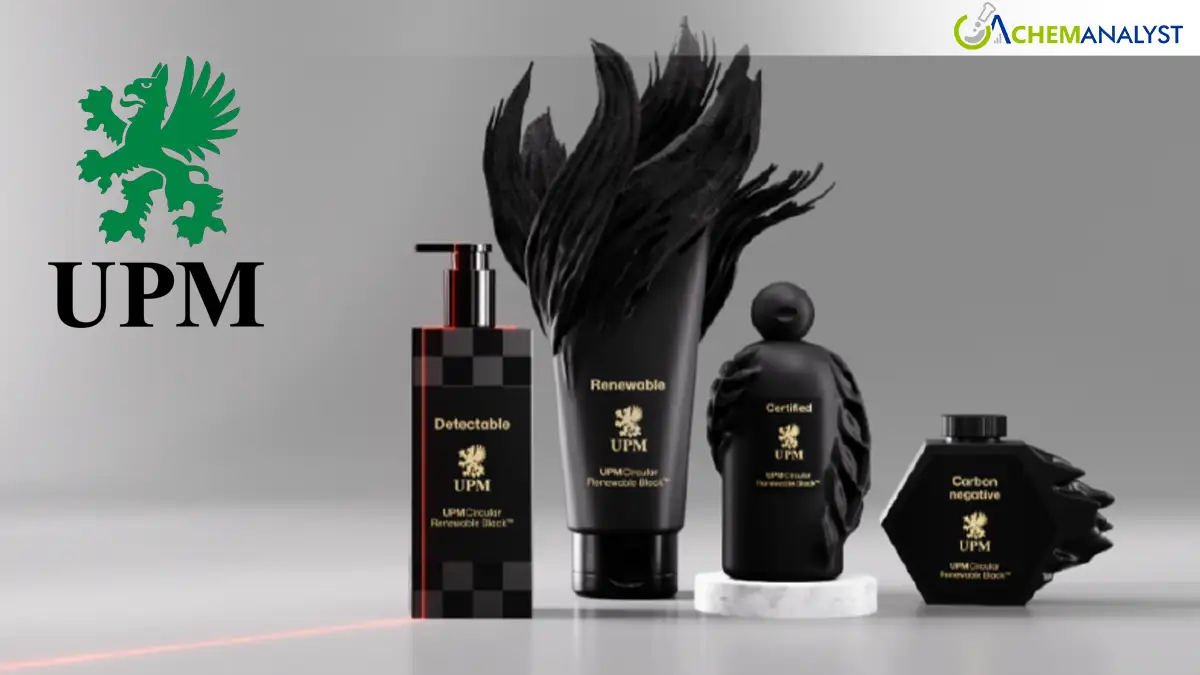
UPM has announced the launch of UPM Circular Renewable Black™, a pioneering material innovation that transforms how the color black is used in sustainable and premium Packaging. This new solution marks a major milestone for the packaging industry, as it is the world’s first bio-based, near-infrared (NIR) detectable, and carbon-negative Black Pigment. By combining strong environmental performance with high-end visual appeal, UPM Circular Renewable Black enables brands to achieve both premium design standards and full recyclability.
Traditionally, black packaging has posed significant challenges for recycling systems. Most black plastics and packaging materials rely on conventional Carbon Black Pigments, which absorb NIR light. Because modern waste sorting facilities depend on NIR sensors to identify and separate materials, these carbon-black-based products often go undetected and are mistakenly rejected from recycling streams. As a result, black packaging has long been viewed as incompatible with circular economy principles, despite its popularity for luxury and high-value consumer goods.
UPM Circular Renewable Black fundamentally changes this perception. Developed using renewable lignin, a natural by-product of the wood processing industry, the pigment offers full NIR detectability while maintaining the rich, deep black color expected in premium packaging applications. This ensures that packaging containing the pigment can be correctly identified and sorted in existing recycling infrastructures, significantly improving recycling rates and material recovery.
Beyond recyclability, the pigment delivers strong sustainability credentials. UPM Circular Renewable Black is carbon-negative, meaning its production removes more carbon dioxide from the atmosphere than it emits over its lifecycle. This feature makes it a powerful tool for brands aiming to reduce their carbon footprint and develop climate-positive products. In addition, the pigment is certified under recognized third-party standards, including FSC™, PEFC, and ISCC Plus, which verify the responsible sourcing and traceability of renewable raw materials.
According to Robert Marx, Vice President Commercial for UPM Biorefining, the innovation represents a turning point for sustainable packaging. He explains that black has historically been considered a barrier to circularity, but this new solution proves otherwise. By combining iconic aesthetics, full NIR detectability, and a carbon-negative footprint, UPM Circular Renewable Black demonstrates that sustainability and design excellence do not have to be mutually exclusive. The product reflects UPM’s broader strategy of delivering science-based, forward-looking solutions that help brands succeed while supporting a truly circular and low-carbon economy.
UPM Circular Renewable Black is part of UPM’s expanding portfolio of CO2-negative Biochemicals, which are set to be manufactured at the company’s flagship biorefinery in Leuna, Germany. With an investment value of approximately €1.3 billion, the Leuna biorefinery represents the largest industrial-scale biochemicals investment in Europe. The facility converts sustainably sourced hardwood into next-generation renewable materials, enabling a shift away from fossil-based inputs across a wide range of industries, including packaging, chemicals, and consumer goods.
Through innovations like Circular Renewable Black, UPM continues to position itself at the forefront of sustainable material development, offering practical solutions that support premium branding, improved recyclability, and meaningful climate benefits.







Leave a Comment
Comments (0)