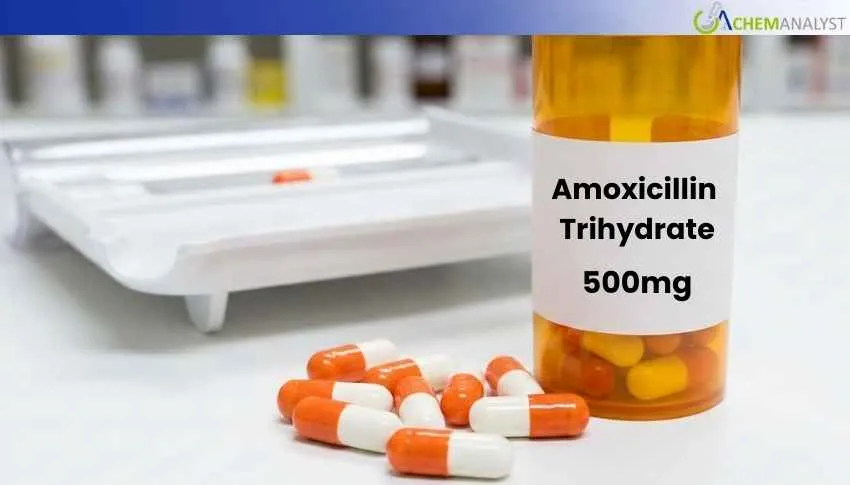
Amoxicillin Trihydrate (USP, FDA) CFR Houston in the U.S. market recorded an overall positive growth of 0.6% during December 2025. This may be attributed to the slight market revival that has been triggered due to demand-side factors of respiratory infections rather than a market change.
The year-end restocking activities were also partly responsible for the purchase of Amoxicillin trihydrate as market players were keen to stock adequate quantities of this product before finalizing their annual purchases. On the expenditure side, logistics continues to be an important factor affecting pricing. During December, ocean freight from China to the United States remained differentiated region-wise. While the volume of Amoxicillin trihydrate remained low, the base ocean rate reported an increase. Some routes, especially those headed for the East Coast in the United States, reported better pricing, while inland, drayage, and port charges for Amoxicillin trihydrate reported an increase in freight costs. These inland and supplemental logistics charges led to an increase in the overall landed cost of Amoxicillin trihydrate. Simultaneously, the transport costs for pharmaceutical consignments from Asia to North America saw more definitive upward pressure in December due to holiday demand and capacity constraints.
Taken together, these logistics factors contributed additional support to the cost of importing Amoxicillin trihydrate, which strengthened the ongoing positive trend seen within the U.S. market. Market sentiment during the month of December was one of cautious optimism, with market players viewing the rise in prices as a stabilizing trend following a downward trend, rather than the initiation of a strongly positive or bullish trend of Amoxicillin trihydrate.
Market players continued to watch their spending and opt for contracting or spot purchases for Amoxicillin trihydrate if the need arises. On the demand side, the rebound in the pharmaceutical manufacturing sector has been rather seasonal and strategic, based on winter consumption patterns and inventory rebalancing, rather than on structural growth. Moving forward, Amoxicillin trihydrate market sentiment is increasingly trending towards renewed downside pressures, as the start of Q1 2026 approaches.
Seasonal demand for Amoxicillin trihydrate should ease after the winter high, though demand for procurement from downstream sectors will be less urgent as inventories from late 2025 are expected to decrease. In the supply sphere, a return to normal patterns for production and logistics from main manufacturing areas, plus better operating efficiency, should raise Amoxicillin trihydrate supply levels and promote competition within the U.S. import market. While there could be some volatility in freight costs when looking at more specific routes or over longer inland sections, a general soften in demand for ocean freight combined with stability in capacity is expected to keep costs in logistics from rising.







Leave a Comment
Comments (0)