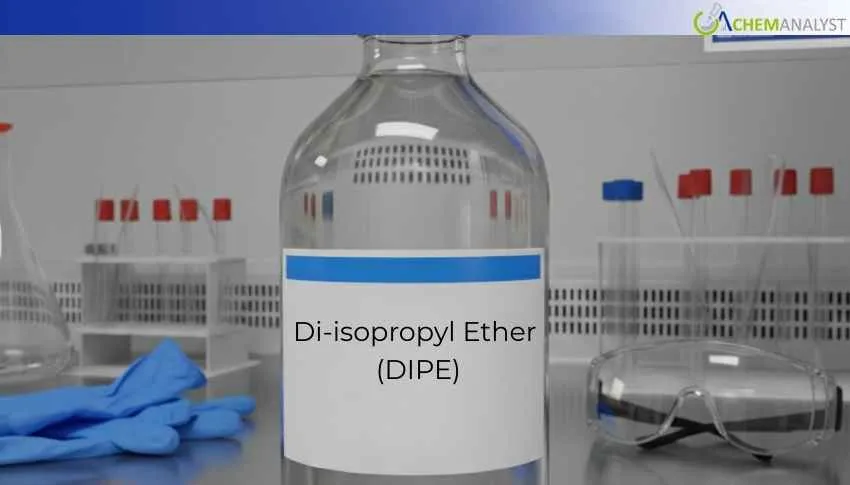
Diisopropyl Ether (DIPE) DEL USGC prices eased in early May, falling 1.08% per weekly assessment data after a month that saw a modest uptick in April. Market participants described the move as a short-term correction against a backdrop of broadly balanced fundamentals: routine domestic operating rates, steady seaborne arrivals and comfortable terminal inventories limited upside momentum even as propylene feedstock costs moved higher. Early-month trading reflected typical spring demand patterns, with summer-grade gasoline blending and solvent procurement running at expected levels and contract coverage above seasonal norms.
Demand pattern for DIPE remained mixed across end-use sectors. Pharmaceutical intermediates continued to represent the largest consumption base with production activity aligned to April levels, keeping buying steady but not expansionary. Specialty solvent distributors and industrial blending houses also maintained routine procurement schedules, supporting moderate consumption for distribution and industrial solvent applications. In contrast, emerging battery electrolyte usage stayed weak, with only small-batch purchases that were insufficient to shift market direction.
On the supply side, producers ran isopropanol dehydration units at routine rates and no maintenance shutdowns were reported for the period, sustaining typical co-product DIPE output. Logistics remained orderly: containerised shipments from the overseas markets including Germany and Japan moved through Gulf Coast terminals without port congestion. However, rising propylene polymer-grade costs have lifted production cash costs and break-evens, increasing cost pressure on DIPE manufacture; the propylene complex climbed meaningfully into the spring, a dynamic that market participants cited as the principal upstream risk. Conditional crude and naphtha disruptions would amplify that pressure by pushing propylene and related costs higher.
Weekly DIPE price behavior showed a narrow trading range through April into early May, with spot offers largely anchored by balanced inventories and heavy contract coverage. Per weekly assessment data, DIPE prices held steady through the first week of May before easing modestly in the early-May snapshot, resulting in the reported 1.08% decline. Volatility was contained and movements were sentiment-driven rather than the product of acute physical shortages, reflecting a market where available supply and routine demand limited dramatic shifts in spot activity.
Looking ahead, ChemAnalyst analysis points to a mild downward bias for DIPE during May. That outlook is driven by comfortable DIPE spot availability across the US Gulf Coast, moderate solvent and blending demand that is not expected to accelerate, and steady production and inventory positions exerting mild downward pressure. Seasonal gasoline blending will provide some baseline demand into the summer, but any sustained price recovery would likely require either a reversal in propylene costs or a material tightening of availability; forecasts are therefore subject to market conditions and evolving upstream dynamics.







 About ChemAnalyst
Leave a Comment
Comments (0)