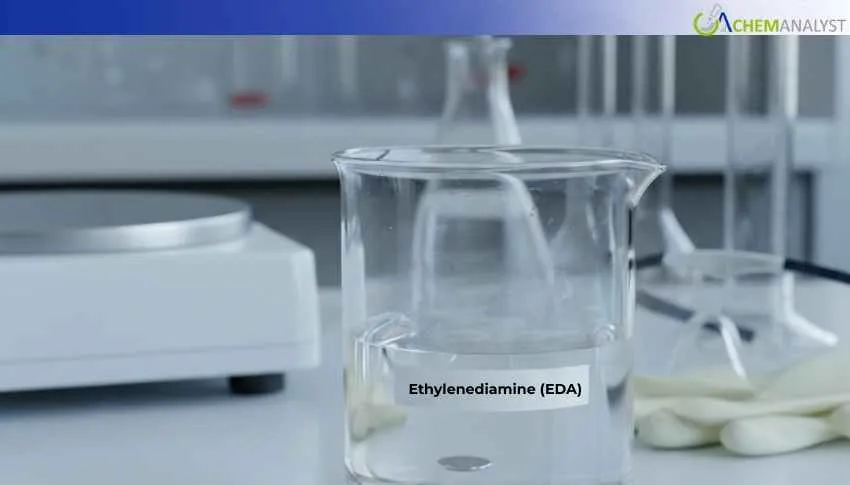
Prices of Ethylenediamine (EDA) in the U.S. further dropped in December 2025, because of sharp declines in ethylene feedstock values amid a difficult demand scenario. The U.S. Gulf Coast, being the leading EDA-producing region in the U.S., experienced the toughest slowdown, owing to excess supply, poor derivative margins, as well as strong exports. Notably, this marked the third straight month of declining EDA prices amid difficult global economic conditions.
The primary reason for the EDA decline was the slow state of the global ethylene market, which was unable to extricate itself from a low-margin cycle. This glut in the various large ethylene-producing regions, including the U.S. Gulf, contributed to keeping ethylene prices low. Although a marginal improvement will occur in Q2 of 2026, based on increased export volumes, the growth will be limited, with a plateau at ethylene prices.
In December, U.S. EDA producers experienced low demand from major downstream industries such as agrochemicals, resins, and specialty chemicals. Most consumers cut their procurement volumes to manage their year-end inventories carefully. Although there were no significant supply-chain interruptions, the EDA market was well stocked, offering little leeway for prices to correct.
Also, the global market trends created additional pressure on the EDA market. The petrochemical industry in Europe further reduced steam cracker capacity in response to high energy costs, high-priced naphtha feedstock, and increased costs of compliance. With crackers in Europe being less competitive, imports of ethylene and derivatives increased from the US, Middle East, and Asia. This increased global competitive pressure, leading US exporters to set low offers to keep their shares intact, which indirectly influenced EDA in the US.
The overall economic trends in the US also impacted demand for chemicals. The automobile sector, a principal consumer of coatings, lubricants, and specialty chemicals with a connection to EDA, saw a volatile year. The imposition of new tariffs on imported autos led to increased expenses for carmakers. This led to aggressive purchasing in the early part of 2025 to beat increased prices. Yet, with benefits declining and car prices rising, overall sales dropped in the latter part of 2025.
As per ChemAnalyst, by the end of December, the US EDA price reflected an overall market impacted by low feedstock costs, low demand in the downstream segment, and competitive pressure in the worldwide market. As there are no expected shortages in supply and the ethylene market conditions are still sluggish, the future for the first half of 2026 appears to be guarded.







Leave a Comment
Comments (0)