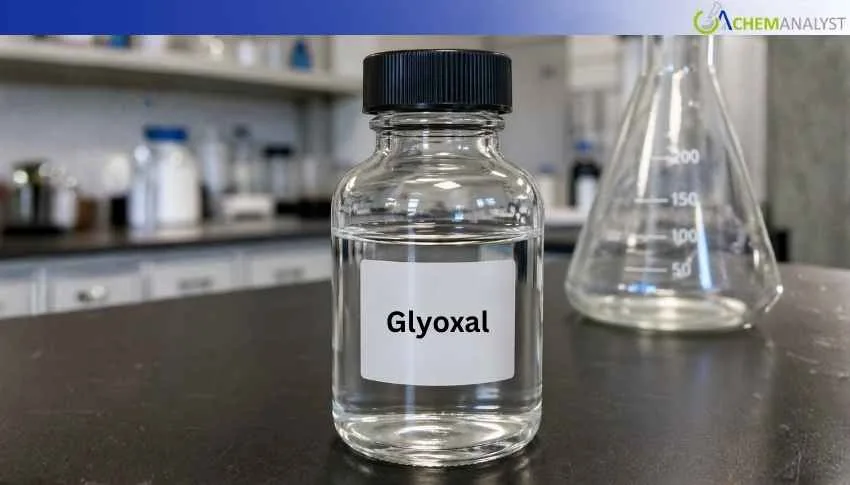
Glyoxal prices in the United States fell sharply by 25.3% month-on-month in April 2026, reversing most of March’s extraordinary geopolitically driven surge. The decline was primarily driven by a surge in competitively priced imports from China and Europe, structurally weak end-use demand across all major consuming industries, and the partial easing of precautionary buying behavior that had inflated March purchasing activity.
On the supply side, April was characterized by a significant increase in import availability from both Chinese and European origins, which overwhelmed domestic market balance and forced U.S. glyoxal producers to lower offers to remain competitive. Chinese producers, accounting for over 60% of global glyoxal capacity and operating on a coal-based acetaldehyde route rather than the ethylene glycol oxidation process used in the U.S., maintained a strong cost advantage. This insulated them from the 32.11% spike in MEG prices on a FOB U.S. Gulf Coast basis, allowing aggressive export pricing into the U.S. market. In contrast, domestic glyoxal producers faced margin compression due to rising feedstock costs. Additional cargo inflows from the Netherlands and Belgium further intensified competition. The 8 April conditional ceasefire between the U.S. and Iran eased geopolitical shipping risk perceptions, improving vessel movement and stabilizing import flows. As a result, abundant import supply persisted throughout April, preventing domestic producers from passing through higher input costs.
Demand conditions across the U.S. glyoxal market remained structurally weak during April 2026, failing to absorb the increased import volumes. The paper and packaging sector maintained stable but flat purchasing levels as boxboard production plateaued and earlier procurement urgency faded. The oilfield chemicals segment saw the sharpest contraction, with subdued drilling activity across U.S. shale basins reducing demand for glyoxal-based corrosion inhibitors and biocides, prompting companies to rely on existing inventories rather than new purchases. Specialty resin producers also reported steady but limited demand due to competition from alternative chemistries and resistance to higher pricing. No seasonal uplift from construction or textile industries materialized, further limiting glyoxal consumption growth. Consequently, distributors allowed inventories to build rather than actively replenish stocks, reinforcing downward price pressure.
Looking ahead, the glyoxal market is expected to transition from sharp correction to gradual stabilization rather than a sustained recovery. In the near term, glyoxal pricing will remain anchored by excess import availability, particularly from China, where coal-based production economics continue to ensure structurally low export offers even under volatile global energy conditions. However, the pace of decline is likely to slow as the market approaches inventory normalization following April’s destocking and demand absorption phase. U.S. domestic glyoxal producers are expected to operate under persistent margin pressure due to elevated MEG costs, which may lead to selective rate cuts, indirectly tightening domestic availability. Demand recovery remains limited, but any rebound in oilfield drilling activity or a seasonal uptick in packaging consumption could modestly improve offtake. Overall, the glyoxal market is likely to enter a low-volatility, range-bound phase with a slight downward bias rather than further steep corrections.







Leave a Comment
Comments (0)