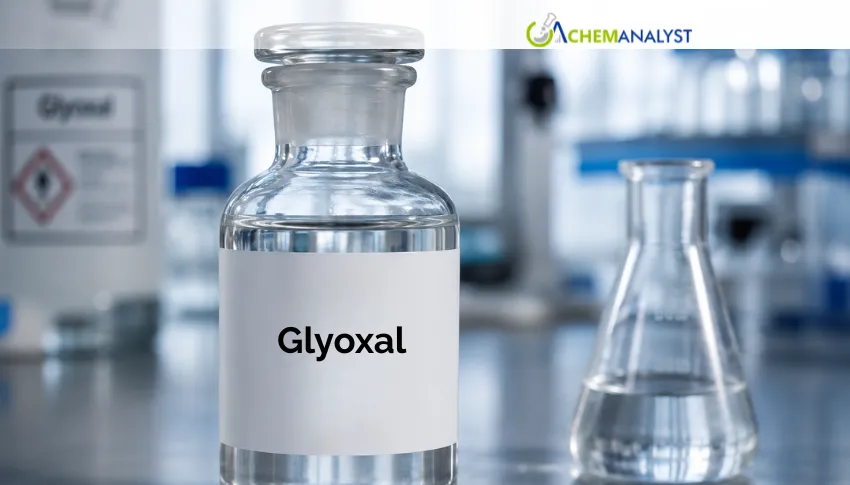
US Glyoxal prices declined 2.36% in June 2026 as comfortable inventories, competitive import availability, and subdued downstream demand continued to pressure market fundamentals. Sellers lowered offers to accelerate inventory movement, while improved logistics and easing feedstock costs further weakened replacement values. Although seasonal weather risks could create temporary disruptions, the near-term outlook remains largely bearish.
Supply-side conditions remained favorable throughout June, contributing significantly to the decline in Glyoxal prices. Chinese exporters increased shipments following weaker domestic coatings demand, while Northwest European producers maintained high operating rates, ensuring steady supplies into the US market. Improved container schedule reliability after mid-June reduced shipment delays and demurrage costs, allowing merchants to maintain comfortable inventory levels. Feedstock Mono Ethylene Glycol (MEG) prices also declined by approximately 4.8% during the month, lowering production and replacement costs for Glyoxal manufacturers and traders. With no major plant shutdowns, force majeures, or logistics disruptions reported, Glyoxal suppliers continued offering competitive prices to clear inventories and sustain sales volumes. However, market participants continued monitoring developments around the Strait of Hormuz, as any renewed geopolitical disruption could increase freight costs and affect delivered pricing.
Demand for Glyoxal remained weak across several key downstream sectors. Paper and packaging manufacturers reduced spot purchases as mills focused on consuming existing inventories amid only modest carton board orders. Oilfield chemical demand also softened following a decline in US rig activity during the middle of June, limiting procurement of Glyoxal-based cross-linking chemicals. Meanwhile, broader manufacturing activity remained largely flat according to Federal Reserve indicators, reducing incremental buying from industrial converters and distributors. In contrast, textile chemical manufacturers and pharmaceutical producers maintained relatively stable procurement patterns due to uninterrupted production schedules and planned inventory replenishment. Nevertheless, steady demand from these sectors was insufficient to offset weakness across other major end-use industries, resulting in continued downward pressure on Glyoxal prices.
Looking ahead, the Glyoxal market is expected to remain volatile through the third quarter of 2026. Competitive import offers, adequate inventories, and cautious downstream procurement are likely to keep pricing under pressure in the near term. However, seasonal flooding risks and the Atlantic hurricane season could intermittently disrupt Gulf Coast logistics, increasing trucking, warehousing, and transportation costs, which may provide temporary support to market prices during periods of tighter supply. Buyers are also expected to maintain disciplined purchasing strategies after recent replenishment activities, limiting opportunities for sustained price recovery.
Over the coming months, Glyoxal market direction will largely depend on freight conditions, weather-related logistics, feedstock cost movements, and downstream manufacturing activity. Continued availability from Asian and European suppliers is expected to maintain adequate supply, while any escalation in shipping disruptions or geopolitical tensions could temporarily tighten inventories. Until stronger industrial demand emerges, the US Glyoxal market is anticipated to remain soft with intermittent short-term volatility rather than a sustained upward trend.








 About ChemAnalyst
Leave a Comment
Comments (0)