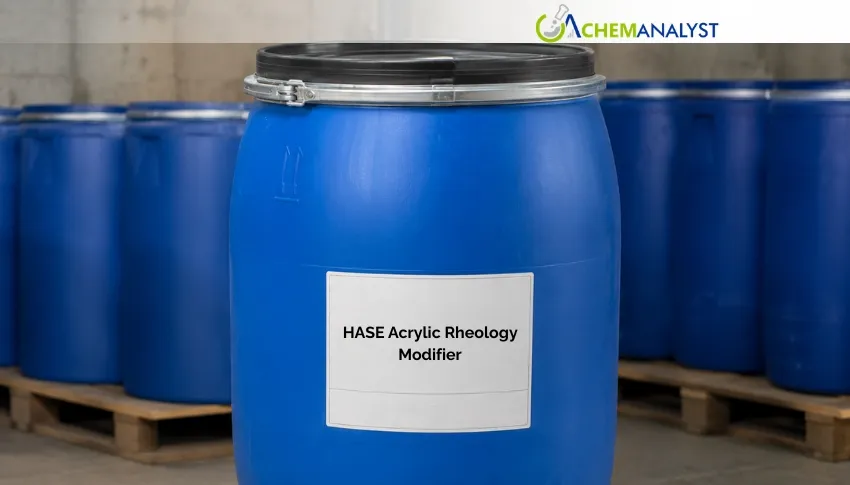
HASE acrylic rheology modifier prices in the United States rose by 4.0% in May 2026, driven by a sharp escalation in upstream acrylic acid feedstock costs and tight domestic supply conditions that left producers with limited ability to absorb input cost inflation. The monthly gain marks one of the strongest price movements recorded in the US HASE Acrylic Rheology Modifier market in recent quarters and reflects the broader petrochemical cost shock reverberating through the specialty additives sector.
Polyacrylic acid prices in the US rose 9.33% in May 2026, driven by a 9.3% surge in feedstock acrylic acid costs underpinned by a 12.0% jump in upstream propylene — dynamics that transmitted directly into HASE Acrylic Rheology Modifier production economics, as acrylic acid constitutes the primary monomer backbone in HASE polymer synthesis. With US acrylic acid costs elevated through May, manufacturers of HASE Acrylic Rheology Modifier operating without long-term feedstock supply contracts were forced to adjust offer pricing upward to protect margins.
Polyacrylic acid prices pushed sharply higher into Q2 2026 as the propylene and acrylic acid feedstock cost shock from the Middle East conflict remained deeply embedded across global petrochemical supply chains, with the effective closure of the Strait of Hormuz since early March having driven naphtha prices significantly higher, transmitting cost surges rapidly into acrylic acid production economics. While North American propylene producers maintained a structural cost advantage through ethane-based cracking, the global feedstock repricing kept domestic acrylic acid cost floors firmly elevated heading into May.
The US supply chain for HASE Acrylic Rheology Modifier and related rheology modifiers is multi-tiered and sensitive to logistical disruptions, with just-in-time inventory practices among large architectural and industrial coatings formulators amplifying price volatility during periods of upstream tightness.
Market activity in the US for HASE Acrylic Rheology Modifier is concentrated in industrial heartlands and major coating manufacturing clusters across the Midwest, Gulf Coast, and Eastern Seaboard, with demand derived primarily from architectural and industrial coatings applications that are closely tied to construction activity and manufacturing sector health. Steady summer pre-season demand from architectural coatings manufacturers maintained consistent HASE Acrylic Rheology Modifier offtake through May, offering producers the market conditions necessary to push through the monthly price increase without significant buyer resistance.
Looking ahead to June 2026, HASE acrylic rheology modifier prices in the United States are anticipated to remain elevated and edge further higher. Acrylic acid feedstock costs are expected to stay firm as propylene cost structures remain above pre-conflict levels despite an announced US-Iran ceasefire, with meaningful supply chain normalisation from Hormuz estimated to take twelve to eighteen months by leading industry analysts. Domestic demand for HASE Acrylic Rheology Modifier from paints and coatings formulators is anticipated to remain active through the peak summer architectural coating season, sustaining consistent downstream pull. Stricter VOC regulations continue to accelerate the shift from solvent-borne to water-borne coating systems, reinforcing structural demand for associative thickeners including HASE Acrylic Rheology Modifier at the expense of traditional cellulosic alternatives. With these regulatory tailwinds and upstream cost pressures simultaneously in play, HASE Acrylic Rheology Modifier prices in June are forecasted to register a further gain in the range of 2.0–3.5%, barring any unexpected feedstock relief or demand softening from US construction sector weakness.







Leave a Comment
Comments (0)