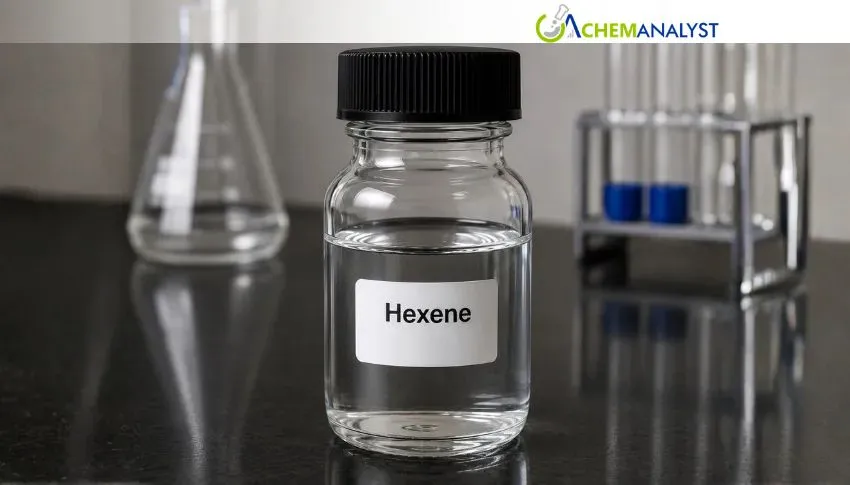
Hexene prices in the USA held steady in early July 2026, following a month-long easing through June that left market sentiment soft. Early June saw a brief uptick, but the market then moved into a sustained downtrend through mid- and late June as ample domestic output and softer downstream buying weighed on Hexene values. Trade flows and increased import availability following mid-June geopolitical developments added to selling pressure, and while incremental upstream cost pressures emerged, they were largely absorbed by comfortable availability. Overall, the Hexene market entered early July with little week-on-week change, against a clear backdrop of June weakness, per ChemAnalyst data.
Downstream demand trends were the primary reason behind the softer tone. Demand for Hexene from polyethylene producers, notably LLDPE and HDPE resin makers, weakened as resin producers curtailed spot procurement amid cautious packaging and industrial activity, and polymer modification and co-monomer applications likewise softened. Packaging and general industrial end-use demand remained muted, and export buying from Asia and Europe was largely need-based given adequate inventories
On the supply side, abundant domestic Hexene output and steady operating rates at olefin complexes kept Hexene co-monomer availability comfortable, limiting any upside from modest upstream cost moves. Ethylene flows remained seamless with no major cracker outages reported, and normal logistics and steady gas costs constrained cost-push risks. Trade-flow shifts and widened condensate/naphtha availability after mid-June heightened competitive offerings into the Gulf Coast, and reported tank positions and unreported draw patterns signaled ample Hexene inventories. There were no notable plant shutdowns affecting Hexene availability during the period, leaving overall supply dynamics tilted toward easing.
Weekly trends showed a distinct deterioration through June, with a notable mid-month drop that stood out among the moves; Hexene prices then continued to drift lower into the final week of June before flattening in the early July assessment. Per weekly assessment data, the sequence of weekly price decreases through late June culminated in a neutral week ending in early July, when prices recorded no net change week-on-week. The pattern reflected diminishing Hexene spot procurement and exports that were insufficient to absorb the incremental supply, even as incremental ethylene cost rises were largely absorbed by sellers.
Looking ahead, the near-term outlook points to further softening in the coming week, given current Hexene market trends. Key drivers supporting downside risk include abundant domestic availability, muted downstream polyethylene demand and limited Hexene spot buying, seamless upstream olefin supply limiting cost-push upside, and competitive global Hexene offers that could keep exports subdued. Our analysts note that the outlook is subject to market conditions; a pickup in resin production or an unexpected supply disruption would alter the picture, but under prevailing fundamentals, the bias remains toward softer prices in the immediate term, per ChemAnalyst analysis.








 About ChemAnalyst
Leave a Comment
Comments (0)