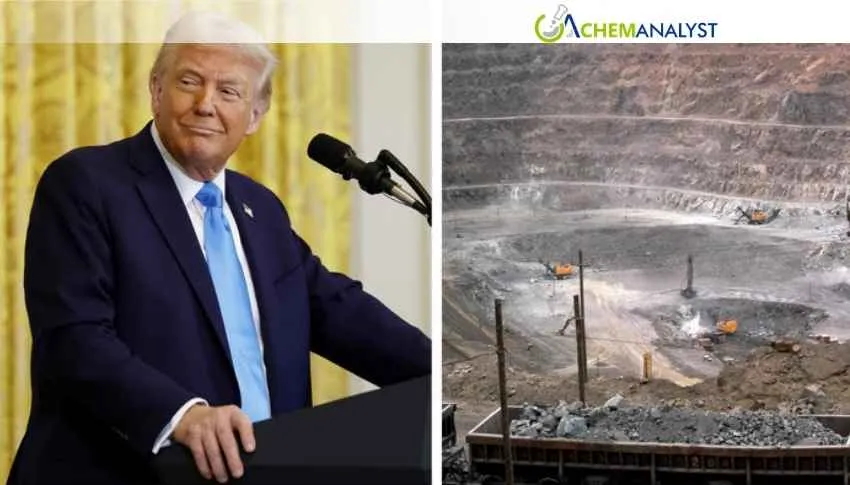
The United States has recently secured a significant 15-year agreement to access rare earth elements from Greenland's Tanbreez project, a move poised to reshape global critical mineral supply chains. This deal, which includes an American company, Critical Metals Corp., gaining a 70% stake in the project, represents a strategic pivot for the U.S. in its efforts to reduce a long-standing reliance on China for these vital resources.
The primary catalyst for this agreement is the U.S.'s urgent need to diversify its critical mineral sources, particularly heavy rare earths like dysprosium and terbium. These elements are indispensable for advanced defense technologies, including fighter jets, missile systems, radar platforms, and drones, as well as for green energy infrastructure like electric vehicles and wind turbines. The urgency is further underscored by upcoming Pentagon regulations, effective in 2027, which will restrict the use of Chinese-origin materials in key defense applications. China currently dominates the global rare earth processing capacity, accounting for 85%, and supplies approximately 80% of U.S. imports.
The deal carries substantial geopolitical and economic ramifications. For Africa, the article frames it as a "huge loss," as the U.S. will reduce its future dependence on mineral-rich African nations, where China already has an entrenched presence in the critical minerals sector. Geopolitically, the agreement strengthens Washington's ambition to build a critical minerals supply chain independent of Beijing, enhancing U.S. defense manufacturing independence and mitigating risks from potential supply disruptions or export controls. Greenland, strategically located between the U.S. and Europe, becomes a crucial partner in this broader strategy, which also includes efforts to restrict non-NATO countries from obtaining mining rights.
Economically, the Tanbreez project, estimated to be worth over 3 billion, is one of the world's largest known sources of heavy rare earth elements outside of China. Initial output is projected at 85,000 tonnes of rare earth oxides per year. The U.S. government is supporting the initiative, with the Export-Import Bank issuing a letter of interest for up to 120 million in financing. Florida-based REalloys has secured a 15-year offtake agreement for 15% of Phase 1 production, aimed at domestic magnet manufacturing, while Ucore Rare Metals, backed by Department of Defense funding, will take 10%.
Despite the strategic advantages, the project faces significant industry-specific challenges. Greenland's rare earth deposits are often found alongside uranium, requiring stable policy on co-mining. Furthermore, the region has limited mining infrastructure, and extracting rare earths from silicates, as found in Greenland, may necessitate new technologies. Experts caution that developing this ecosystem will be a long-term endeavor, highlighting the complex realities of Arctic mining.








 About ChemAnalyst
Leave a Comment
Comments (0)