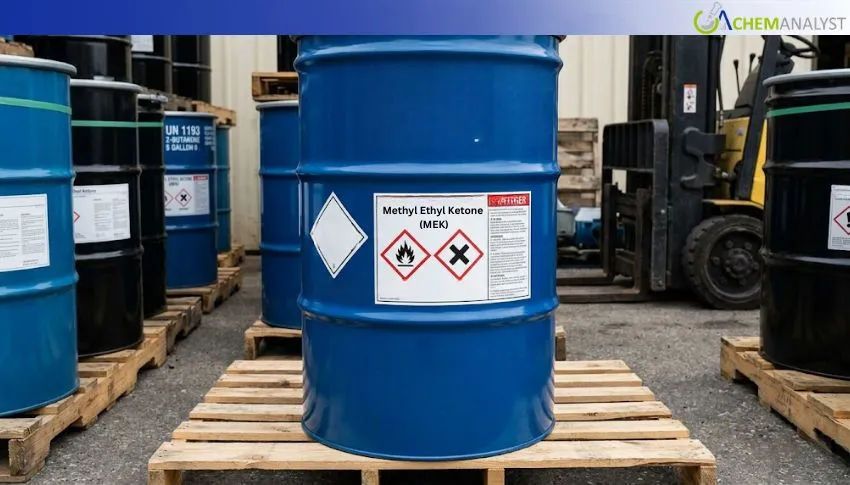
The US MEK market shifted from subdued trading conditions in February to a firmer tone in early March. February activity remained relatively muted as buyers maintained cautious procurement strategies. However, the market quickly turned upward as Asian exporters raised quotations, prompting US buyers to reassess landed cost expectations.
A key driver behind the MEK price increase was the rise in feedstock sec-butanol prices in exporting regions. Higher input costs increased production expenses for Asian suppliers, particularly in Japan and other key export hubs. As a result, import offers into the United States moved higher, encouraging sellers to maintain MEK in firm positions.
Geopolitical developments also contributed to the MEK price rise. Escalating tensions following the strikes on Iran by the United States and Israel at the end of February increased uncertainty across global energy and petrochemical markets. Rising crude oil prices strengthened upstream petrochemical values, which indirectly supported higher MEK production costs.
Supply availability tightened further due to reduced operating rates at several Asian MEK facilities. Production disruptions and maintenance shutdowns at some units limited export cargo availability, restricting prompt shipments to the international market. As a result, traders reported that securing low-priced cargo has become increasingly difficult.
Inventory conditions also played an important role in strengthening the market. Social inventory levels in the US remained relatively low, allowing suppliers to resist discounting and maintain higher offer levels. With limited prompt availability, traders adopted a cautious approach and avoided aggressive selling of MEK.
Demand conditions in downstream industries remained relatively soft despite the price increase. Procurement from paint, coatings, and adhesives manufacturers remained cautious due to slow activity in the construction sector. Buyers largely continued to purchase on a need-based basis rather than building significant inventories.
The US construction sector continued to face structural challenges that limited stronger chemical demand. Labor shortages pushed wages higher, increasing project costs and squeezing contractor margins, especially for fixed-price projects. Stricter immigration policies further tightened workforce availability, while uncertainty around trade policies delayed investments in new commercial and industrial developments.
Although recent interest rate cuts by the Federal Reserve have provided some support to construction activity, borrowing costs remain elevated. Many developers continue to delay projects due to financing constraints, allowing only large infrastructure or government-backed projects to proceed.
Outlook: As per the Chemanalyast, MEK prices in the United States are expected to remain firm in the coming months as global supply risks continue to influence the market. Rising tensions in the Middle East disrupted shipping through the Strait of Hormuz, a route that handles nearly 20% of global crude oil supply. Further, disruption could lift crude oil prices significantly, increase feedstock costs, and raise freight and insurance expenses, likely pushing MEK production and import costs higher.






Leave a Comment
Comments (0)