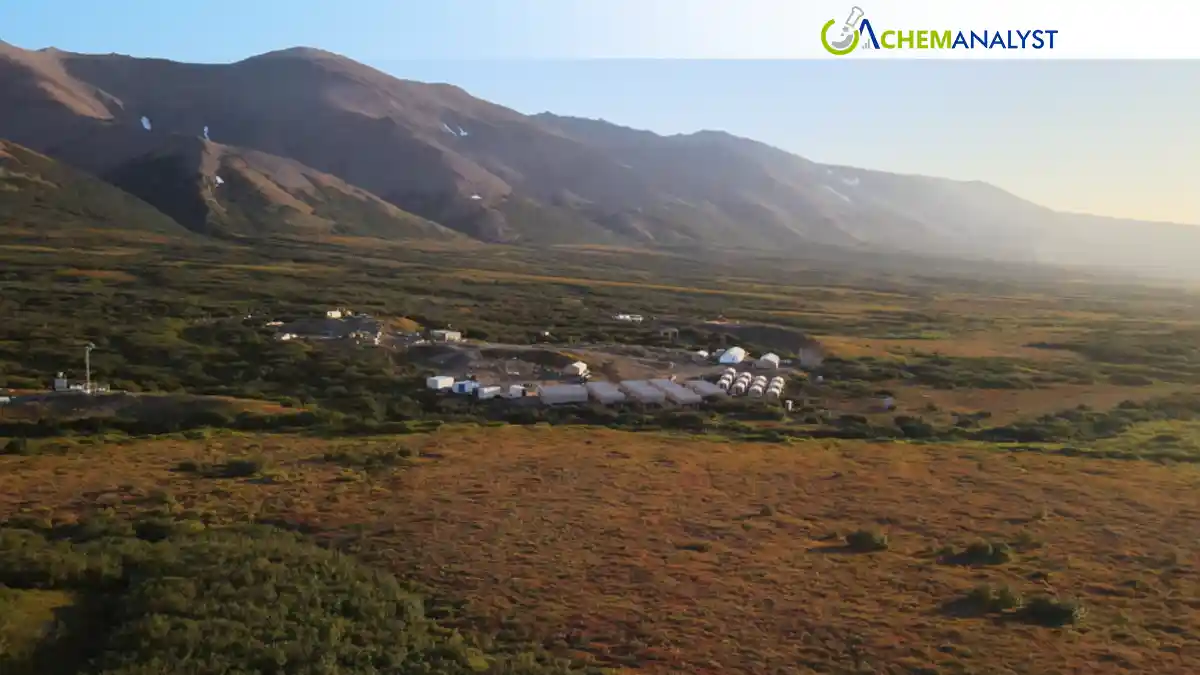
The US government is taking steps to accelerate the development of Alaska’s vast natural-resource base, with critical minerals emerging as a major priority for energy security, defense and advanced manufacturing.
The US Department of the Interior has proposed modernizing federal regulations governing exploratory oil and gas drilling on the Arctic Outer Continental Shelf through the Marine Minerals Administration. The proposal is part of the broader administration strategy to expand domestic resource development and advance President Donald Trump’s goal of US energy and resource dominance.
The move supports Executive Order 14153, “Unleashing Alaska’s Extraordinary Resource Potential,” issued in January 2026. The order called for the reversal of restrictions on resource development across Alaska’s state and federal lands and emphasized the state’s importance to US economic and national security.
Alaska holds significant mineral resources. According to the Alaska Department of Natural Resources, 23% of US federal land open to mining is located in the state. Alaska also has substantial shares of global zinc, gold, silver, copper and molybdenum resources and has the geological potential to produce 51 of the 54 critical minerals identified by the US Geological Survey.
The state’s mineral investment potential is also attracting attention. A 2024 Fraser Institute survey ranked Alaska third globally for investment attractiveness and first for mineral potential when other factors were excluded.
A key objective of the US strategy is to establish integrated domestic supply chains, connecting mining with processing, refining and advanced manufacturing. This approach could reduce dependence on imported raw materials and retain greater economic value within the country.
Graphite is a major focus. Graphite One’s Graphite Creek Project in Alaska is described by the USGS as the largest known graphite deposit in the US. The company is developing a mine-to-manufacturing strategy designed to supply domestic graphite materials. The US currently relies entirely on imports for natural graphite.
Graphite One has also received permitting for an active anode materials facility in Ohio. The plant is expected to initially produce about 10,000 tonnes per year of synthetic active anode materials, with planned expansion to 25,000 tonnes. These materials are intended for lithium-ion batteries used in electric vehicles and grid-scale energy storage.
Antimony is another strategic focus. Felix Gold is developing the Treasure Creek Antimony Project in Alaska alongside its Frontier Antimony Refinery. The company has extracted and stockpiled high-grade antimony ore from the project, including material from a vein that returned assays of up to 71.9% antimony.
The refinery is planned to process Treasure Creek material and potentially additional domestic feedstock.
Overall, regulatory reforms and federal support could accelerate Alaska’s emergence as a key US source of critical minerals and strengthen domestic supply chains for batteries, defense and advanced manufacturing.
Impact on Products and Chemical Commodity Prices
The policy shift is likely to have a bullish long-term impact on graphite, antimony and related battery-material markets by encouraging US mining, processing and refining capacity. Greater domestic production could eventually reduce US import dependence and improve supply security, particularly for natural graphite and antimony. However, new mines and processing facilities require substantial capital, permitting and construction time, so near-term supply effects should remain limited. For ChemAnalyst-tracked commodities, increased US investment may support prices for graphite, antimony and battery-related materials through stronger demand for processing and downstream manufacturing. Over the longer term, additional domestic supply could moderate import-driven price volatility and reduce exposure to overseas disruptions.







Leave a Comment
Comments (0)