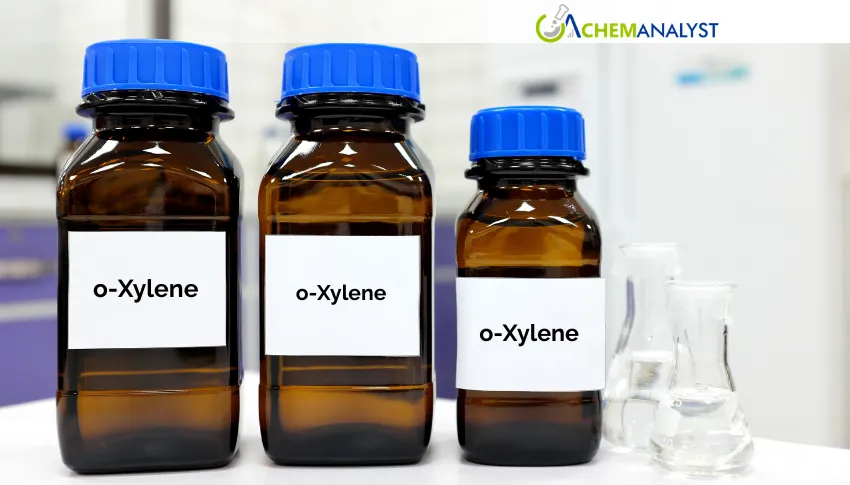
The US o-xylene market remained under pressure during late June 2026 as weak downstream demand, comfortable supply conditions, and softer upstream costs continued weighing on market sentiment. o-Xylene prices declined by 1.47% week-on-week during the latest assessment period, reflecting cautious purchasing activity and increasing seller competition. Despite stable refinery operations and uninterrupted logistics, the o-xylene market continued to face limited buying interest from key downstream industries, leaving suppliers with reduced pricing power.
Demand across major o-xylene consuming sectors remained mixed throughout late June. The phthalic anhydride and chemical intermediates segment continued experiencing weaker procurement, reducing feedstock requirements for downstream plasticizers, alkyd resins, coatings, and flexible PVC production. As a result, o-xylene consumption from these sectors remained below expectations, limiting support for spot pricing despite stable industrial activity.
Plasticizer manufacturers continued to maintain relatively steady purchasing patterns, particularly for wire and cable, flooring, and flexible PVC applications. However, procurement largely reflected routine operating requirements rather than inventory expansion, preventing any meaningful improvement in o-xylene demand. Similarly, architectural coatings and paint manufacturers continued reporting subdued consumption as slower residential construction activity weighed on coatings production and raw material requirements.
Supply fundamentals remained favorable throughout the assessment period. Domestic production continues to supply approximately 85% of total U.S. o-xylene requirements, ensuring adequate availability across the Gulf Coast market. Stable refinery operating rates associated with the summer gasoline season maintained consistent reformate production, while uninterrupted logistics allowed inventories to be replenished efficiently. Consequently, buyers faced no immediate concerns regarding supply security.
Feedstock developments further reinforced the softer market tone. Falling crude oil and reformate values reduced production costs for o-xylene manufacturers, weakening the cost support that had previously underpinned pricing. Lower feedstock costs limited producers' ability to justify higher offers, encouraging greater pricing flexibility across the spot market. Although geopolitical risks surrounding global crude supply routes remain a potential upside factor, these concerns have not yet materially influenced domestic o-xylene pricing.
Weekly price movements reflected the prevailing market weakness. Following the sharper declines observed earlier in June, the o-xylene market remained relatively stable through mid-month before recording a further 1.47% week-on-week decline during late June. The continued easing reflected subdued downstream inquiries, softer export demand, and competitive supplier behavior rather than any structural disruption to production or logistics.
Looking ahead, the near-term outlook for o-xylene remains cautiously balanced. ChemAnalyst analysis indicates that prices could recover modestly if crude oil strengthens and phthalic anhydride producers resume seasonal restocking, potentially supporting an increase of around 2.9%. However, this scenario remains highly dependent on improving downstream demand.







Leave a Comment
Comments (0)