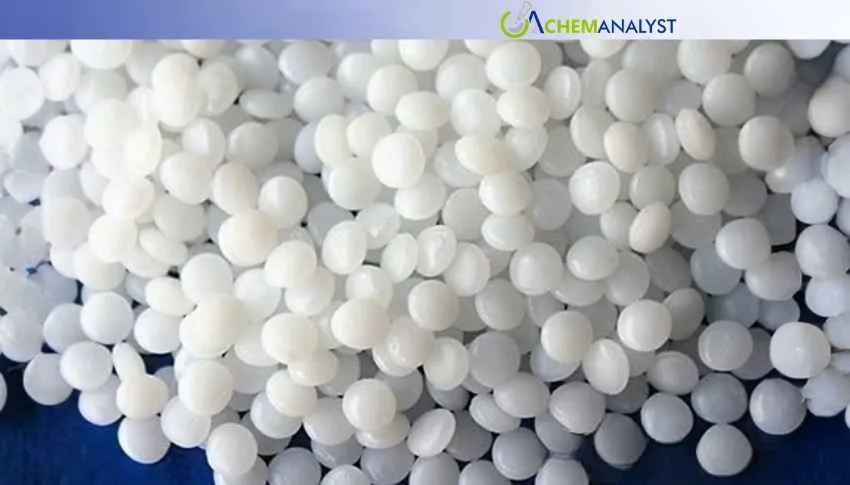
Polyoxymethylene (POM) prices in the United States advanced 3.07% on a week-on-week basis during the week ending 15 May 2026, sustaining the market's bullish trajectory into mid-Q2. The increase was driven by a significant rise in formaldehyde feedstock costs that directly elevated domestic production economics, with POM producers electing to pass the cost pressure fully through to buyers to preserve operating margins — a strategy supported by resilient downstream procurement activity across key consuming sectors.
The 4.9% formaldehyde cost increase constituted the primary supply-side driver of the reference week's price advance, elevating POM production economics materially and providing clear cost-push justification for the 3.07% price move. Formaldehyde and methanol values have remained structurally elevated under the sustained disruption of Persian Gulf natural gas and petrochemical supply chains arising from the ongoing U.S.-Israel-Iran conflict — with the dual Strait of Hormuz blockade still operative despite "Project Freedom's" pause. Plastics product manufacturing prices across the broader U.S. industry rose 3.0% year-on-year in April 2026, accelerating from 1.9% in March, confirming that POM's cost-inflation environment is not isolated but reflects industry-wide input cost escalation. Producers faced with elevated formaldehyde costs and no prospect of near-term feedstock normalisation passed the increase on fully, with POM buyers accepting the adjustment as cost-justified rather than opportunistic.
Downstream demand for POM remained constructively resilient during the reference week, consistent with the broader U.S. plastics industry backdrop described by the Plastics Industry Association as characterised by a "supportive macroeconomic and technological backdrop" despite geopolitical energy volatility. U.S. plastics and rubber products manufacturers' shipment values reached $25.7 billion in March 2026 — matching the April 2023 peak — confirming robust underlying industrial output. The automotive sector maintained steady POM procurement for precision connectors, fuel system components, and door mechanism assemblies, while the electrical and electronics segment — energised by surging AI data centre infrastructure investment and EV platform expansion — sustained firm offtake across homopolymer and copolymer grades. The ongoing metal-to-engineering-plastic substitution trend, driven by lightweighting imperatives across automotive and industrial applications, provided structural demand support independent of cyclical procurement patterns.
The near-term outlook for U.S. Polyoxymethylene (POM) prices remains bullish through May 2026, supported by elevated formaldehyde costs and ongoing geopolitical disruptions affecting methanol supply chains. Continued Strait of Hormuz trade restrictions are sustaining feedstock cost pressure and strengthening producer pricing power. Over the next four to six weeks, potential progress in U.S.-Iran negotiations could gradually ease methanol and natural gas pricing, slowing POM price gains by mid-June. However, improved downstream demand from automotive and industrial sectors, supported by high manufacturing activity and rising plastics consumption, is expected to sustain POM market firmness. Long-term demand growth from EV production and metal-to-plastic substitution continues to underpin bullish market fundamentals.







 About ChemAnalyst
Leave a Comment
Comments (0)