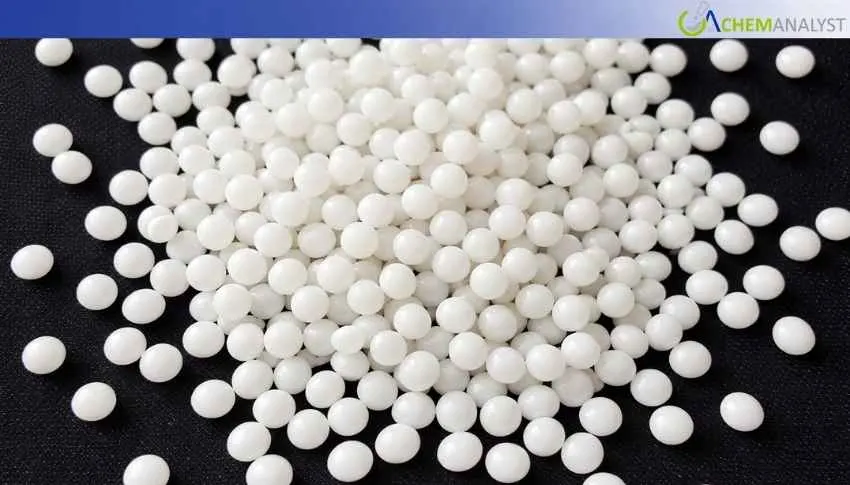
Polyoxymethylene (POM) prices in the United States rose 4.62% on a week-on-week basis during the week ending 17 April 2026. The increase was driven by formaldehyde feedstock costs anchored at elevated levels, a significant deterioration in supply-side logistics efficiency, sharply higher container freight costs, and resilient downstream demand — notwithstanding a fragile and contested easing of Middle East geopolitical tensions.
Supply-side conditions for POM deteriorated markedly during the reference week, with formaldehyde feedstock costs stabilising at the upper end of their prevailing range and providing a durable cost floor beneath domestic production economics. Beyond feedstock, distribution efficiency declined significantly, with vendor lead times extending— a direct indicator of persistent friction across the POM supply chain. Transportation bottlenecks compounded by the ongoing U.S.-Israel-Iran conflict continued to disrupt global material movement, with imports sourced from Asian and European producers subject to extended transit times attributable to cargo rerouting away from the Strait of Hormuz corridor. While Iran announced that the Strait was open to commercial vessels following a fragile Israel-iRAN ceasefire, the U.S. naval blockade of Iranian ports remained fully operative, causing shipping companies to maintain extreme caution and limiting the resumption of normal transit flows — a position confirmed by Iran's subsequent reassertion of Hormuz control. Drewry's World Container Index surged 20% during the week, elevating landed POM import costs in the U.S. market. These compounding logistics and geopolitical constraints produced a mild but clearly discernible supply-side tightness across domestic POM channels.
Demand for POM in the U.S. demonstrated steady-to-improving momentum during the reference period, underpinned by resilient performance across automotive and electrical end-use sectors. The automotive segment remained the principal demand growth driver, with vehicle sales reaching 1,405,817 units — a 17.2% month-on-month increase in March— sustaining elevated consumption of POM across precision-engineered components including connectors, fuel system assemblies, under-the-hood mechanisms, and lightweight structural applications. Despite the temporary diplomatic signals from the ceasefire and initial Hormuz reopening announcement, overall market sentiment among POM buyers remained cautious. Procurement managers continued precautionary stocking behaviour, reflecting considered assessment that energy prices would remain structurally elevated throughout the Strait of Hormuz restoration process. Concerns over prolonged restoration timelines and material re-escalation risks further encouraged forward purchasing, sustaining upward pressure on transacted volumes and reinforcing the prevailing POM price trajectory.
The near-term price outlook for U.S. POM remains directionally bullish, though the pace of appreciation may moderate as diplomatic developments in the Middle East are assessed by market participants. The fragile Israel-Iran ceasefire and scheduled U.S.-Iran negotiations represent incremental de-escalation signals; however, their durability remains uncertain given the continuance of the U.S. naval blockade, Iran's conditional management of Strait of Hormuz access, and the unresolved status of Iran's nuclear programme — the central issue in ongoing talks. Formaldehyde feedstock costs for POM are unlikely to soften materially until methanol supply chains normalise, which is itself contingent on meaningful Hormuz transit restoration. Market participants are advised to monitor the outcome of the next scheduled U.S.-Iran negotiating round and the operational status of Strait of Hormuz.








 About ChemAnalyst
Leave a Comment
Comments (0)