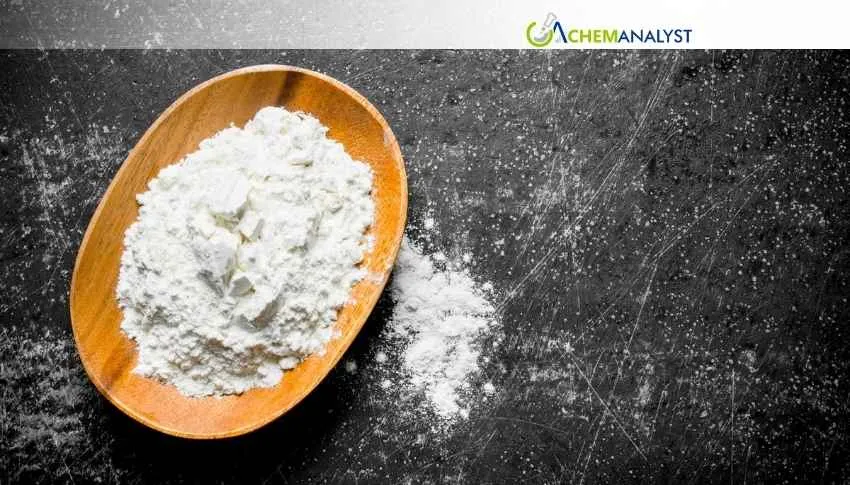
US Potassium Carbonate prices declined 1.15% in June 2026 as lower feedstock costs and subdued downstream purchasing weighed on market sentiment. Improved production economics, comfortable inventories, and steady import availability kept the market well supplied, while cautious procurement across detergent, specialty glass, and agricultural sectors limited opportunities for price support.
Supply-side fundamentals remained favorable throughout June, placing downward pressure on Potassium Carbonate prices. Feedstock potassium chloride prices declined by approximately 2.7% during the month, reducing manufacturing costs and enabling producers to maintain stable operating rates. Potassium hydroxide availability also remained largely stable, supporting uninterrupted production across domestic facilities. Although geopolitical tensions in the Middle East briefly raised concerns regarding global shipping and potassium hydroxide trade flows, imports from Canada and China continued without significant disruption. Rising freight costs and occasional port congestion extended delivery times for some cargoes, but previously accumulated inventories and stable domestic production prevented any meaningful tightening in Potassium Carbonate availability. Consequently, suppliers maintained competitive pricing as ample supply comfortably met market requirements.
Demand conditions for Potassium Carbonate remained mixed, with several major downstream sectors adopting conservative purchasing strategies. Liquid detergent manufacturers moderated procurement after building inventories during May, reducing consumption of Potassium Carbonate in June. Specialty glass producers also reported weaker demand as construction-related activity softened, with commercial planning activity, including data centre projects, declining by 6.8% month on month, limiting demand for potash-based chemicals. Agricultural consumption remained subdued as most growers had already secured fertilizer requirements ahead of the planting season, while elevated fertilizer and diesel costs encouraged disciplined purchasing behaviour. However, broader improvements in US manufacturing activity continued to provide stable baseline demand from industrial chemical applications, preventing a sharper decline in overall Potassium Carbonate market consumption.
Looking ahead, Potassium Carbonate prices are expected to remain under mild pressure through July before gradually recovering during August and September as seasonal demand strengthens. Summer weakness in construction-linked glass production is likely to continue limiting consumption in the near term, while detergent manufacturers are expected to maintain cautious inventory management. However, agricultural procurement is anticipated to improve toward the end of the third quarter as distributors and growers begin preparations for fall fertilizer application programs, providing stronger support for potash-based chemicals. Stable industrial activity is also expected to sustain baseline demand throughout the period. The medium-term Potassium Carbonate outlook remains cautiously optimistic despite near-term softness. Producers are expected to maintain balanced operating rates as lower feedstock costs support competitive production economics. At the same time, any renewed geopolitical disruptions affecting global shipping or potassium hydroxide trade flows could tighten raw material availability and temporarily strengthen Potassium Carbonate market sentiment.








 About ChemAnalyst
Leave a Comment
Comments (0)