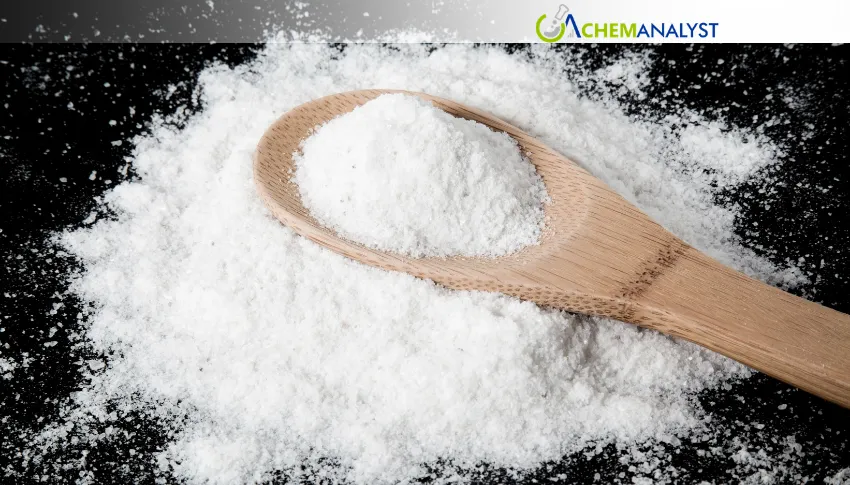
Sodium Sulphate prices in the United States remained largely stable during the first half of June 2026, although the market continued to reflect the impact of cost increases recorded during May. Buyers adopted a cautious procurement strategy as comfortable inventories and steady domestic production reduced concerns about near-term availability. While suppliers attempted to maintain firm offers following earlier feedstock and logistics inflation, purchasing activity remained measured, limiting further upward momentum in the Sodium Sulphate market. Market participants increasingly focused on demand fundamentals rather than cost pressures, resulting in balanced trading conditions across major Gulf Coast hubs.
Demand for Sodium Sulphate remained mixed across key downstream sectors during the first half of June. The detergent industry, which accounts for the largest share of Sodium Sulphate consumption, continued to experience structural challenges as liquid detergent products steadily gained market share over powder formulations. Consequently, detergent manufacturers maintained hand-to-mouth buying patterns and avoided significant inventory accumulation. At the same time, industrial glass producers provided stable support to Sodium Sulphate demand through consistent consumption for refining applications. Pulp and paper manufacturers also maintained regular procurement schedules following spring maintenance turnarounds, while textile-sector demand remained comparatively weak and offered limited support to overall market activity.
On the supply side, Sodium Sulphate availability remained comfortable as natural mirabilite operations across California, Texas, and Wyoming continued to run without significant disruption. These operations ensured sufficient domestic supply and prevented any major tightening in market fundamentals. Synthetic-route producers, however, continued to monitor production economics closely following the sharp increase in sulphuric acid costs experienced during May. According to ChemAnalyst data, the DEL Louisiana marker for Sodium Sulphate increased by 1.72% in May 2026 as rising feedstock expenses and elevated transportation costs pushed spot offers higher. During the first half of June, however, easing concerns regarding sulphuric acid volatility and stable logistics conditions helped prevent additional increases in Sodium Sulphate pricing.
Looking ahead, analysts expect the Sodium Sulphate market to face mild downward pressure through the remainder of June and into the third quarter. Ample domestic availability, comfortable inventories, and cautious purchasing patterns among detergent manufacturers are likely to weigh on sentiment. Although steady demand from glass and pulp industries should continue to provide a degree of support, it may not be sufficient to offset weaker consumption from other sectors. Furthermore, any moderation in sulphuric acid prices or transportation costs could accelerate a correction in Sodium Sulphate values. Over the June–November period, Sodium Sulphate is expected to remain vulnerable to gradual price softening unless stronger industrial demand, logistical disruptions, or feedstock-related supply constraints emerge to tighten market conditions.






Leave a Comment
Comments (0)