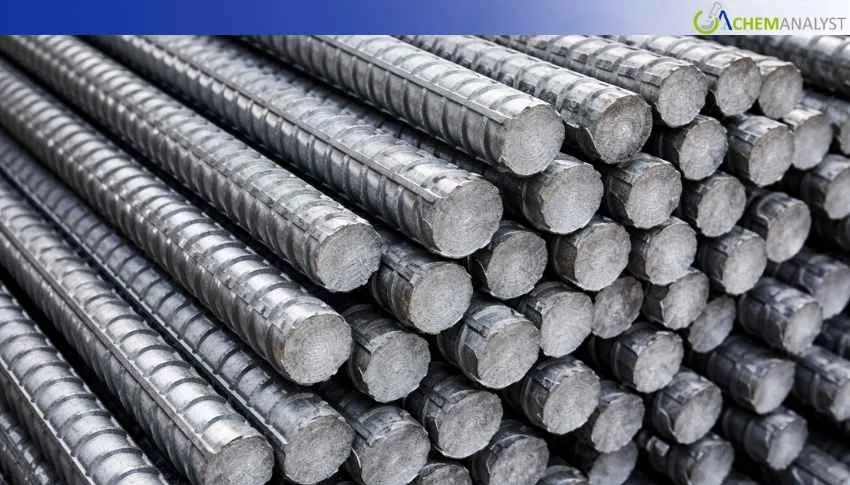
US steel rebar prices decreased by 1.4% for the week ending 16 January 2026, owing to the typical slowdown in demand that occur during the season. Although prices decreased, they were not very low, as the supply situation in the market was very tight. Most US plants were already sold out for the first quarter of 2026 for steel rebar sales. An increase in steel prices because of collection difficulties and procurement by mills in the winter season supported the steel rebar market.
Imports brought comfort, as shipments remained low and new production capacity faced delays in being brought online. The shortage of rebar in the steel market remained broad-based despite low activity in residential construction. However, demand in infrastructure projects, energy projects, and the construction of data centers ensured healthy utilization rates at steel rebar manufacturers.
Trade policy developments also played a major role. The US imposed initial countervailing duties on steel rebar imported from Algeria, Egypt, and Vietnam, which were some of the largest exporters prior to the tariffs imposed in March 2025. The US Department of Commerce, as well as the International Trade Administration, started antidumping and countervailing duty investigations in June 2025, examining data for the entire year 2024. The new rates that were released include 1.08% for Vietnam, 29.51% for Egypt, and 72.94% for Algerian exporters. Egypt was the largest source of US steel rebar imports in 2024, followed by Bulgaria and Algeria in the third and fourth positions, respectively.
Raw material trends further complicated this scenario. As per the statistics given by the American Iron and Steel Institute, weekly raw steel production in the United States for the week ending 10 January 2026 was 1.752 million net tons, with a capacity utilization rate of 75.7%. This showed a 2.8% increase over the previous week and a minor increase over last year’s statistics for the same week. An increase in production translates to enhanced steel rebar supply, but not to a level that can alleviate supply shortages.
Downstream, construction demand remained uneven. The backlog of small construction contractors fell sharply in 2025—and non-residential construction activity had momentum in data centers—supported only by large contractors. Contractor outlook improved but remained below levels seen at the end of 2024, and employment in the industry declined by 11,000 jobs in December 2025. These types of uneven demand conditions impact demand structures for steel rebar.
At the policy level, structural risks were underscored by industry leaders. Barry Schneider, COO of US steelmaker Steel Dynamics and chairman of the US-based Steel Manufacturers Association, warned lawmakers that while the US steel sector is stable, global overcapacity, mostly from China, high interest rates, and permitting delays pose ongoing challenges. He urged lawmakers to have stringent trade enforcement and a well- defined industrial policy so as not to hurt domestic steelmaking, including production of steel rebar.
The US steel rebar market should be stable to moderately bullish in the short term. Prices will be supported by limited supply and rising scrap prices; weak residential construction might avoid sharp spikes.







Leave a Comment
Comments (0)