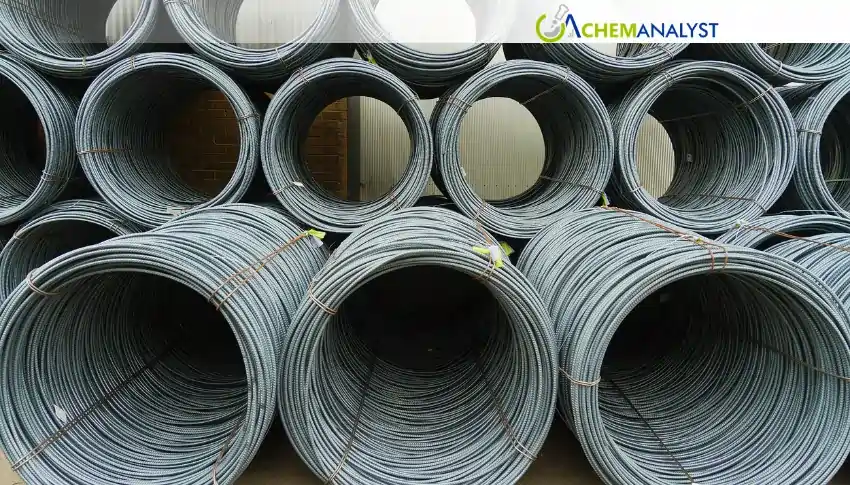
US Steel Wire Rod prices were essentially unchanged in late June 2026, with weekly data showing unchanged price movement as the market balanced opposing forces. Early in the month, steady buying and consistent production supported a mild upward push, and mid-June even brought a brief period of firmer momentum. However, by month’s end, activity slowed and transactions thinned, leaving the Steel Wire Rod market stable rather than directionally driven. Seasonal slowness and muted import arrivals kept liquidity subdued, while tighter domestic cost fundamentals prevented any meaningful downside. The result was a calm, range-bound close to June, with traders largely describing Steel Wire Rod conditions as steady and uneventful across the broader Steel Wire Rod supply chain.
US Steel Wire Rod demand moved unevenly across end-use sectors, with construction-related activity emerging as the weakest segment. Buying for prestressed concrete strand and engineered mesh remained constrained due to trade-defense measures and higher domestic benchmarks, leaving the construction channel thin and limiting transaction volumes. Early-month purchasing from domestic buyers offered some baseline stability, though sentiment stayed cautious. Import demand, however, dropped sharply as offshore suppliers faced very slow transaction activity, and policy shifts reshaped sourcing decisions, according to ChemAnalyst data. Overall, the Steel Wire Rod market reflected a split landscape: construction-linked outlets under pressure, domestic buyers steady but restrained, and import pathways significantly muted, shaping a subdued tone for Steel Wire Rod through June.
US Steel Wire Rod supply conditions provided notable support through June even as demand stayed soft. Mid-month logistics shifts and policy changes tightened offshore availability, with the Section 232 framework applying a 50% duty on imported semi-finished steel, including wire rod, significantly limiting external sourcing options, according to ChemAnalyst data. Rising domestic scrap costs added raw-material pressure, reinforcing mill cost structures and helping maintain a pricing floor. A domestic supplier’s engineered-mesh price increase also set a higher benchmark, strengthening mill pricing posture within a constrained import environment. With no major plant outages reported, production flowed steadily, leaving the Steel Wire Rod market supported by firm domestic fundamentals despite muted downstream activity across the broader Steel Wire Rod landscape.
US Steel Wire Rod prices showed a brief mid-June lift before settling into a stable pattern, with weekly data indicating just under a 3% rise in the week ending June 21, followed by a flat performance through June 26. Tariff effects and firm cost pressures helped push Steel Wire Rod higher into mid-month, but limited transactional flow and seasonal slowness kept the late-June market neutral. Import activity remained muted, reinforcing a steady rather than directional tone. Overall, the Steel Wire Rod market maintained a supported outlook in the 12-week view, even as near-term activity cooled and buyers adopted a more cautious stance across the broader Steel Wire Rod landscape.
US Steel Wire Rod is expected to remain stable in the coming week, with only limited upside as opposing market forces continue to balance each other. Protective measures—most notably the 50% Section 232 tariff—and elevated domestic feedstock costs are keeping a firm floor under Steel Wire Rod pricing. At the same time, seasonal slowness and thin import-side transactions are likely to cap any meaningful gains, leaving the market steady but not strongly directional. Current trends suggest a supported but subdued environment, though shifts in transaction activity or broader economic signals could quickly influence momentum. Overall, Steel Wire Rod is positioned for a calm near-term outlook shaped by tariff support, cost pressures and restrained demand across the Steel Wire Rod supply chain.







 About ChemAnalyst
Leave a Comment
Comments (0)