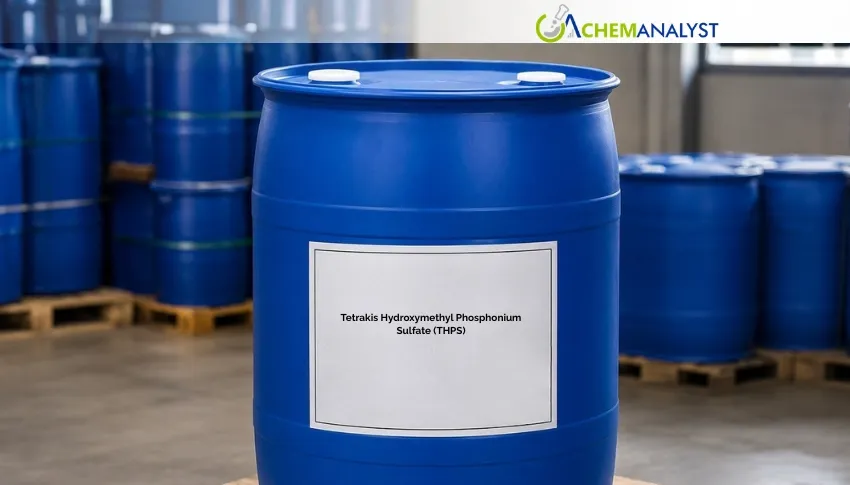
THPS demand remained moderately healthy across the oil & gas and water treatment sectors during the assessment period. The latest Baker Hughes and WellDatabase data showed the U.S. active rig count rising to 557 rigs by June 12, up 15 rigs week-on-week, supported by stronger oil-directed drilling activity in the Permian Basin and other producing regions. This sustained the THPS demand for drilling chemicals and biocides.
Water treatment companies also maintained regular procurement for bacterial and fungal control applications, while flame-retardant demand remained stable. Leather processing demand continued to stay relatively soft, limiting broader market expansion.
THPS supply conditions remained comfortable as imports from major Asian exporters like China continued without major disruptions. During the week, feedstock formaldehyde prices remained stable in the origin nation after declining sharply during the previous month as methanol prices had fallen, significantly lowering production costs. Other feedstock phosphorus trichloride prices also remained largely stable across China, providing balanced manufacturing cost for THSP.
Market participants maintained adequate inventories, while THPS producers operated at normal rates without major supply interruptions. However, ocean freight rates from China to both U.S. coasts continued moving higher due to early peak-season cargo volumes and importers advancing shipments ahead of potential tariff changes, increasing landed costs for U.S. buyers of THPS.
According to Chemanalyst data, the near-term outlook for THPS remains slightly softer based on current market trends. Lower feedstock costs across major exporting Asian nations are expected to allow manufacturers to offer more competitive export quotations, keeping import prices under mild downward pressure. At the same time, easing in geopolitical tensions between US-Iran following the signing MOU, could gradually reduce freight and insurance costs, lowering overall landed prices in the United States. Nevertheless, healthy demand from oilfield chemicals and water treatment applications is expected to prevent any significant decline. Market participants are therefore likely to witness only modest price adjustments over the coming weeks, with trading expected to remain balanced unless unexpected supply disruptions or stronger downstream demand alter the current market fundamentals.







Leave a Comment
Comments (0)