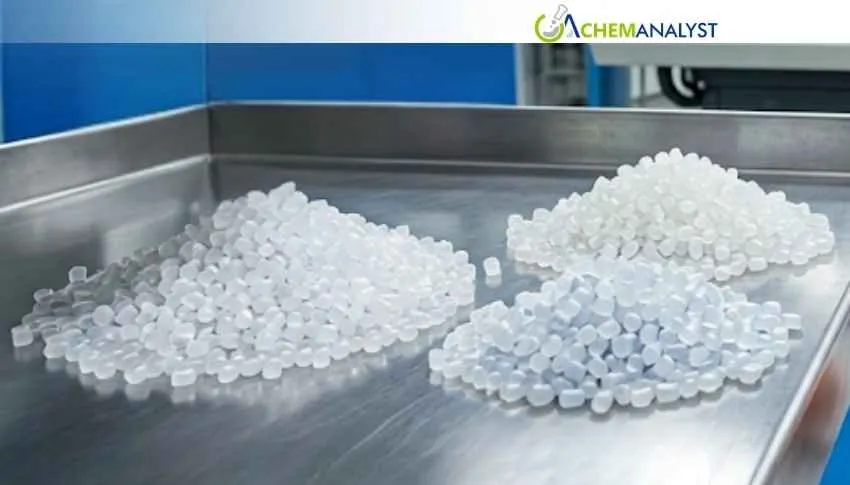
Thermoplastic Elastomer (TPE) prices in the United States advanced 3.78% during the week ending May 22, 2026, in a remarkable market divergence — rising sharply despite ethylene feedstock costs declining 8.0% and butadiene falling 4.6% during the week — as the sustained collapse of Gulf-origin TPE competitive imports, peak US automotive and EV manufacturing procurement, and the structural supply void left by the prolonged Middle East war overwhelmed the moderating feedstock cost dynamics that would ordinarily have restrained price appreciation.
The key driver sustaining the extraordinary demand-pull price appreciation despite declining feedstock costs was the continued collapse of Middle Eastern TPE production and export availability. The Strait of Hormuz stalemate — now entering its third consecutive month — has effectively eliminated SABIC, KRATON Gulf, and other Gulf Coast TPE producers from global export competition. In 2026, the global thermoplastic elastomer market is estimated at USD 32 billion, with demand surging from the electric vehicle sector where TPEs are increasingly used in battery components, wire insulation, seals, and interior parts due to their durability and lightweight properties, sustaining extraordinary structural procurement growth that absorbed the full impact of collapsed Gulf supply and redirected demand toward available US Gulf Coast production.
The US automotive and EV sectors sustained powerful downstream procurement momentum despite the 25% auto parts tariffs that took effect on May 3. North America dominates the overall global TPE market with an estimated 37.2% share in 2026, with automotive acquiring the prominent market share of 33.7% and manufacturers leveraging TPEs for their flexibility, vibration-dampening capabilities, and resistance to heat, chemicals, and weathering. US automotive OEMs — absorbing the new tariff-driven input cost structure — maintained full production schedules through the reference week, sustaining extraordinary TPE procurement for seals, gaskets, interior components, and EV battery system applications simultaneously. The rising styrene feedstock cost of 1.5% during the week — applied to styrene-ethylene-butylene-styrene (SEBS) TPE grades specifically — provided an incremental cost-push complement to the dominant demand-pull dynamic driving the week's 3.78% price appreciation.
Looking ahead, US TPE prices are anticipated to remain elevated and potentially appreciate further through June and into Q3 2026 as the structural supply-demand imbalance sustains pricing power for domestic producers. While the declining ethylene and butadiene feedstock costs will eventually transmit to modest production cost relief for US manufacturers, the structural premium from collapsed Gulf competition is expected to sustain FOB US pricing well above pre-conflict benchmarks through the summer. Any confirmed Hormuz reopening timeline would introduce expectations of eventually restored Gulf TPE competition, applying downward medium-term pressure; however, physical production and export restoration from Gulf facilities is expected to lag Hormuz transit reopening by 3–6 months, sustaining the US pricing premium through at least Q3 2026 and potentially into Q4.








 About ChemAnalyst
Leave a Comment
Comments (0)