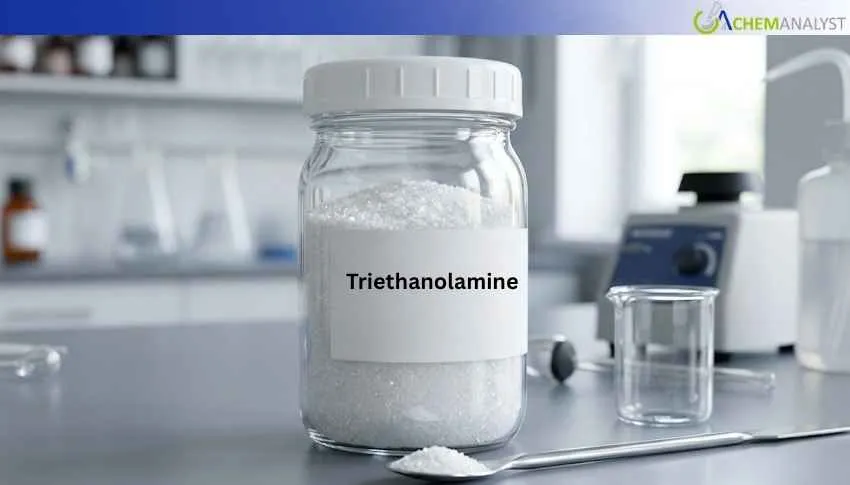
Triethanolamine (TEA) prices in the United States climbed 2.05% in late March 2026, supported by rising upstream feedstock costs, firmer domestic ethanolamine pricing, and sustained export interest as global petrochemical supply chains remained under geopolitical strain. The increase reflects a broader uplift across the U.S. chemical value chain, where producers have been steadily revising offers higher in response to cost-push inflation and improved overseas arbitrage opportunities.
The primary catalyst behind the rise was the sharp escalation in ethylene oxide and ammonia-linked production economics, both critical inputs for TEA manufacturing. U.S. ethylene oxide prices had already surged earlier in March on tighter merchant availability and stronger downstream demand, creating a direct cost-pass-through effect into ethanolamines and derivative amines. With Gulf Coast producers operating at disciplined rates and prioritizing margin optimization, TEA suppliers found stronger justification for late-month upward revisions.
A major macro driver remained the Middle East conflict and disruption to petrochemical flows through the Strait of Hormuz, which sharply tightened global availability of multiple chemical intermediates. Although the U.S. remains structurally advantaged due to natural-gas-based feedstocks, domestic producers benefited from the loss of overseas competition and stronger export nominations into Latin America and Europe. This export pull reduced spot flexibility in the domestic market, particularly for industrial-grade TEA used in surfactants, cement grinding aids, metalworking fluids, and gas treatment chemicals.
Market participants also pointed to higher logistics and packaging costs, especially for drum and isotank movements from Texas hubs, which further inflated delivered replacement values. Buyers in detergents, personal care intermediates, and construction chemicals accelerated essential restocking toward the month-end, anticipating additional April increases from major U.S. TEA suppliers. This precautionary procurement behavior strengthened transactional momentum and supported the 2.05% rise.
From a sentiment perspective, the TEA market remained firm-to-bullish, with sellers maintaining tight control over spot allocations. The combination of upstream ethylene oxide inflation, resilient downstream demand, and geopolitical risk premiums embedded across global amines trade suggests that U.S. TEA prices may remain elevated into early April unless feedstock volatility eases materially.
Overall, the late-March TEA increase underscores how U.S. feedstock resilience, export competitiveness, and global supply uncertainty are combining to strengthen the domestic Triethanolamine market, positioning suppliers for continued margin gains in the near term.







Leave a Comment
Comments (0)