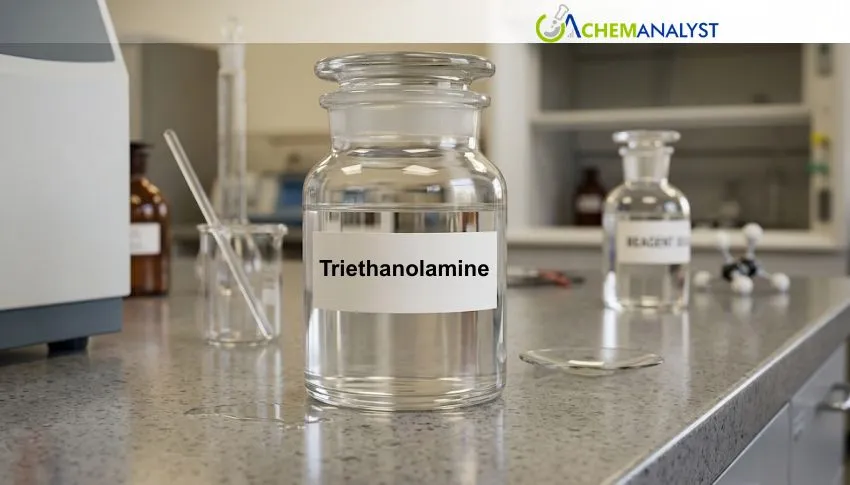
US triethanolamine prices rose 2.22% during the week of July 3, 2026, as a combination of limited product availability, a modest increase in feedstock ethylene oxide costs, and resilient downstream demand from personal care and industrial sectors converged to push the market higher, even as the broader US construction sector continued to signal subdued activity.
The primary driver of the week's price increase was constrained supply availability in the US domestic triethanolamine market. With import flows from key producing regions remaining measured and domestic production at US Gulf Coast facilities insufficient to fully satisfy near-term buyer requirements, the tightened prompt supply balance gave sellers sufficient leverage to raise offer levels and push through the week's gain. Triethanolamine is synthesized from ethylene oxide and ammonia via an ethoxylation reaction, meaning its production economics are directly sensitive to movements in both feedstocks. Ethylene oxide costs increased 1.2% over the week, modestly elevating the production cost floor for triethanolamine manufacturers and reinforcing the rationale for higher offer levels, while ammonia prices remained broadly stable, providing no offsetting cost relief.
On the demand side, the US triethanolamine market draws consistent procurement support from personal care formulators — where the product is widely used as a pH adjuster and emulsifier in cosmetics and skin care — as well as from cement grinding aid and metalworking fluid applications. This relatively diversified demand base for triethanolamine provided a reliable floor for purchasing activity during the week. US retail sales advanced 0.9% in May 2026, nearly doubling the 0.5% forecast, with control purchases — which strip out autos, gasoline, building materials, and food services — rising 0.7%, the fifth consecutive increase. The resilience of consumer spending, particularly in health and personal care store categories, signalled continued downstream product demand that sustained triethanolamine procurement from formulators serving the retail market.
However, the construction segment — a key end-use channel for triethanolamine in cement and concrete applications — continued to present a headwind. The Housing Market activity dropped two points to 35 in June 2026, marking the 14th consecutive month the index remained below 40, the longest such stretch since the 2011-2012 foreclosure crisis, as rising material costs, elevated mortgage rates, and ongoing affordability challenges continued to strain the housing market. 35% of builders reported cutting prices in June, up from 32% in May, with the average price reduction at 6%, while 62% of builders continued offering sales incentives to buyers. This persistent weakness in residential construction limited the scope for a broader demand-driven price rally in triethanolamine, confining the week's increase predominantly to supply-side dynamics.
Looking ahead, the near-term outlook for US triethanolamine prices is expected to remain constructive, with supply tightness likely to persist as the primary supportive factor. Any meaningful price correction would require either a significant improvement in import availability or a notable softening in personal care and industrial sector procurement. The trajectory of ethylene oxide costs will remain a key variable to monitor, as any further increase in the dominant feedstock would add upward cost pressure and reinforce the current upward price bias in the US triethanolamine market.







 About ChemAnalyst
Leave a Comment
Comments (0)