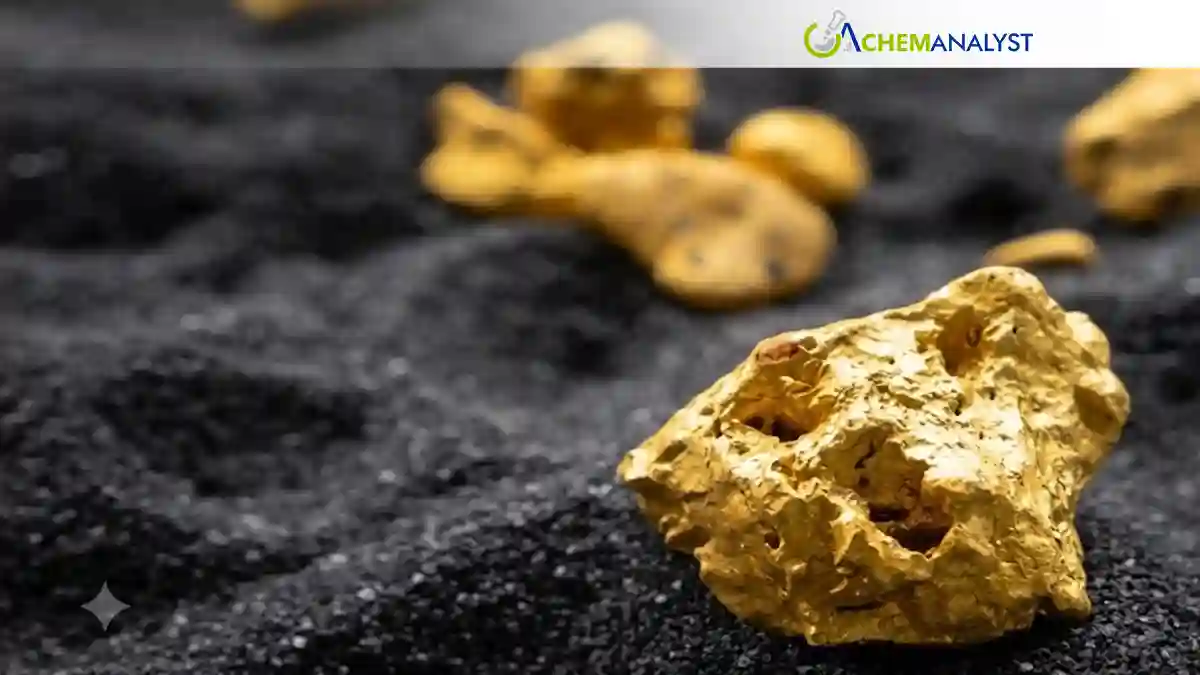
The Goschen Rare Earths and Mineral Sands Project, VHM Limited's flagship development in north-west Victoria, Australia, is advancing toward construction and production, underscored by significant regulatory approvals and a recent strategic partnership. The project is poised to become a key supplier of critical minerals essential for modern technologies.
The Goschen Project encompasses substantial resources, including 413,107 tonnes of Total Rare Earth Oxide (TREO) and a world-class mineral sands resource of 629 million tonnes. This resource base includes 199 million tonnes of Proved and Probable Ore Reserve. The project aims to produce rare earth elements, zircon, and titanium minerals, all designated as critical minerals by Australia and the United States. These materials are crucial for clean energy systems, electric vehicles, advanced defense applications, and digital technologies.
VHM Limited has systematically secured necessary regulatory approvals. The company received a retention license in January 2020. The Environment Effects Statement (EES) process concluded with a favorable assessment from the Victorian Minister for Planning in December 2024. Subsequently, the Federal Government granted approval under the Commonwealth Environment Protection and Biodiversity Conservation Act 1999 (EPBC) on September 18, 2025.
A significant milestone was the granting of a mining licence (MIN007256) in April 2025, permitting development across 1,534 hectares for a 20-year period. Following this, the Cultural Heritage Management Plan (CHMP) received approval in October 2025. Resources Victoria approved the project's work plan on November 28, 2025, clearing the way for construction activities. The VHM board formally approved the project's development on March 23, 2026.
The Goschen Project plans to mine and process up to 5 million tonnes of mineral sands annually over its 20-year lifespan. Initial phases will focus on producing zircon-titania concentrate and rare earth mineral concentrate (REMC). Future stages include a hydrometallurgical circuit to convert REMC into mixed rare earth carbonate (MREC) and a mineral separation plant for further refinement of concentrates. Products will move by road to the Ultima intermodal terminal and then by rail to the Port of Melbourne for export. Water will be supplied from Kangaroo Lake through a 38-kilometer pipeline.
The Goschen Project holds substantial economic and geopolitical significance. Its strategic location in a Tier 1 mining jurisdiction offers strong infrastructure and a skilled regional workforce. The project's progression has positively impacted investor confidence, with VHM Ltd shares gaining 36.84% over the past year due to increasing market interest in critical mineral developers.
A major development occurred on July 2, 2026, when VHM entered a strategic partnership with Iluka Resources. This partnership secures a long-term offtake agreement for rare earths concentrate and provides cornerstone capital, establishing an integrated Australian rare earths supply chain. This move aligns with and strengthens the Australia-US Critical Minerals Strategy, bolstering global supply chain resilience for essential advanced technologies. The estimated capital cost for Phase 1 is A$376 million.
Impact on Chemical Commodity Prices
The Goschen Project's advancement is expected to have a moderately bearish to stable impact on prices of several mineral-based chemical commodities tracked by ChemAnalyst over the medium to long term. Increased production of zircon is likely to improve feedstock availability for ceramic glazes, refractory materials, foundry applications, and zirconium chemicals, easing supply constraints and limiting price volatility. Greater output of titanium-bearing minerals such as rutile and ilmenite could strengthen raw material availability for Titanium Dioxide (TiO2) production, potentially stabilizing TiO2 pigment prices if downstream demand remains balanced. Although rare earth elements are not traditional bulk chemical commodities, improved supplies of rare earth concentrates and mixed rare earth carbonate may reduce pricing pressure across magnet and catalyst value chains. However, since commercial production is still under development, any immediate price impact will be limited. The project primarily strengthens long-term supply security, supporting more stable pricing for critical mineral-derived chemicals over the coming years.








 About ChemAnalyst
Leave a Comment
Comments (0)