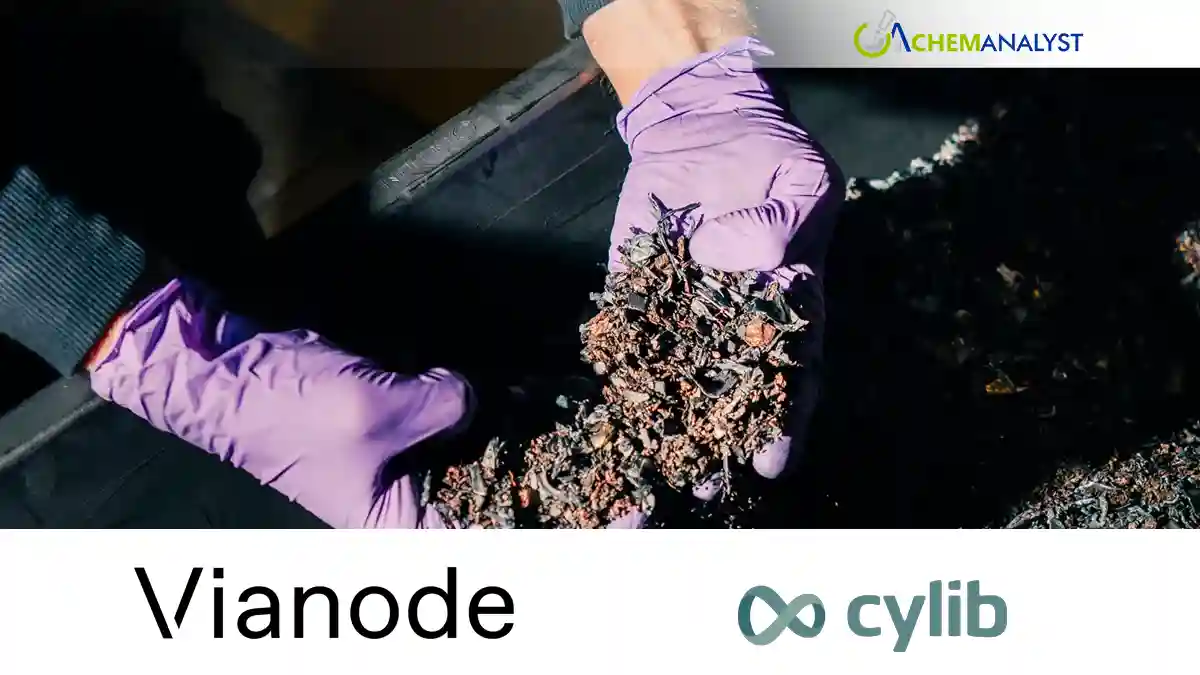
Advanced battery materials producer Vianode and battery recycling specialist cylib have entered into a strategic partnership aimed at accelerating the development of a circular battery materials ecosystem in Europe. The two companies recently signed a memorandum of understanding (MoU) to explore the integration of recycled graphite into next-generation battery anode materials, marking a significant step toward reducing dependence on virgin raw materials and enhancing sustainability across the battery value chain.
The collaboration focuses on combining cylib’s expertise in battery recycling and graphite recovery with Vianode’s advanced anode material development capabilities. Under the agreement, the companies will assess the potential use of graphite concentrate recovered through cylib’s proprietary OLiC (Optimized Lithium and Graphite Recovery) technology in the production of Vianode’s future anode materials. The initiative seeks to create a closed-loop system for battery graphite, ensuring valuable materials recovered from end-of-life batteries can be reintroduced into new battery production.
As part of the partnership, cylib will be responsible for recovering and producing high-quality graphite concentrate from spent battery materials. The company will also work on establishing a reliable supply chain capable of delivering recycled graphite that meets the stringent purity and quality standards required for advanced battery applications. Vianode, meanwhile, will focus on incorporating this recycled graphite into anode formulations and validating its performance through laboratory testing and pilot-scale trials. These evaluations will help determine the suitability of recycled graphite for commercial battery production while maintaining high performance standards demanded by electric vehicle and battery manufacturers.
The companies believe that strengthening the circular use of battery materials is critical to building a more sustainable and resilient battery industry. By recovering graphite from used batteries and reintegrating it into new products, the collaboration aims to reduce environmental impacts, lower carbon emissions, and improve Europe’s material security. The effort also aligns with broader European Union objectives to establish a low-carbon, self-sufficient battery supply chain that is less dependent on imported raw materials.
Vianode Chief Executive Officer Burkhard Straube emphasized the importance of circularity in the battery sector, stating that recovering and reusing graphite is essential for creating a truly sustainable battery ecosystem. He noted that the partnership with cylib would help reduce reliance on newly mined resources while supporting Europe’s transition toward a more environmentally responsible battery industry.
Similarly, cylib Co-CEO and Co-Founder Dr. Lilian Schwich highlighted the complementary strengths of the two companies. According to her, the partnership demonstrates that circular economy solutions can deliver both sustainability and competitiveness. By combining advanced anode technology with proven recycling capabilities, the companies aim to create a strong value proposition for the European battery market.
The collaboration could eventually lead to a commercial supply agreement, subject to successful testing and evaluation. If the results prove favorable, both parties intend to negotiate long-term arrangements for the supply of recycled graphite concentrate under commercially viable and sustainable conditions.
Vianode’s synthetic graphite already offers a substantial environmental advantage, generating approximately 90% lower carbon dioxide emissions than conventional graphite materials used today. Integrating recycled graphite into its products represents another major milestone in the company’s sustainability strategy, supporting its ambitious target of reducing emissions to just 1.0 kilogram of CO2 equivalent per kilogram of graphite by 2030.
Meanwhile, cylib’s water-based OLiC recycling technology delivers recovery rates exceeding 90% for key battery materials, including lithium, graphite, nickel, cobalt, and manganese. The process also reduces carbon emissions by roughly 80% compared with primary resource extraction and is designed to handle multiple battery chemistries at industrial scale, enabling efficient and sustainable material recovery for future battery production.








 About ChemAnalyst
Leave a Comment
Comments (0)