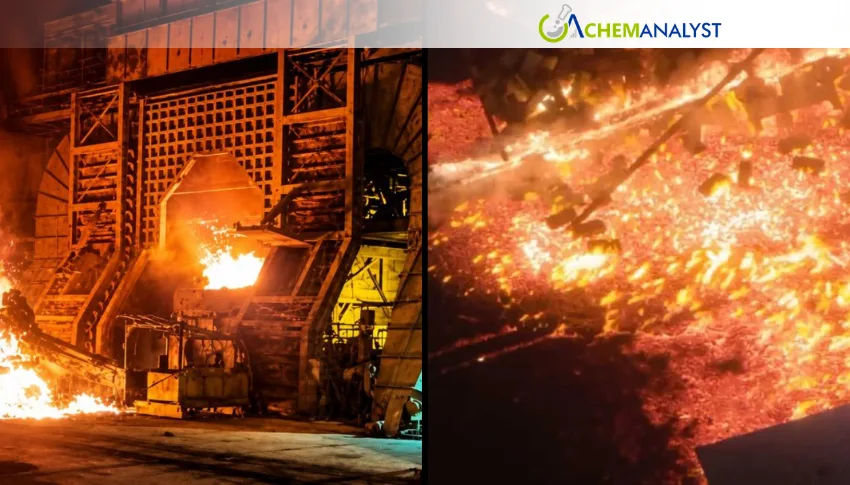
A tragic industrial accident at the Visakhapatnam Steel Plant (VSP), operated by Rashtriya Ispat Nigam Limited (RINL), claimed the lives of nine workers and left eleven others injured, several of them critically, on Monday evening. The devastating incident occurred in the Anakapalle district of Andhra Pradesh and has raised serious concerns regarding industrial safety practices in one of India’s major steel manufacturing facilities.
According to preliminary reports, the accident took place in Machine-2 of the Continuous Casting Department (CCD) within Steel Melting Shop-1 (SMS-1). The disaster unfolded during a lifting operation involving a large ladle carrying molten steel at an extremely high temperature of nearly 1,600 degrees Celsius. During the operation, a sudden explosion reportedly occurred, causing the ladle or container to rupture. The resulting breach led to a massive outpouring of molten metal, which rapidly spread across the surrounding work area.
Workers positioned near the site had little opportunity to escape as the intensely hot molten steel engulfed the vicinity. The heat generated by the spill was so extreme that the bodies of the deceased workers were rendered unrecognisable. The explosion and subsequent fire created panic throughout the plant, forcing employees to flee the area in search of safety. Emergency sirens were activated immediately, triggering evacuation procedures and alerting rescue personnel.
Emergency response teams, including firefighters and medical staff, were quickly deployed to the scene. Firefighters worked tirelessly to contain and extinguish the blaze, while ambulances transported injured workers to nearby hospitals for urgent treatment. Rescue and recovery operations continued for several hours as officials assessed the extent of the damage and searched for any additional victims.
Union Minister of State for Heavy Industries Bhupathiraju Srinivas Varma described the incident as highly unfortunate and expressed condolences to the families affected by the tragedy. He stated that preliminary information suggested the accident may have been caused by an explosion while molten steel was being transported in a ladle. However, he emphasized that the precise cause of the incident could only be determined after a comprehensive technical investigation. He further noted that Union Steel Minister D. Kumaraswamy had also sought detailed information regarding the accident and was closely monitoring developments.
The tragedy has occurred at a critical time for RINL, which has been working to strengthen operations under a revival plan approved by the Government of India. The central government sanctioned financial support amounting to ?11,440 crore last year to assist in revitalising the company and improving its operational performance after concerns regarding its long-term viability.
Understanding the steelmaking process at VSP helps explain the circumstances surrounding the accident. Production begins with molten iron being extracted from blast furnaces at temperatures approaching 1,600 degrees Celsius. This liquid iron is transported using specially designed transfer ladles to the Steel Melting Shop, where it undergoes refining in LD Converters, also known as Basic Oxygen Furnaces. Massive Electric Overhead Travelling (EOT) cranes are used to lift and position hot metal ladles, each capable of holding approximately 150 tonnes of molten material.
During refining, oxygen is injected into the molten iron along with fluxing agents such as lime. This process removes impurities including carbon, silicon, and phosphorus through highly exothermic chemical reactions. The resulting liquid steel is then transferred into steel ladles for further treatment in ladle furnaces or vacuum degassing units to achieve the desired chemical composition and quality standards.
The final stage involves transferring the refined liquid steel to Continuous Casting Machines, where it is transformed into semi-finished products such as billets, blooms, and slabs. The accident reportedly occurred during one of these critical handling and transportation stages, highlighting the inherent risks associated with managing large quantities of superheated molten metal. As investigations proceed, industry experts and authorities are expected to examine equipment integrity, operational procedures, maintenance practices, and safety protocols to determine the root cause and prevent similar tragedies in the future.








 About ChemAnalyst
Leave a Comment
Comments (0)