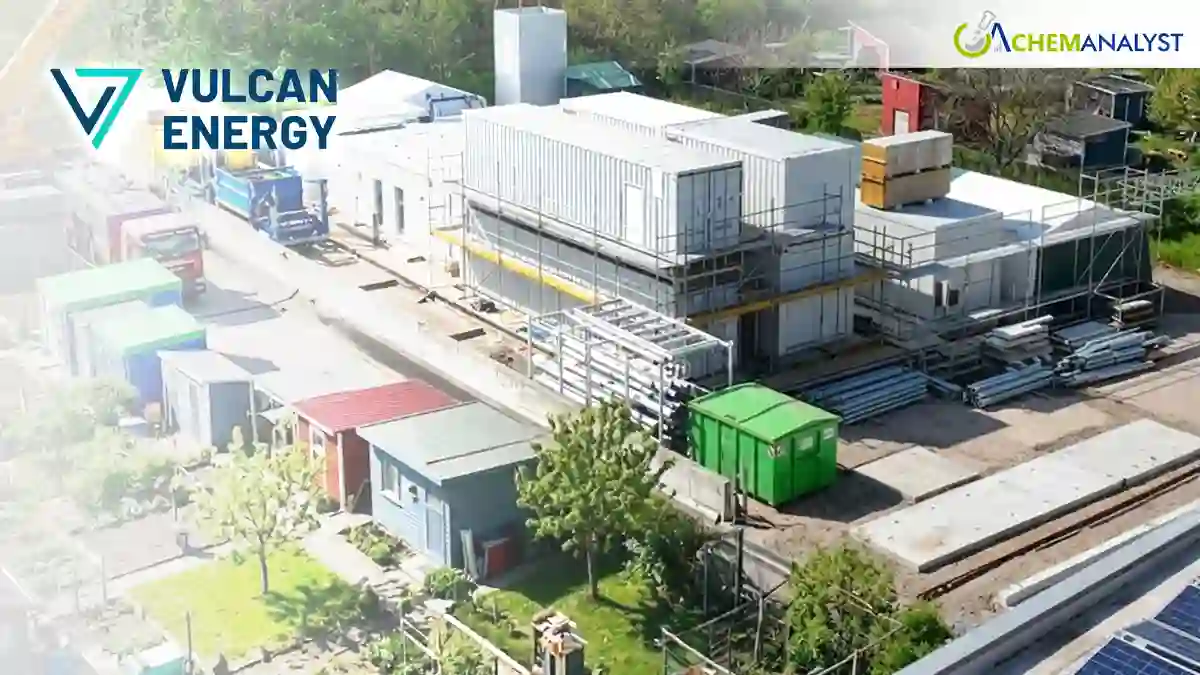
Vulcan Energy has officially commenced major construction activities for its Lionheart lithium chemicals facility, marking an important milestone in the company’s strategy to establish a domestic and sustainable lithium supply chain in Europe. The central lithium chemicals plant is being developed at Infraserv Industrial Park Höchst in Frankfurt, one of Europe’s largest and most significant chemical and energy hubs. This development represents a major step forward for Germany’s ambitions to strengthen its battery materials industry and reduce dependence on imported critical raw materials.
The start of construction was celebrated with a groundbreaking ceremony attended by several prominent political, financial, and industrial leaders. Among the key attendees were Boris Rhein, Minister-President of the German state of Hesse, and Mike Josef, Lord Mayor of Frankfurt am Main. Their presence, along with other major stakeholders, highlighted the strong institutional and governmental support behind the project. It also emphasized the strategic importance of domestic lithium production for Germany and the broader European battery value chain, especially as demand for electric vehicles continues to rise rapidly.
The downstream lithium chemicals plant will play a crucial role in converting lithium chloride into lithium hydroxide monohydrate (LHM), a key battery-grade material used in electric vehicle batteries. This conversion will be carried out using an electrolysis-based process. The Lionheart project, which represents Vulcan’s first production phase, is designed to achieve an annual production capacity of 24,000 tonnes of LHM. This output is expected to be sufficient to supply lithium for approximately 500,000 electric vehicle batteries every year.
In addition to lithium production, the project will generate substantial renewable energy co-products, including around 275 GWh of renewable electricity and approximately 560 GWh of heat annually for local consumers. These outputs are expected to support regional energy needs while reinforcing the sustainability profile of the operation over its projected 30-year lifespan.
Vulcan Energy’s Managing Director and CEO, Cris Moreno, expressed enthusiasm over the project’s progress, stating that the company is pleased to move from preparatory works into full-scale construction of its commercial lithium chemical plant. He noted that this milestone follows a similar groundbreaking event held at the company’s upstream lithium extraction facility in Landau the previous year. According to him, this progress demonstrates Vulcan’s commitment to staying on schedule for construction and achieving its target of beginning commercial production by 2028.
The company had previously secured a €2.2 billion ($3.9 billion) funding package in December 2025, which enabled it to make a positive Final Investment Decision for the Lionheart project. Situated in the Upper Rhine Valley Brine Field between Germany and France, Lionheart is expected to become the first of several planned production phases for Vulcan. It is considered a flagship project for Europe’s long-term energy security and resilience in securing critical raw materials.
At the core of the project is Vulcan’s innovative adsorption-based direct lithium extraction (DLE) technology. Lithium will be extracted from naturally heated, low-impurity geothermal brines located deep underground. These geothermal brines not only serve as the lithium source but also provide renewable heat and energy that power the extraction and conversion processes. This integrated model allows Vulcan to produce battery-quality lithium materials while simultaneously generating renewable energy for operations and surplus energy for the local market.
The company’s two-step production system begins with lithium extraction at the source, followed by downstream electrolysis processing at the central lithium conversion facility. With all required regulatory approvals for construction already secured, the groundbreaking marks the formal shift from early preparation to full-scale development across both the upstream and downstream segments of the Lionheart project.






Leave a Comment
Comments (0)