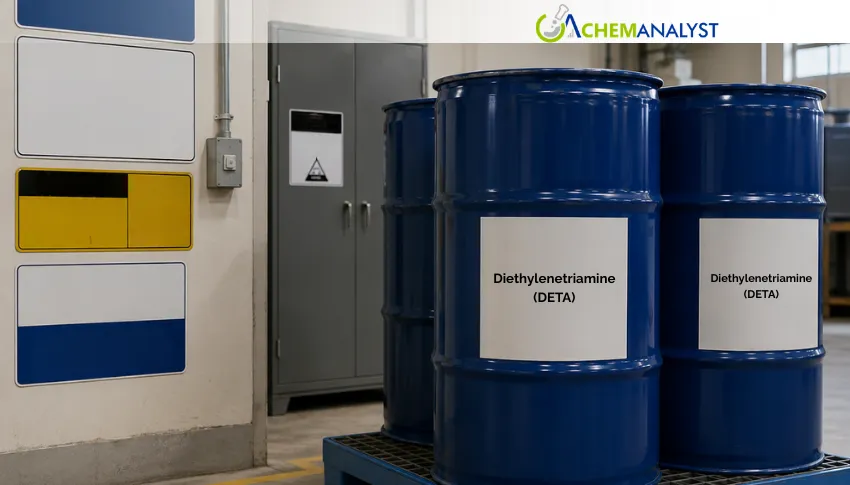
Diethylenetriamine (DETA) prices in the United States declined 2.8% in May 2026, even as key feedstock costs moved higher, with ammonia rising 5.2% and ethylene oxide increasing 1.7% during the month. The counterintuitive price decline amid rising input costs underscores the overwhelming influence of weak demand-side fundamentals and persistent oversupply conditions that dominated the US DETA market through the month.
DETA is produced primarily through the ammonolysis of ethylene dichloride or via the reductive amination of monoethanolamine, with ammonia and ethylene oxide representing critical cost inputs depending on the production route employed. The 5.2% surge in ammonia costs and 1.7% increase in ethylene oxide reflected tightening upstream supply dynamics across the US Gulf Coast chemical complex. However, despite a notably higher feedstock cost burden, domestic producers lacked the pricing power to pass through these increases to a downstream market characterized by abundant inventory and cautious buying behaviour. Existing stockpiles built during earlier months of softer demand limited buyer urgency, while competitive pressure from low-cost Asian and Middle Eastern cargoes continued to intensify, weakening US export competitiveness and effectively capping any upward pricing momentum for DETA.
The demand environment for DETA in May remained broadly subdued across its key end-use applications. As a critical curing agent and hardener for epoxy resin systems, DETA demand is closely linked to construction, automotive, wind energy, and industrial coatings activity. While the US epoxy resin market is positioned for steady long-term growth, with the domestic market estimated to reach USD 1.23 billion in 2026 driven by infrastructure modernisation, automotive lightweighting, and electronics applications, near-term procurement activity remained cautious through May. The sharp 15.4% month-on-month decline in US housing starts to a seasonally adjusted annual rate of 1.177 million in May 2026, the lowest since May 2020, weighed materially on DETA demand from construction-grade adhesives, protective coatings, and epoxy flooring systems, which collectively account for nearly 38% of domestic epoxy consumption.
Demand from water treatment applications, where DETA-derived chelating agents are used for heavy metal sequestration and industrial effluent management, offered some support, with tightening effluent standards across US industrial zones providing a degree of structural demand resilience. Similarly, the agricultural and fabric softener segments contributed incremental volumes, though neither was sufficient to offset the broader demand softness weighing on the market. With ammonia and ethylene oxide costs rising but producers unable to pass through increases, US DETA manufacturers faced a meaningful margin squeeze in May, reinforcing the challenging near-term outlook for the market until downstream construction and industrial activity recovers meaningfully.







Leave a Comment
Comments (0)