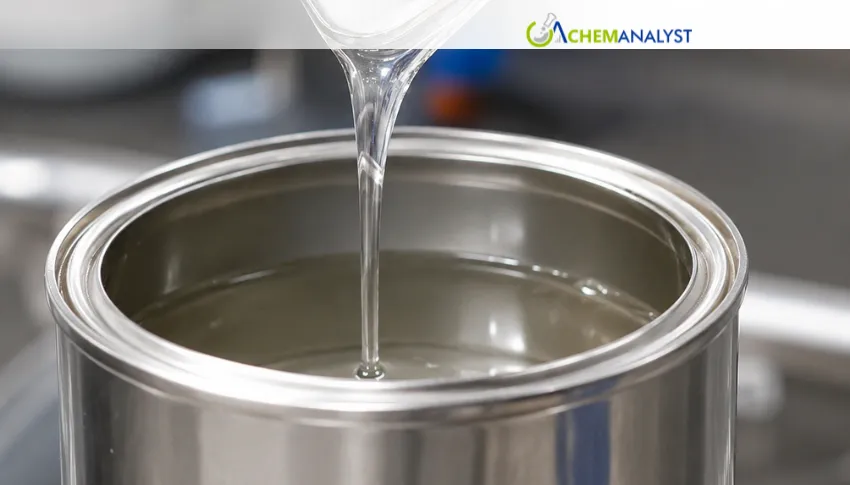
U.S. PU Resin prices declined 2.03% in late August 2026 as weak summer buying, comfortable inventories, and lower upstream cost support continued to pressure the market. The decline reflected limited urgency among buyers, while sellers faced reduced leverage amid sufficient material availability. The market also remained influenced by uneven downstream conditions, with automotive, furniture, bedding, construction, coatings, and adhesives applications showing varying degrees of weakness.
On the supply side, PU Resin availability remained comfortable across the U.S. market as Gulf Coast production normalized after Covestro AG’s force majeure in July. The disruption temporarily tightened regional availability, but a swift mid-July restart restored throughput and prevented a prolonged supply deficit. Feedstock economics also weakened, with MDI prices declining 3.8% while TDI remained broadly stable, reducing manufacturing costs and eroding cost-side support for PU Resin offers. Gulf Coast warehouse inventories were reported to be ample, allowing producers and distributors to meet spot requirements without significant replenishment pressure. Consequently, PU Resin sellers increasingly competed on price to move available volumes, while stable logistics and sufficient stocks limited the possibility of immediate supply-driven price increases.
Demand for PU Resin remained unimpressive in the final week of August, with the automotive sector providing limited momentum for flexible-foam consumption. The market entered August on a weaker footing after July EV sales plunged 40.5% following the expiration of the federal tax credit, while the 52.2% increase in hybrid sales was insufficient to fully offset the decline in EV-related demand. This softness continued to weigh on August purchasing expectations, with U.S. vehicle sales forecast at 1.35 million units, down 8.5% year on year, while the SAAR was expected to remain around 16.3 million units. Beyond automotive applications, coatings and adhesives consumption was also subdued, reflecting weaker construction activity, as July construction spending declined, and federal construction expenditure fell 3.5%. Against this backdrop, buyers largely prioritized existing inventories and limited new PU Resin purchases to immediate production requirements.
Looking ahead, PU Resin prices are expected to recover gradually in September as downstream manufacturers return from the summer slowdown and begin rebuilding inventories for fourth-quarter production schedules. Automotive component manufacturers, furniture producers, appliance suppliers, and industrial users may increase procurement as production planning strengthens, improving PU Resin seller negotiating power. However, the recovery is unlikely to be uniform because construction activity remains constrained by elevated borrowing costs. Hurricane-season risks represent an additional variable through September and into October, as potential Gulf Coast production interruptions, port restrictions, or transportation delays could tighten regional availability and encourage precautionary purchasing. If disruptions remain limited, improving Q4 procurement should provide only moderate upward support; significant hurricane-related outages, however, could amplify price increases by restricting spot PU Resin availability and strengthening producer leverage.








 About ChemAnalyst
Leave a Comment
Comments (0)