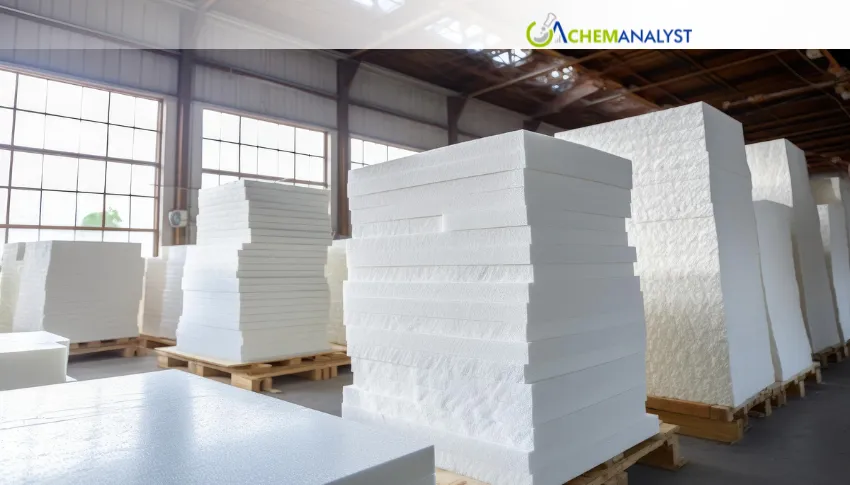
Expanded polystyrene (EPS) supply conditions remained comparatively healthy during August. Domestic availability improved as operations at the INEOS NOVA Joliet facility normalized following the earlier force majeure, while imports from Mexico and South Korea supplemented local material. The improved supply position prevented buyers from becoming overly dependent on domestic producers and reduced the urgency for inventory accumulation. Consequently, distributors generally concentrated on short-term requirements and maintained relatively lean inventories. This availability allowed buyers to resist immediate price increases of EPS even as producers faced higher styrene-related costs.
Demand fundamentals were mixed. Construction and insulation applications continued to provide the principal support for EPS consumption, but the residential sector remained constrained by affordability pressures. In recent, NAHB/Wells Fargo Housing Market Index unexpectedly increased to 35 from 34 in July. However, the reading remained below 40 for the 16th consecutive month, showing that the improvement represented only a modest stabilization rather than a meaningful recovery in builder confidence.
The housing data also points to limited near-term upside for insulation-grade EPS. July US construction spending subsequently fell 0.5% month-on-month to 2.158 trillion USD, its lowest level since October 2023, while residential construction spending declined 1.3%. Single-family construction spending fell 3.2% from June and 6.5% year-on-year. High mortgage rates remained a major constraint, with the average 30-year fixed mortgage rate around 6.66%. These conditions suggest that the slight improvement in builder sentiment was not yet translating into strong construction activity or aggressive EPS restocking.
The packaging segment provided an additional demand base. EPS continued to benefit from protective packaging requirements for appliances, electronics and other durable goods supported by e-commerce. However, foodservice packaging remained under pressure from restrictions on expanded polystyrene food containers in several US jurisdictions. As a result, demand was sufficiently stable to prevent a deeper price correction but not strong enough to absorb the additional cost pressure rapidly.
The late-August price movement therefore demonstrated a clear disconnect between feedstock costs and downstream resin pricing. Higher benzene and styrene values increased producers' replacement costs, but comfortable EPS availability and limited spot buying prevented an immediate pass-through. Producers consequently faced margin compression, while distributors retained negotiating leverage. The wider US manufacturing sector also remained resilient but cautious in August, with the manufacturing index at 54.6, although new orders softened and input prices remained elevated.
Looking toward September, the US EPS market is expected to shift toward a moderately firmer price environment. Producers are likely to seek price increases to recover higher styrene and benzene costs and rebuild margins. However, the upside should remain measured because housing activity remains weak, builder confidence is still subdued, and EPS supply is comfortable. Import availability from Mexico and South Korea will also limit the potential for sharp domestic price increases. Overall, September is likely to feature selective producer-led price increases rather than a broad-based rally, with the market balancing rising production costs against cautious downstream purchasing and weak residential construction fundamentals.








 About ChemAnalyst
Leave a Comment
Comments (0)