Global Bioethanol Market is projected to grow from USD 64589 million in 2025 to USD 170126 million by 2036, registering a CAGR of 9.26% during the forecast period. Bioethanol, a versatile renewable biofuel and crucial industrial chemical, is synthesized primarily through the biochemical fermentation of sugars and starches derived from raw materials such as corn, sugarcane, and advanced cellulosic feedstocks, mirroring the molecular structure and functional applications of synthetic ethanol but replacing the energy-intensive catalytic hydration of petrochemical-derived ethylene with biologically driven enzymatic hydrolysis and yeast fermentation pathways. In its broad application landscape, bioethanol exhibits significant competitive advantages over traditional fossil-based alternatives, functioning as a high-octane oxygenate that substantially enhances the thermal efficiency and anti-knock index of blended automotive fuels while drastically lowering tailpipe greenhouse gas emissions. Beyond primary energy applications, its high chemical polarity, low toxicity, and exceptional volatility offer distinct processing benefits and formulation stability in pharmaceutical, cosmetics, and specialty chemical manufacturing, largely outperforming heavier and more hazardous hydrocarbon solvent alternatives. The rapid expansion of this sector is fundamentally underpinned by stringent environmental mandates, robust government fuel-blending targets, and volatile crude oil economics that accelerate the global transition toward renewable energy architectures. Regional dynamics exert a pivotal influence on this growth trajectory, with North American and Latin American markets dictating global supply capacities through their immense agricultural yields and mature refining infrastructure, while accelerating industrialization, aggressive decarbonization initiatives, and proactive regulatory frameworks across the Asia-Pacific region are catalyzing unprecedented domestic biofuel integration and large-scale sustainable chemical investments.
Bioethanol Applications in Packaging and Construction Industries
Bioethanol finds its dominant application within the automotive transportation sector as a crucial fuel-blending oxygenate, fundamentally chosen for its remarkably high octane rating and intrinsic oxygen content, which together optimize engine efficiency, prevent engine knocking, and facilitate a cleaner, more complete combustion process. The demand for this versatile chemical is aggressively propelled by a potent combination of its technical superiority in enhancing vehicle performance and an escalating consumer preference for sustainable, bio-based solutions that significantly reduce tailpipe particulate emissions and overall carbon footprints without compromising industrial efficacy. Furthermore, its excellent solvent properties, low toxicity, and high purity are accelerating its integration as a foundational base ingredient in cosmetics, personal care, and specialized industrial chemical formulations. As industrial end-users continuously prioritize renewable feedstocks to meet consumer-driven environmental preferences and shift away from fossil-derived alternatives, the overall market trajectory points toward robust expansion, characterized by increasing market penetration into emerging, high-value sectors such as sustainable aviation fuels and advanced green biochemical synthesis, ensuring sustained, growing demand across diverse regional economic landscapes.
Global Bioethanol Market Segmentation by Resin Type and End-Use Application
The global bioethanol market is primarily segmented by feedstock source—comprising starch-based, sugar-based, and advanced lignocellulosic materials—and by end-use application, which categorizes the chemical into transportation fuel, industrial solvents, pharmaceuticals, personal care, and food and beverage manufacturing. Within this landscape, the transportation fuel segment currently maintains a formidable leading position, largely because of sweeping international regulatory mandates for renewable blending, the chemical's superior cost-effectiveness as an octane enhancer, and its seamless, stable integration into existing internal combustion engine infrastructure. Despite the massive volume driven by traditional road transport, the deployment of bioethanol as a precursor for sustainable aviation fuel and bio-based plastics represents the fastest-growing segment in the industry, fueled by surging demand for specific end-products like alcohol-to-jet synthetic kerosene for commercial airlines and bio-polyethylene utilized in agricultural films and zero-waste packaging. The primary technical driver making bioethanol highly suitable for these high-growth industrial applications is its uniform aliphatic structure and reactive hydroxyl group, which allow the chemical to undergo highly efficient catalytic dehydration into bio-ethylene and advanced oligomerization into complex, high-density drop-in hydrocarbon fuels, thereby unlocking immense economic potential across hard-to-abate manufacturing and aerospace sectors.
North America's Dominant Role in the Global Bioethanol Market
North America currently holds the undisputed leading position in the global bioethanol market, dominating the international geographical landscape as the primary epicenter of large-scale production and consumption. This geographic supremacy is deeply rooted in aggressive legislative frameworks, notably comprehensive carbon mandates such as the Renewable Fuel Standard and regional low-carbon fuel policies that enforce clean-energy integration while providing robust federal subsidies for green infrastructure. Furthermore, this regional leadership is significantly bolstered by a strong shift in market sentiment that overwhelmingly prioritizes sustainable, domestically sourced renewable energy alternatives to mitigate greenhouse gas emissions, alongside unparalleled institutional investments in agricultural supply chain optimization and advanced research and development initiatives targeting next-generation cellulosic extraction efficiencies. Leveraging this formidable foundation of continuous innovation and infrastructural readiness, North America is actively driving the diversification of bioethanol applications, successfully expanding its utility far beyond standard internal combustion blending requirements to pioneer scalable commercial pathways into sustainable aviation fuels and advanced bio-based polymer feedstocks.
Recent Developments and Strategic Initiatives (2025)
The global bioethanol market experienced robust capital expenditure and favorable regulatory advancements from late 2024 through early 2026, driven by strengthened fuel blending mandates and strategic capacity expansions. In the regulatory sphere, the United States Environmental Protection Agency approved petitions in February 2025 from eight Midwestern states to permanently allow the year-round sale of E15 bioethanol blends. Concurrently, the Government of India actively bolstered domestic output by lifting prior restrictions on bioethanol production from sugarcane juice and molasses for the 2025 to 2026 supply year, ensuring sufficient supply for national E20 blending targets. Capitalizing on these policy tailwinds, major regional players actively executed greenfield and brownfield projects. In India, Zuari Envien Bioenergy, a joint venture of Zuari Industries, scheduled the commissioning of its 180 kiloliters per day bioethanol plant in Uttar Pradesh in November 2025. In Southeast Asia, Toyota partnered with state-owned energy company Pertamina in November 2025 to develop a 155 million dollar bioethanol facility in Lampung, Indonesia, securing an annual production capacity of 60,000 kiloliters to support upcoming national E10 regulations. Meanwhile, the European landscape saw critical infrastructure investments, including Corden BioChem securing regulatory approvals in late 2025 to officially resume production at its newly acquired Podari bioethanol facility in Romania by 2026, and Ukraine's OKKO Group utilizing European Bank for Reconstruction and Development financing to advance the construction of a 110 million euro bioethanol plant with an 83,000-ton annual capacity targeted for a third-quarter 2026 launch. Together, these targeted developments reflect a highly resilient market characterized by sustained global investments and process innovation to meet escalating decarbonization demands.
Key Players in the Global Bioethanol Market
Major players in the Global Bioethanol market are Archer Daniels Midland, INPASA Agroindustrial S/A, POET Bioprocessing, Valero Renewable Fuels, Others
Years considered for this report:
Historical Period: 2015-2024
Base Year: 2025
Estimated Year: 2026
Forecast Period: 2026-2036
This report will be delivered through an online digital platform with a one-year subscription, along with quarterly updates.
Objective of the Study:
• To assess the demand-supply scenario of the Bioethanol, covering production, demand, and supply at the global level.
• To analyze and forecast the market size of Bioethanol
• To classify and forecast the Global Bioethanol market based on end-use industries and regional distribution.
• To examine competitive developments in the global Bioethanol market, such as expansions, mergers & acquisitions, and other strategic initiatives.
Research Methodology: How Was the Bioethanol Market Data Collected?
To extract data for the Global Bioethanol market, primary research surveys were conducted with Bioethanol manufacturers, suppliers, distributors, wholesalers, and traders. During the interviews, respondents were also asked about their competitors.Through this approach, ChemAnalyst was able to identify and include manufacturers that could not be captured through secondary research due to its limitations.Moreover, ChemAnalyst analyzed various market segments and projected a positive outlook for the Global Bioethanol market over the coming years.
ChemAnalyst calculated the global demand for Bioethanol by analyzing the volume consumed by end-user industries. The forecast was developed based on the growth rates of these end-use industries. These values were obtained from industry experts and company representatives and were externally validated by analyzing the historical sales data of respective manufacturers to determine the overall market size. Additionally, various secondary sources, such as company websites, association reports, and annual reports, were reviewed by ChemAnalyst.
Key Target Audience for This Report
• Bioethanol manufacturers and other industry stakeholders
• Organizations, forums, and alliances related to Bioethanol distribution
• Government bodies, including regulatory authorities and policymakers
• Market research organizations and consulting firms
The study provides insights into several critical ques tions relevant to industry stakeholders, including Bioethanol manufacturers, customers, and policymakers. It also helps identify high-growth segments over the coming years, thereby supporting stakeholders in making informed investment decisions and facilitating strategic expansion.
Report Scope and Market Segmentation Framework
In this report, the Global Bioethanol market has been segmented into the following categories. In addition, key industry trends have been detailed below:
Attribute
Details
Market size Value in 2025
USD 64589 Million
Market size Value in 2036
USD 170126 Million
Growth Rate
CAGR of 9.26% from 2026 to 2036
Base year
2025
Estimated year
2026
Historical Data
2015 - 2024
Forecast period
2027 - 2036
Quantitative units
Demand in thousand tonnes and CAGR from 2026 to 2036
Report coverage
Industry Market Size,Capacity By Company, Capacity by Location, Operating Efficiency, Production by Company, Demand by End- Use, Demand by Region, Demand by Sales Channel, Demand-Supply Gap, Foreign Trade, Company Share
Segments covered
By End-Use: (Transportation, Pharmaceutical, Alcoholic Beverages, Power Generation, and Others) By Sales Channel: (Direct Sale and Indirect Sale)
Regional scope
North America, Europe, Asia Pacific, Middle East and Africa, and South America.
Market Data & Insights
Table of Content
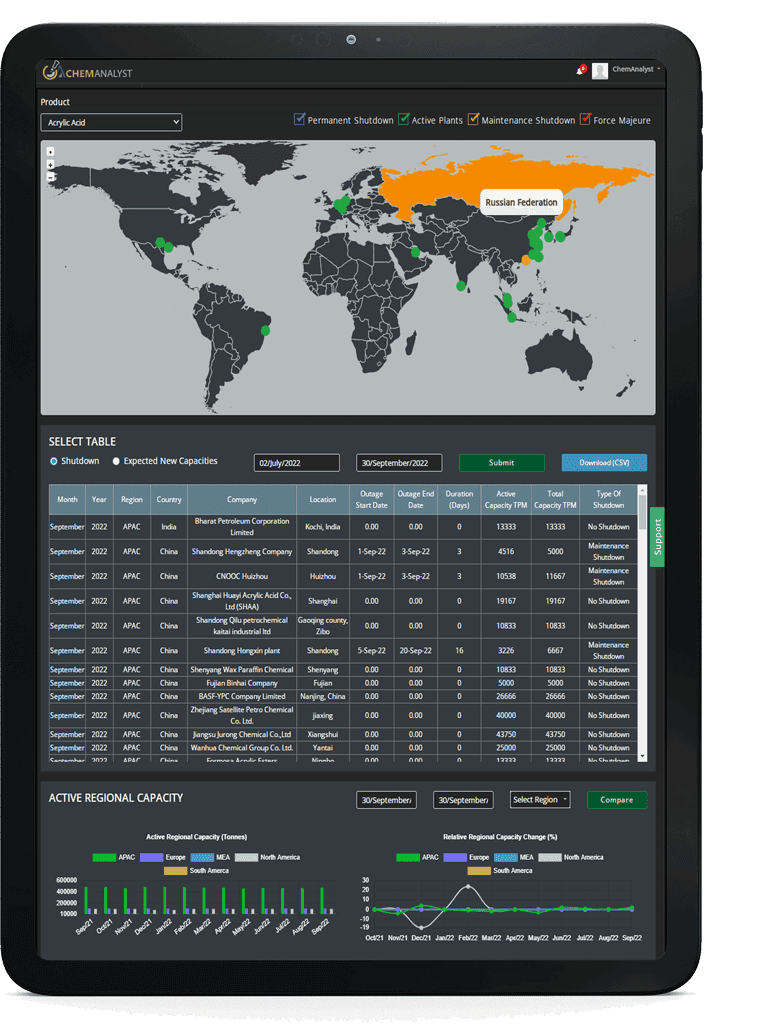
1. Capacity By Company
On our online platform, you can stay up to date with essential manufacturers and their current and future operation capacity on a practically real-time basis for Bioethanol.
2. Capacity By Location
To better understand the regional supply of Bioethanol by analyzing its manufacturers' location-based capacity.
3. Plant Operating Efficiency
To determine what percentage manufacturers are operating their plants or how much capacity is being currently used.
4. Production By Company [Quarterly Update]
Study the historical annual production of Bioethanol by the leading players and forecast how it will grow in the coming years.
5. Demand by End- Use [Quarterly Update]
Discover which end-user industry (Transportation, Pharmaceutical, Alcoholic Beverages, Power Generation, and Others) are creating a market and the forecast for the growth of the Bioethanol market.
6. Demand by Region
Analyzing the change in demand of Bioethanol in different regions, i.e., North America, Europe, Asia Pacific, Middle East and Africa, and South America, that can direct you in mapping the regional demand.
7. Demand by Sales Channel (Direct and Indirect)
Multiple channels are used to sell Bioethanol. Our sales channel will help in analyzing whether distributors and dealers or direct sales make up most of the industry's sales.
8. Demand-Supply Gap
Determine the supply-demand gap to gain information about the trade surplus or deficiency of Bioethanol.
9. Company Share
Figure out what proportion of the market share of Bioethanol is currently held by leading players across the globe.
10. Country-wise Export
Get details about quantity of Bioethanol exported by major countries.
11. Country-wise Import
Get details about quantity of Bioethanol imported by major countries.
12. Industry Market Size
It is an essential metric for market analysis, as it provides insights into the overall size and growth potential of bioethanol market in terms of value and volume.
I am satisfied with overall performance of ChemAnalyst. Weekly updates before the final report were especially helpful and reassuring. Additional requests on the interim and/or final reports were handled in a swift and professional manner
Mr.Shin Dosho
Member - Board of Directors
Osaka Gas Co. Ltd
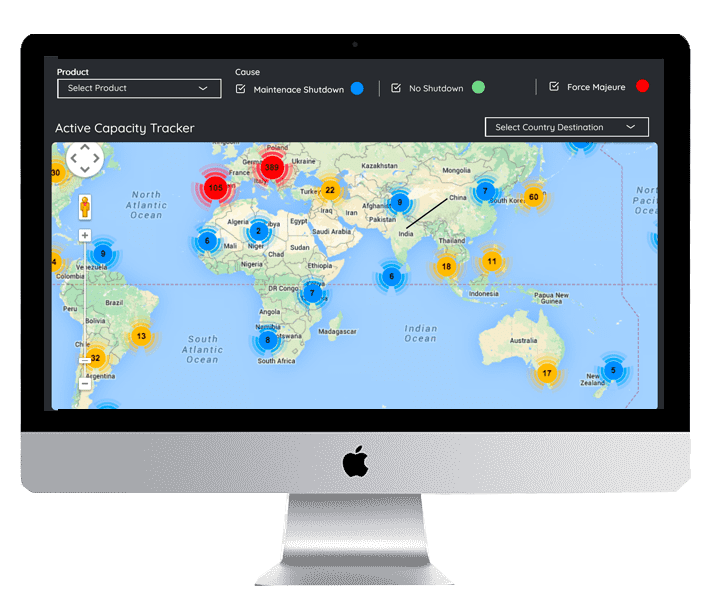
Disruption Tracker
Disruption Tracker reflect the major shutdown on monthly basis which will help you in
tracking the inventory management and smooth functioning of business. Unforeseen shutdowns and disruptions
resulting in a loss of production capacity to impact the bottom line. The capacity tracker provides industries
with a global view of production and consumption capacity loss that reflects the corresponding conversion factors.
It also highlights the immediate impact on supply due to planned and unplanned outages as well as upcoming start-up
of new capacities. Additionally, it emphasizes how each shutdown—whether due to a maintenance turnaround or a case
of force majeure, affects the plant's operating rate for the given duration. Disruption tracker gives a clear insight
into the worldwide outages affecting the commodity of interest. With every shutdown, it also reflects the impact on
supply of the product in the market at a Global level.
The Global Bioethanol Market was valued at USD 64589 million in 2025 and is projected to reach USD 170126 million by 2036, growing at a CAGR of 9.26% during the forecast period.
The report covers market sizing and forecasting (2015–2036), segmentation, regional analysis, competitive landscape, and recent strategic developments. It also offers solutions including Custom Research for tailored business strategies.
Our Solutions
Custom Research
We at ChemAnalyst provide tailor-made solutions to our clients based on their requirements which help them in building and expanding their business by developing customized strategy such as sales strategy, GTM Strategy, product portfolio and new product development. Our dedicated team helps clients in getting the best solution for their requirements. We at ChemAnalyst look forward to serving our clients for long term association.
Techno Economic Feasibility Report (TEFR)
ChemAnalyst provide TEFR reports which include market sizing, plant cost (ISBL and OSBL units), financial modelling, covering all the major financial calculations and ratios including production cost, IRR, major technology, licensing fee (if required), and others fixed and variable costs. TEFR reports will help the client to build greenfield project as well as brownfield expansion for a specific geography. Our Team of experts have delivered multiple TEFR reports which help clients in moving ahead of their business competition by grabbing the opportunity and expanding their business portfolio.
Price Benchmarking
Pricing benchmark report provides real-time data perpetuating current market scenarios, in a world that is changing at a rapid pace, having real-time prices is an imperative to make impactful insights and thereby informed decisions. The Price Benchmarking report provides pricing data for an individual market, or group of markets, which can be converted into localized insights and comparable listings. Benchmarking Reports help clients to make informed decisions by construing the data on several filters: region, country, category, grade and subsequently increasing their brand presence. Clients majorly require pricing benchmarks when they opt for a competitive pricing strategy.
We use cookies to deliver the best possible experience on our website. To learn more, visit our
Privacy Policy.
By continuing to use this site or by closing this box, you consent to our use of cookies.
More info.