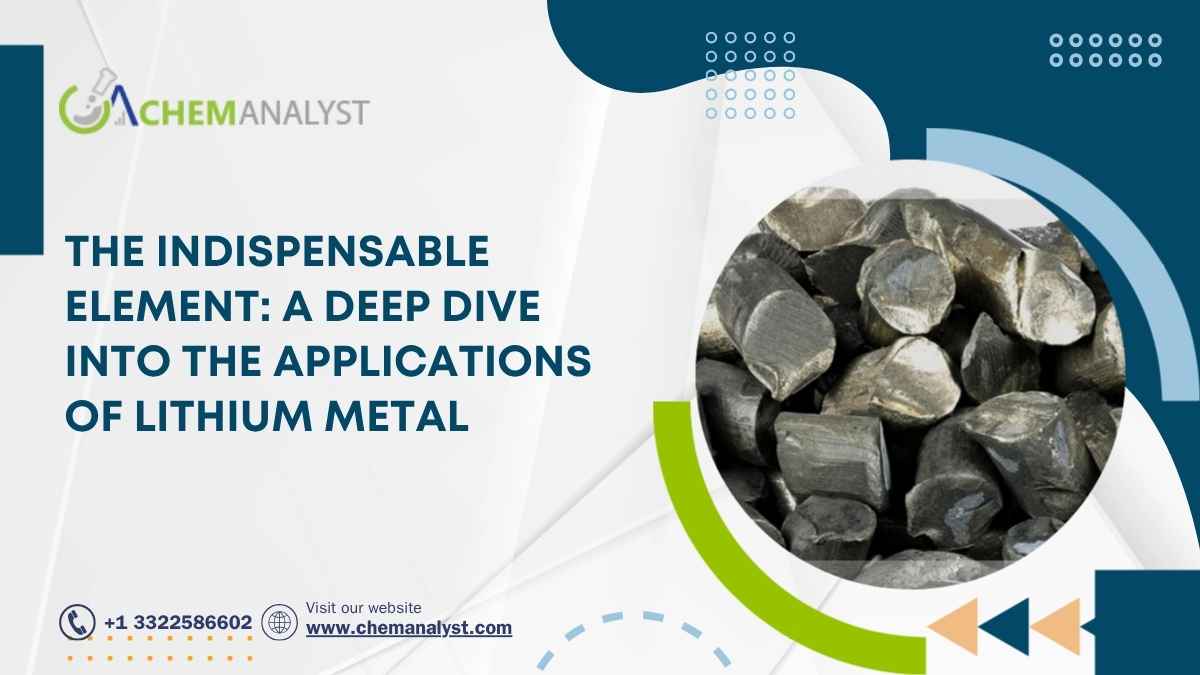
Lithium metal is the lightest metal with a high electrochemical potential and is indispensable for energy storage, electric vehicles, electronics, and medical applications. Since its isolation in 1817, it has been vital to modern technology leading to advances in numerous fields.
I. Introduction
Lithium metal, a soft silvery-white alkali metal, is the least dense solid element on the periodic table. Yet, this apparently simple element has an amazing combination of low density, and its associated high electrochemical potential makes it an energetic entity and a key player in high technology. The event of its discovery in 1817 was merely the inception in a saga through which it transformed from a chemical oddity to a crucial support of our electrified existence. Whether it’s powering the electric vehicle revolution, enabling our hyper-connected digital lives or even playing a role in life-saving medical treatments, the reach of Lithium Metal is both surprising and deeply influential. This blog delves into its key applications that explain why this lightweight giant that is shaping our present and future.

II. Industrial Applications by Sector
Automotive & Transportation
The largest use of Lithium Metal is in the core of lithium-ion batteries, the battery of lithium ions, and the center of the supply chain in the expanding electric vehicle (EV) industry. Its higher energy density enables EVs to hold more energy in a smaller and lighter battery pack, which translates into greater driving ranges, a key consumer acceptance factor. Chemical compositions such as Nickel Manganese Cobalt (NMC) or Lithium Iron Phosphate (LFP) optimize performance for high energy density or safety and longer life. And they’re increasingly found beyond cars, on electric buses, bikes, and scooters that breathe cleaner life into urban streets. The aerospace industry also uses lithium-aluminum alloys to produce high-quality, lightweight aircraft components which leads to decreased fuel consumption and improved flight efficiency.

In the field of metallurgy, Lithium Metal is crucial, yet it is very seldomly exposed. Lithium carbonate is also used in cement and concrete formulations as an accelerator to promote curing, particularly in cold weather and/or to facilitate rapid completion of work. It also improves the resistance of the material to alkali-silica reaction (ASR), which causes microcracking and weakening of concrete. Also, super performance lubricating grease based upon lithium stearate is also essential for the lubrication of the construction machines appliances of the kind in what they are used. These greases exhibit outstanding high temperature resistance and excellent water washing resistance, which enable these products to provide equipment’s running under extremely severe condition.

Electronics & Electricals
The portable electronic devices of our age — the smartphone, the laptop, the tablet, the wireless earpod — are all powered by the condensed energy of Lithium Metal batteries. The relentless pushing toward smaller, thinner devices with all-day battery life wouldn’t be possible without it. Besides personal electronics, Lithium Metal is also essential for grid-scale energy storage systems (ESS). These giant packs of batteries take the surplus power generated by renewables like solar and wind and feed it back into the grid on demand. That helps keep the lights on, and could help the world move off fossil fuels.

Healthcare & Pharmaceuticals
The effect of Lithium Metal on the healthcare industry is monumental. For years, lithium carbonate has been the cornerstone, U.S. Food and Drug Administration-approved treatment for bipolar disorder, serving as a powerful mood stabilizer. It saves dozens of lives on a daily basis." In another important use, disposable lithium batteries are also the gold anode for life-saving medical equipment such as cardiac pacemakers and cardiac defibrillators where the long-term reliability of the power source is critical. 7) including cardiac pacemakers and implantable cardioverter-defibrillators (ICDs), in which patient safety depends on a long battery life with stable voltage output.
Manufacturing and Metallurgy
Due to its high reactivity, Lithium Metal is a powerful agent in metallurgy. It is used as a deoxidizer, scavenger, and alloying agent in the production of non-ferrous metals like copper and aluminum, removing impurities and improving the quality of the final product. A major application is in the manufacturing of specialized glass and ceramics. The addition of lithium carbonate (a derivative) significantly lowers the melting point of the glass mixture, reducing energy consumption during production. It also drastically reduces the coefficient of thermal expansion, resulting in glass-ceramics like oven-proof cookware (e.g., Corning Ware) that can withstand rapid and extreme temperature changes without shattering.

The market for Lithium Metal is experiencing unprecedented growth, overwhelmingly driven by the insatiable demand from the lithium-ion battery sector. The automotive industry is the primary end-user, with global EV sales accelerating year after year. The consumer electronics industry provides a steady, mature market, while the burgeoning grid-scale energy storage sector represents a massive new frontier for demand. This has turned lithium supply chains into a topic of significant geopolitical interest, with nations striving to secure access to this strategic resource. Consequently, the battery recycling industry is rapidly emerging as a crucial part of the circular economy. This secondary supply source is vital not only for sustainability but also for stabilizing market supply and mitigating the environmental impact of new mining operations, ensuring the long-term viability of the lithium-powered economy.

IV. Product Grades and Specifications
Lithium Metal is not a one-size-fits-all product; it is produced in various grades and physical forms to meet stringent application requirements. Battery-grade lithium, used for anodes, demands the highest purity levels, often exceeding 99.9%. In this grade, controlling impurities like sodium, potassium, iron, and water is critical. Even minute contaminants can trigger unwanted side reactions within a battery cell, leading to reduced performance, shorter lifespan, and potentially hazardous safety issues like thermal runaway. For applications in alloys or chemical synthesis, a lower-purity technical grade may be sufficient and more cost-effective. Suppliers provide Lithium Metal in forms such as ingots, rods, wire, foil, and powder, each with detailed specifications and chemical analysis certificates to guarantee it meets the end-user's precise needs.

V. Substitutes and Limitations
While Lithium Metal is the king for high-energy applications, much work on alternatives is ongoing. Sodium-ion batteries are the best candidate replacement owing to the high abundance and low cost of sodium compared to lithium. But they currently have less energy density, so they are heavier and bulkier for the same amount of energy — that’s a huge negative for EVs. In addition, handling of pure Lithium Metal is complicated by its strong reactivity with air and moisture, and it must be handled in special, moisture-free conditions. The major but unquantifiable restraint is environmental and social consequences of lithium mining, which can be water-intensive and is under scrutiny in the dry regions where it is commonly located.
VI. Innovations in Applications
The evolution of Lithium Metal is driven by constant innovation. The breakthrough everyone is most looking forward to: the solid-state battery. These batteries have a solid material, instead of the flammable liquid electrolyte found in the lithium ion cells used today, which can result in higher levels of safety, a 50 percent or higher increase in energy density and much faster charging times. New Direct Lithium Extraction (DLE) technology is being introduced to the supply chain to allow for more efficient extraction of lithium from brine resources with a much smaller environmental impact than that of older evaporation pond methods. For instance, a firm like “Solid Power” is leading the way in Lithium Metal anodes in their solid-state cell designs to drive energy density for next generation EVs. These developments are crucial to fully exploiting lithium's potential.
VII. Conclusion
From the palm of our hands to the roads in our world and the grids of power that run them, Lithium Metal has established itself as a genuinely enabling element of the 21st century. Its unique qualities make it the basis of the current shift toward sustainable energy and high-end electronics. Although there are challenges to be overcome in its supply chain and usage, the rate at which it is innovating is fast and exciting. The future will no doubt bring more complex, more efficient uses for Lithium Metal and in so doing further its legacy not just as a commodity but as a critical driver of technological progress and a key figure in the generation of a cleaner, more electrified world.