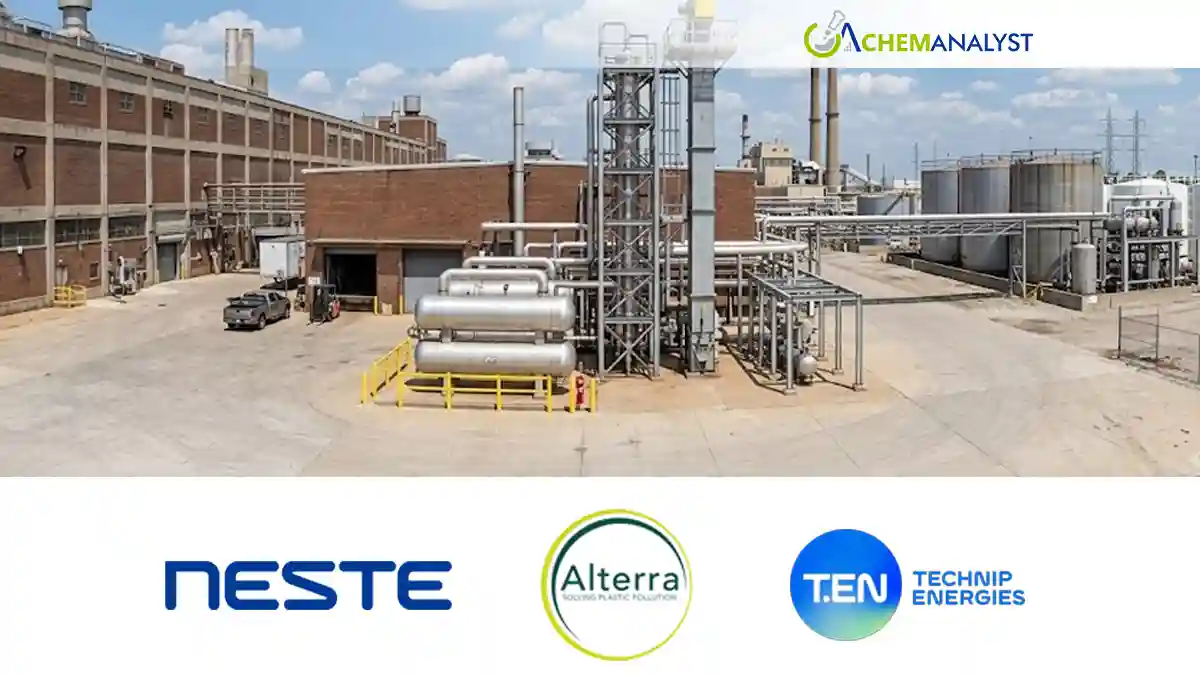
The collaboration between Alterra, Technip Energies, and Neste has reached an important milestone with the commercial introduction of Nerea™, an innovative standardized modular solution designed to accelerate the global deployment of chemical recycling facilities for plastic waste. The new offering is intended to simplify the development of plastic chemical recycling projects by replacing traditional custom-engineered plant designs with a standardized, modular approach. This transition enables waste management companies, project developers, refiners, and petrochemical manufacturers to establish chemical recycling operations more efficiently while improving cost predictability, project timelines, and operational reliability.
The launch of Nerea™ comes at a time when the global plastics industry is facing mounting sustainability challenges. Worldwide plastic production has almost doubled over the past two decades, reaching approximately 431 million metric tons in 2024. Despite growing awareness of plastic pollution and increasing efforts to improve recycling, the overall rate of plastic circularity has not kept pace with the rapid rise in consumption. As a result, substantial quantities of plastic waste continue to be disposed of through incineration, landfilling, or uncontrolled release into the natural environment, contributing to environmental degradation and resource loss.
Simultaneously, governments and regulatory authorities, particularly across Europe and several other regions, are introducing stricter environmental policies and recycled-content requirements. These regulations are creating stronger market demand for recycled and circular feedstocks that can replace virgin fossil-based raw materials in petrochemical production. Against this backdrop, scalable and commercially viable chemical recycling technologies have become increasingly important for supporting the transition toward a circular plastics economy.
Nerea™ builds upon the strategic collaboration agreement established between Alterra, Technip Energies, and Neste in November 2024. The solution combines the specialized strengths of all three companies into a single industrial offering. Alterra contributes its proven thermochemical liquefaction technology, which has demonstrated more than five years of uninterrupted commercial operation while processing diverse real-world plastic waste streams. Neste brings extensive expertise in upgrading low-quality waste-derived feedstocks into high-value circular raw materials, while Technip Energies contributes its global capabilities in engineering, modular plant design, project execution, and industrial deployment.
A key differentiator of Nerea™ is its standardized modular plant architecture. Unlike conventional chemical recycling facilities that typically require customized engineering for each project, Nerea™ utilizes a repeatable design that significantly reduces engineering complexity, lowers pre-investment costs, and shortens development schedules. This standardized approach provides project developers and investors with greater confidence regarding capital expenditure, construction timelines, and operational performance. Furthermore, the modular configuration enables rapid deployment across a wide variety of industrial locations and operating environments.
The technology is specifically designed to process heterogeneous and difficult-to-recycle plastic waste that cannot easily be handled through conventional mechanical recycling methods. Through Alterra's thermochemical liquefaction process, mixed plastic waste is converted into high-quality liquid feedstock suitable for further upgrading and use within the petrochemical industry. This allows materials that would otherwise become waste to be transformed into valuable resources, supporting higher recycling rates and reducing dependence on virgin fossil feedstocks.
Fred Schmuck, Chief Executive Officer of Alterra, emphasized that Nerea™ represents the shared ambition of the three partners to make industrial-scale circular solutions easier to implement. According to him, the combination of proven technology, industrial expertise, and a standardized delivery model reduces many of the barriers that have historically slowed the expansion of chemical recycling. He noted that the partnership creates a more predictable and scalable pathway for converting difficult-to-recycle plastics into valuable circular feedstocks.
Julie Cranga, Senior Vice President of Carbon Capture & Circularity Product Line at Technip Energies, highlighted that the standardized offering integrates proven recycling technology, feedstock expertise, and industrial project execution into a solution that is ready for commercial deployment. She stated that Nerea™ provides customers with greater certainty throughout project development, investment planning, construction, and operational phases, thereby helping accelerate the adoption of chemical recycling technologies worldwide.
Lars Peter Lindfors, Senior Vice President of Technology & Innovation at Neste, pointed to the company's recently commissioned upgrading unit at its Porvoo refinery in Finland—the world's largest facility of its kind by processing capacity. He noted that Neste has extensive experience converting lower-quality raw materials into premium circular products and expressed confidence that Nerea™ will help support industry-wide expansion by providing reliable, scalable, and easy-to-deploy technology capable of meeting the growing global demand for liquefied waste plastic feedstocks.
Impact of the Product:
The commercial launch of Nerea™ is expected to strengthen the chemical recycling value chain by making plastic waste conversion projects faster, more cost-efficient, and easier to deploy. Its standardized modular design reduces engineering complexity, capital risk, and project lead times, encouraging greater investment in chemical recycling infrastructure. As additional facilities come online, the availability of recycled pyrolysis oil and other circular feedstocks is likely to increase, supporting petrochemical producers in meeting recycled-content regulations and sustainability targets.
For chemical commodities tracked by ChemAnalyst, the immediate price impact is expected to be limited, as Nerea™ represents a technology platform rather than a large-scale capacity addition. However, over the medium to long term, increased production of recycled feedstocks could moderately reduce demand for virgin fossil-based naphtha and related petrochemical feedstocks. This may exert slight downward pressure on virgin olefins and certain polymer prices during periods of adequate supply, while recycled feedstocks and circular polymer markets may gain stronger pricing support as demand for sustainable materials continues to grow.







Leave a Comment
Comments (0)