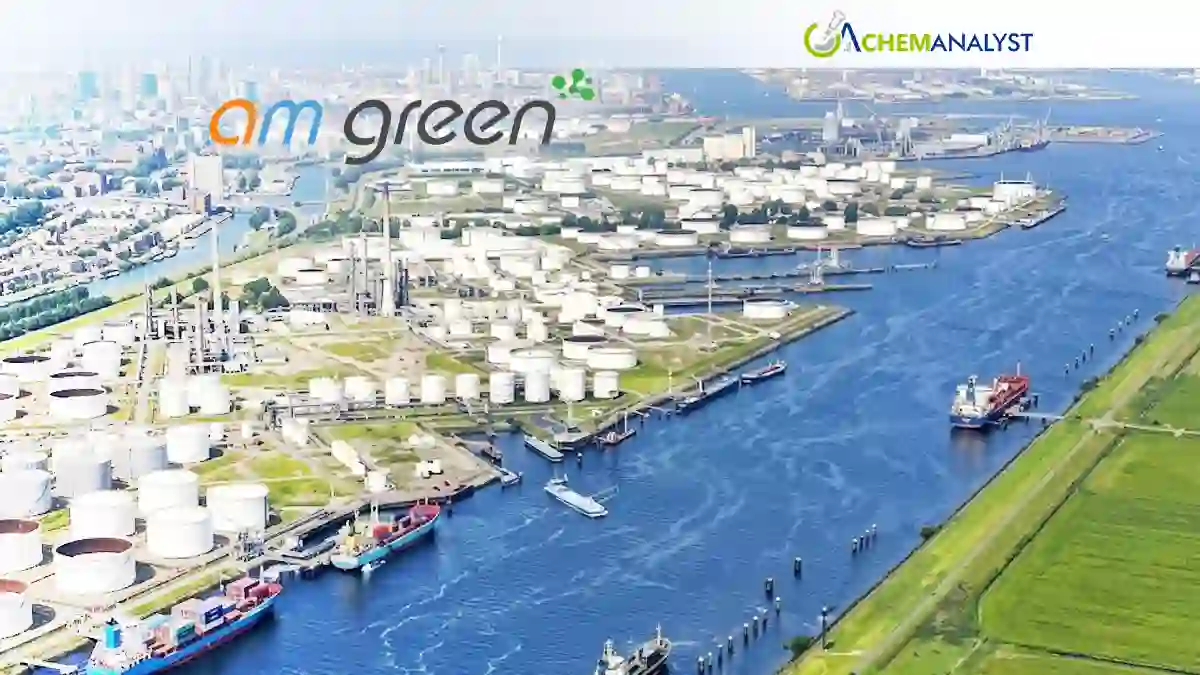
AM Green, a prominent Indian green energy developer, and the V.O. Chidambaranar (VOC) Port Authority in Thoothukudi, Tamil Nadu, have signed a Memorandum of Understanding (MoU) to establish a large-scale renewable ammonia production and bunkering hub. This significant partnership aims to develop a facility with a planned capacity of one million tonnes per year (MTPA) of green ammonia, positioning Thoothukudi as a key export hub for low-carbon fuels. The agreement, signed on May 28, 2026, reinforces India's commitment to its National Green Hydrogen Mission and global decarbonization efforts.
The project involves a substantial investment exceeding Rs 22,000 crore (approximately $2.6 billion USD) across production and bunkering infrastructure. This includes an estimated Rs 15,000 crore for the 1 MTPA green ammonia production facility near the port. Additionally, the initiative is expected to facilitate around Rs 35,000 crore in renewable energy generation investments to power the complex. AM Green plans to develop up to 200 kilotonnes per annum (KTPA) of green ammonia bunkering capacity by 2029-2030, with a potential expansion to 500 KTPA by 2035, depending on market demand.
The primary objective is to produce green ammonia using renewable energy sources like solar and wind power. This green ammonia will serve international shipping and industrial markets seeking to reduce their carbon footprint. The project supports the development of green fuel trade routes connecting India with markets in Europe and Asia. The initial phase of the green ammonia bunkering facility is targeted for completion by 2029-2030.
This mega-project is poised to deliver significant economic benefits. The substantial investment will boost the local economy in Tamil Nadu and contribute to national economic growth. The project is anticipated to create over 5,000 direct and indirect jobs, fostering local employment and skill development. Furthermore, it will catalyze ancillary investments in renewable energy capacity, storage, and logistics, benefiting local suppliers and engineering firms.
The collaboration is a crucial step for India's energy security and its goal to become a leader in green energy. By establishing a major green ammonia hub, India aims to reduce reliance on fossil fuels and contribute significantly to global decarbonization efforts. Thoothukudi, already a designated National Green Hydrogen Hub, is strategically positioned to leverage its existing ammonia handling infrastructure and connectivity to global shipping lanes. This initiative aligns with India's "Panchamrit" commitments made at the COP-26 Conference for carbon emission reduction and achieving Net Zero.
The VOC Port Authority will play a vital role by providing land and port facilities. This includes infrastructure for importing renewable energy equipment and exporting green ammonia. The port's existing capabilities in handling liquid ammonia and its strategic location on India's southern tip make it an ideal choice for this venture. The port's proactive green initiatives, including a pilot electrolytic hydrogen plant and a green methanol bunkering facility, further solidify its commitment to sustainable maritime development.
Impact on Product:
The project will significantly strengthen the green ammonia market by creating one of India's largest renewable ammonia production and bunkering hubs. Demand for electrolyzers, renewable electricity, green hydrogen, ammonia storage tanks, cryogenic infrastructure, catalysts, compressors, and port logistics equipment is expected to increase. The facility will also support the marine fuel transition by supplying low-carbon ammonia to international shipping while enhancing India's position as a major exporter of green fuels to Europe and Asia. Over the long term, the project is expected to stimulate investments across the renewable energy and hydrogen value chain, encouraging additional green ammonia production capacity and supporting the growth of downstream industries reliant on sustainable feedstocks.
Impact on Prices of Chemical Commodities Tracked by ChemAnalyst:
The announcement is expected to have a limited immediate impact on chemical commodity prices tracked by ChemAnalyst, as commercial production is scheduled only by 2029-2030. However, the project carries significant long-term implications for ammonia and hydrogen-related markets. As additional green ammonia capacity enters the market, supply availability is expected to improve, potentially moderating green ammonia premiums over time as economies of scale reduce production costs. Conventional ammonia prices are unlikely to experience immediate pressure because green ammonia will initially represent a relatively small share of global supply. Increased investments in renewable power, electrolysis, and hydrogen infrastructure may support demand for industrial gases, catalysts, specialty materials, and engineering chemicals during the construction phase. In the longer term, greater availability of low-carbon ammonia could encourage downstream fertilizer, marine fuel, and chemical manufacturers to adopt greener feedstocks, gradually influencing pricing dynamics and accelerating the transition toward sustainable chemical value chains.







 About ChemAnalyst
Leave a Comment
Comments (0)