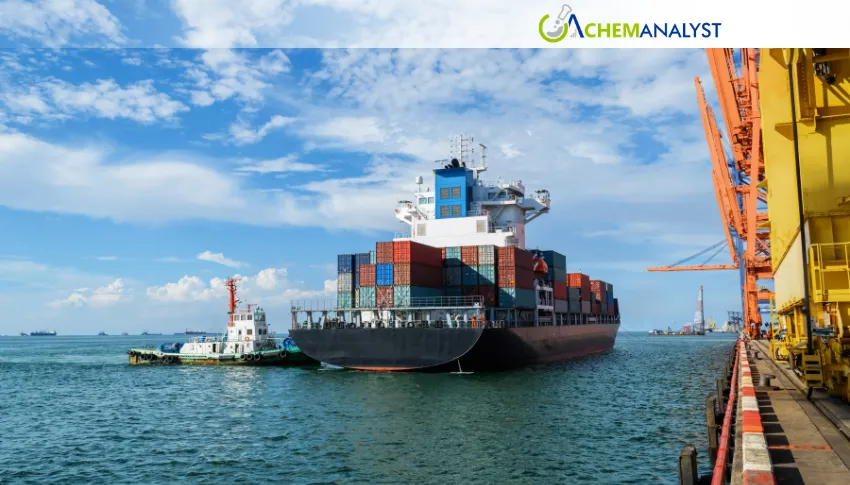
The week ending June 1, 2026, was rough for global ocean freight. The Strait of Hormuz remained mostly closed, having been shut for almost 90 straight days because of the US-Israel conflict with Iran, which intensified in late February. Iran’s new “Persian Gulf Strait Authority” continued to charge passing vessels over $1 million in tolls, violating international rules according to shipping groups. More than 1,550 ships are still stuck in or near the Gulf, carrying around 22,500 seafarers.
Major Incidents & Developments
Maersk and Hapag-Lloyd disclose surging extra costs
Vincent Clerc, Maersk's CEO, said the company is spending about $500 million more each month because of the Hormuz situation. This extra cost gets passed on to customers. Rolf Habben Jansen, Hapag-Lloyd’s CEO, added that his company is now paying an extra €50 to €60 million weekly. He noted that rate increases roughly match their cost hikes. Rates for major routes increased too; ships going from Asia to North Europe see a 51% hike compared to before the conflict, while the Mediterranean route is 45% higher and the transatlantic one is up 57%.
Port congestion intensifies across Gulf hubs
Jebel Ali, Khorfakkan, Sohar, Fujairah, and Salalah all faced serious congestion recently. At most terminals, demurrage and detention fees start kicking in after five to seven free days.Cargo meant for Dubai and Abu Dhabi is piling up at Asian and European ports because there's no clear way to send it forward.
Global container index posts fourth straight weekly rise on 28 May
The World Container Index climbed 3%, reaching $2,800 for a 40-foot container the week of May 28. This marks its fourth straight weekly rise. Leading this trend, MSC hiked rates by 28% for June voyages. On top of that, Maersk introduced a Peak Season Surcharge for trips from Far East Asia to North Europe and the Mediterranean. Starting June 10, this added $300 for a TEU and $600 for a FEU for most starting points.
Houthis resume Red Sea attacks; Suez recovery wiped out
Houthi forces restarted their attacks on commercial ships in the Red Sea following US-Israeli strikes on Iran in late February. This set back some progress from the October 2025 Gaza ceasefire. Because of the conflict, companies such as Maersk, MSC, and Hapag-Lloyd continue to avoid the Cape of Good Hope. Doing this adds 10 to 14 days and about 4,000 nautical miles to their trips from Asia to Europe. Saudi Arabia is now using the East-West pipeline to send some crude oil overland to Yanbu. Still, this alternate route to bypass Hormuz can only manage a small portion of the typical flow through the strait.
Short-Term Outlook
Freight markets are going to stay high at least until Q3 2026. Iran won't end shipping attacks anytime soon; they want a full war settlement for that. With the US maintaining its naval blockade on Iranian ports, Hormuz isn't going to reopen soon. Long transit times, hub congestion, and those pesky war risk surcharges will continue too. So, shippers should really lock in short-term rate agreements, build up extra safety stock, and secure bookings early. This is to prepare for more peak season surcharge rounds expected in June and July.








 About ChemAnalyst
Leave a Comment
Comments (0)