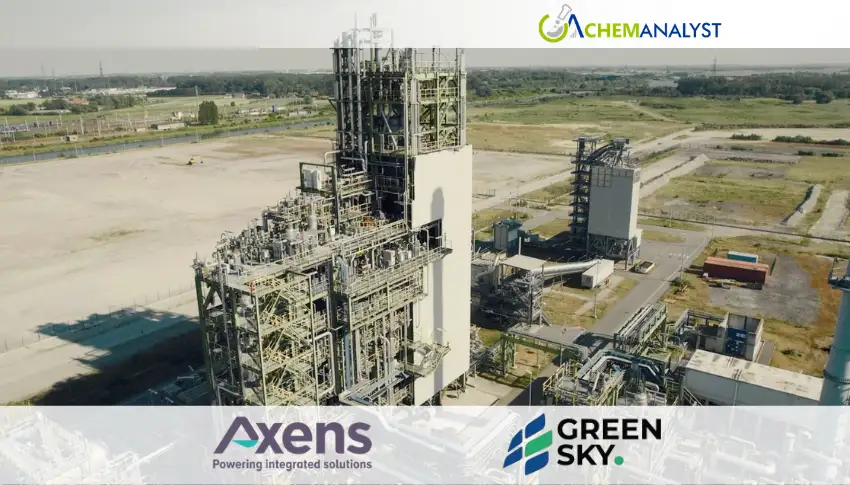
Axens has announced a strategic collaboration with Green Sky Capital (GSC) to develop a sustainable aviation fuel (SAF) production facility in Egypt with an annual production capacity of 200,000 tonnes. The project represents a major milestone for both Egypt and the African continent, as it is expected to become the first commercial-scale SAF production plant in Egypt and the first of its kind across Africa. The initiative highlights the growing commitment of regional stakeholders to accelerate the transition toward cleaner energy solutions and support global efforts to reduce carbon emissions from the aviation sector.
The planned facility will utilize lipid-based feedstocks to produce SAF through Axens’ advanced Vegan® Hydroprocessed Esters and Fatty Acids (HEFA) technology. This proven technology is widely recognized for its ability to efficiently convert renewable feedstocks into high-quality sustainable aviation fuel that can significantly lower lifecycle greenhouse gas emissions compared to conventional jet fuel. The project is being developed on an accelerated timeline, with commercial production targeted to begin by the end of 2027.
The development of the SAF facility aligns closely with Egypt’s broader energy transition strategy and sustainability objectives. By relying on locally sourced Used Cooking Oil (UCO) as a primary feedstock, the project is expected to create a circular economy model that transforms waste materials into valuable renewable energy products. This approach not only supports environmental sustainability but also encourages the development of local supply chains and economic opportunities associated with feedstock collection and processing.
Beyond contributing to domestic sustainability goals, the project is expected to strengthen Egypt’s position as a regional center for renewable fuels. Its strategic location provides access to Mediterranean, European, Middle Eastern, and African markets, enabling the country to play an increasingly important role in the growing global SAF industry. As demand for low-carbon aviation fuels continues to rise, the facility could become a key supplier to airlines seeking to meet decarbonization targets and comply with emerging environmental regulations.
As part of the collaboration, Axens will supply its proprietary Vegan® HEFA technology package along with integrated catalyst and adsorbent solutions designed to maximize operational efficiency. The company will also provide technical expertise, operational assistance, and comprehensive training programs to ensure reliable plant performance and optimized production throughout the facility’s lifecycle. These support services are intended to help maintain high operational standards while enhancing overall plant productivity.
In addition to the SAF plant development, Axens and Green Sky Capital have entered into a broader strategic Memorandum of Understanding (MOU) aimed at further improving process efficiency and production performance. Through ongoing collaboration and technical optimization efforts, the partners have already achieved notable improvements in SAF yield rates without negatively affecting utility consumption or the performance of valuable by-products. These enhancements are expected to significantly increase the volume of SAF produced from each tonne of feedstock processed.
The resulting gains in conversion efficiency are anticipated to provide Green Sky Capital with a substantial competitive advantage over conventional SAF production facilities. Higher yields and improved process economics can lower production costs, enhance profitability, and strengthen the long-term viability of the project. Overall, the partnership demonstrates how technological innovation and strategic collaboration can accelerate the deployment of sustainable aviation fuel infrastructure while supporting global decarbonization objectives and advancing the transition toward a cleaner, more sustainable aviation industry.








 About ChemAnalyst
Leave a Comment
Comments (0)