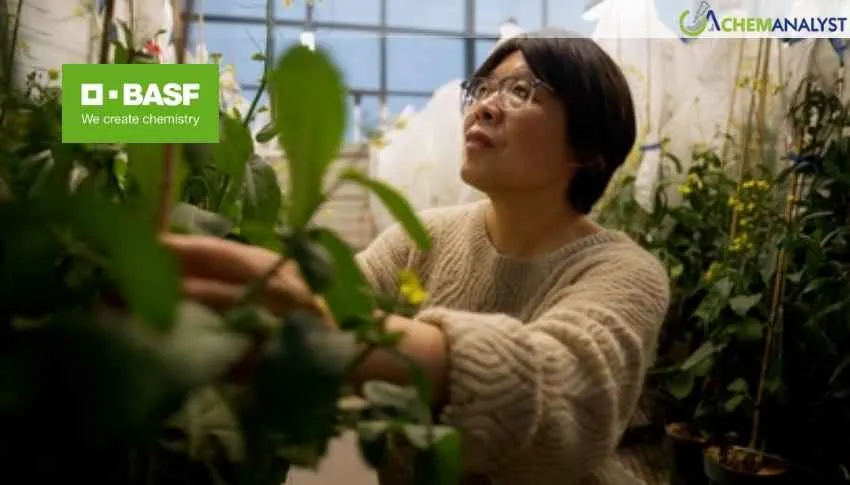
BASF Agricultural Solutions has announced a significant investment of €17 million aimed at expanding and modernizing its Canola Breeding Centre of Innovation located in Saskatoon, Canada. Construction on the upgraded facility is scheduled to begin in the spring, marking a major step in the company’s long-term strategy to strengthen its leadership in canola research and development. This move underscores BASF’s continued commitment to advancing agricultural innovation and delivering superior crop solutions to farmers worldwide.
The Saskatoon facility has long served as a cornerstone of BASF’s global canola breeding operations. For over three decades, the company’s InVigor® hybrid canola has contributed to improved productivity, resilience, and performance for canola and oilseed rape growers across multiple regions. With this new investment, BASF aims to further enhance its breeding capabilities by incorporating cutting-edge technologies, advanced automation systems, and data-driven methodologies that can significantly accelerate the development of high-performing hybrid varieties.
According to Livio Tedeschi, President of BASF Agricultural Solutions, canola remains a strategically important crop for the company, particularly given its vital role in supporting Canadian agriculture and contributing to global food supply chains. He emphasized that the investment reflects BASF’s dedication not only to canola innovation but also to strengthening its broader agricultural portfolio. By reinforcing its research infrastructure, BASF is positioning itself to meet the evolving needs of farmers while addressing challenges such as climate variability, disease pressure, and the growing demand for sustainable crop production.
A central element of the expansion project is the introduction of advanced breeding technologies designed to improve efficiency and precision. The upgraded facility will feature precision-controlled growth environments and high-throughput automation pipelines, enabling researchers to conduct large-scale breeding operations with greater accuracy. These advancements will support the implementation of genomic selection at scale, allowing scientists to make faster and more informed breeding decisions. As a result, BASF expects to accelerate genetic gains and significantly reduce the time required to bring new hybrid varieties to market.
Doreen Schachtschabel, Senior Vice President of Research and Development for Seeds & Traits at BASF, highlighted the importance of these technological upgrades. She noted that increasing breeding throughput and enhancing predictive capabilities will streamline innovation cycles and improve the company’s ability to deliver superior products efficiently. The integration of advanced analytics and automation is expected to play a critical role in driving future breakthroughs in canola breeding.
In addition to technological enhancements, the expansion will include the construction of a state-of-the-art research-grade glasshouse. This facility will support the development of next-generation hybrid breeding programs by providing controlled conditions for year-round research and experimentation. By expanding its research footprint in Canada, BASF aims to strengthen its capacity to develop differentiated solutions that can boost crop yields, enhance disease resistance, and improve overall farm productivity.
Overall, this investment reflects BASF Agricultural Solutions’ forward-looking approach to innovation in the agricultural sector. By combining advanced technologies with expanded research capabilities, the company is reinforcing its position as a global leader in canola breeding while contributing to the sustainability and efficiency of modern agriculture.






Leave a Comment
Comments (0)