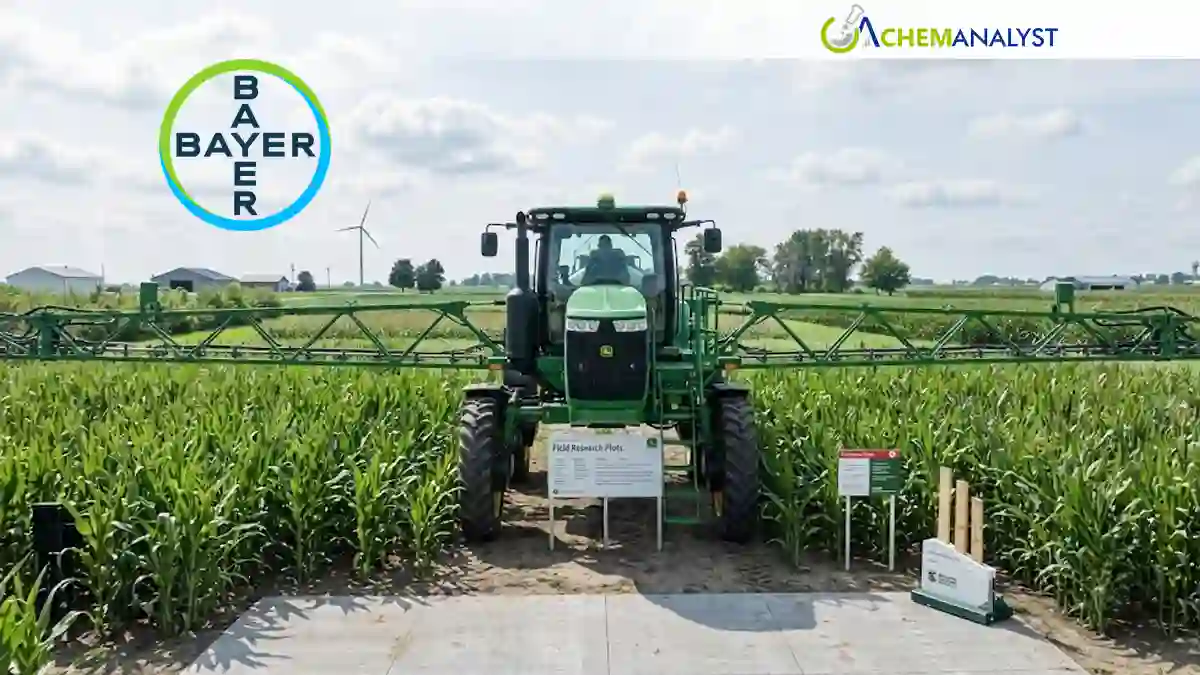
Bayer is accelerating the rollout of its next generation of Crop Science products as it advances its plan to introduce 10 blockbuster innovations over 10 years. A blockbuster has expected peak sales potential of at least €500 million.
Two products, Plenexos insecticide and the Preceon Smart Corn System, have already entered commercialization. Preceon, a digitally enabled short-stature corn system, is delivering benefits in Mexico, Italy, Spain and the United States, with a commercial launch in Argentina beginning this year. The system is designed to improve resilience against weather extremes, enable higher planting densities, increase accessibility for farm equipment and support stronger root development. Bayer targets penetration across 26 million acres by 2035, with digital capabilities through FieldView.
Plenexos, which targets a broad range of sucking pests, has launched in Colombia, while Mexico, Brazil and the United States are next. Bayer says farmers can use up to 75% less active ingredient than with other products for pest control. The insecticide targets soy, cotton, fruits and vegetables and is expected to achieve €500 million in peak sales potential by the mid-2030s.
In soybean technology, Bayer expects to introduce Vyconic 1 in the United States and Canada next year. The trait stack provides tolerance to five herbicides, giving growers greater flexibility in weed management and helping address resistance concerns. Bayer says elite varieties containing Vyconic have demonstrated yield gains of more than two bushels per acre. Intacta 5+ is scheduled for Brazil during the 2027/2028 growing season and will combine five herbicide tolerances with insect protection traits. Together, Bayer’s soybean technologies and next-generation traits are expected to generate more than €3 billion in peak sales potential.
Other planned blockbusters include fourth-generation corn rootworm protection and Icafolin, a herbicide with a projected €750 million peak sales potential in the mid-2030s.
Bayer is strengthening its research engine through AI-enabled precision breeding, genome editing and its CropKey platform. The company says its precision breeding system doubles the historical rate of genetic improvement and accelerates time to market threefold. CropKey is supporting research into more than 15 novel modes of action, including a broad-spectrum soybean fungicide that has advanced to Phase II.
Beyond crop protection and seeds, Bayer is developing intermediate biofuel crops and hybrid wheat while executing its Five-Year Framework. Cost reductions have reached nearly €400 million, while inventory reductions have reached €500 million. The company targets more than €3.5 billion in incremental sales by decade-end.
Product and Chemical Commodity Price Impact
Bayer’s expanding crop protection and seed portfolio is likely to increase competition and product availability across agricultural inputs, particularly insecticides, herbicides and crop protection intermediates. Plenexos could exert some downward pressure on demand for competing active ingredients if its lower application rate gains adoption. However, Bayer’s new herbicide-tolerant traits could support stronger demand for associated herbicide products over time. For chemical commodities tracked by Chemanalyst, the near-term price impact is expected to remain limited because commercialization is gradual and region-specific. Over the medium term, wider adoption could create mixed effects: competitive pressure may weigh on prices of substitute agrochemicals, while demand for selected crop protection intermediates could strengthen.








 About ChemAnalyst
Leave a Comment
Comments (0)