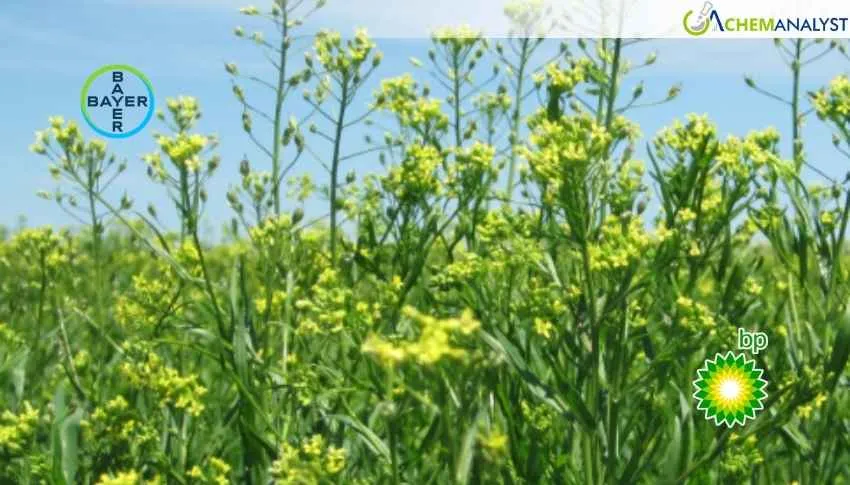
Bayer and bp have announced a long-term strategic alliance aimed at significantly scaling the cultivation and commercialization of camelina, an oilseed crop, under Bayer's newgold® brand. This collaboration seeks to establish a robust intermediate oilseeds market to address the rapidly increasing demand for biodiesel, renewable diesel (RD), and sustainable aviation fuel (SAF), which is projected to reach 40 billion gallons by 2040, nearly tripling current levels.
The alliance leverages the distinct strengths of both companies. bp will contribute its extensive expertise in fuels and refining, while Bayer will provide its industry-leading seed technology and vast network of farmer customers. The initial focus of commercialization will be North America, where Bayer has already introduced newgold® camelina in the Northern Plains of the U.S. and parts of Southern Saskatchewan and Alberta in Canada. This initiative follows Bayer's acquisition of camelina assets in late 2024 or January 2025, with ongoing testing of various camelina biotypes to prepare for a full-scale launch.
Key Events and Causes: The primary event is the formation of this strategic alliance. The underlying cause is the urgent need to decarbonize the transportation sector, particularly areas like aviation, rail, marine, and heavy-duty equipment, where electrification is challenging. Biofuels, derived from renewable organic materials such as camelina, are seen as crucial for achieving lower carbon intensity in these sectors.
Consequences and Impacts:
• Industry-Specific Impact: This alliance marks a significant development in the biofuels and agricultural industries. It aims to create a reliable supply chain for camelina-derived biofuels, enhancing the availability of sustainable fuel options. Camelina is highlighted for its versatility, capable of being grown as an intermediate crop, a rotational crop, or on underutilized land, offering flexibility to farmers. Its characteristics, such as being winter hardy, drought tolerant, requiring lower inputs, and not competing with food production, make it an attractive feedstock for low-carbon fuels.
• Economic Impact: The partnership is designed to offer new revenue streams for farmers by integrating them into the low-carbon fuel economy, providing greater market certainty for those considering camelina cultivation. For bp, it strengthens its push into lower-carbon energy, while for both companies, it aims to deliver value for their shareholders. The projected growth of the biofuel market to 40 billion gallons by 2040 underscores the substantial economic opportunity this alliance targets.
• Geopolitical Impact: While not explicitly detailed as geopolitical, the scaling of sustainable aviation fuels and renewable diesel contributes to broader energy security goals and supports international efforts to reduce carbon emissions from transportation, aligning with global climate objectives. By developing domestic biofuel sources, it could also lessen reliance on traditional fossil fuel imports.







Leave a Comment
Comments (0)