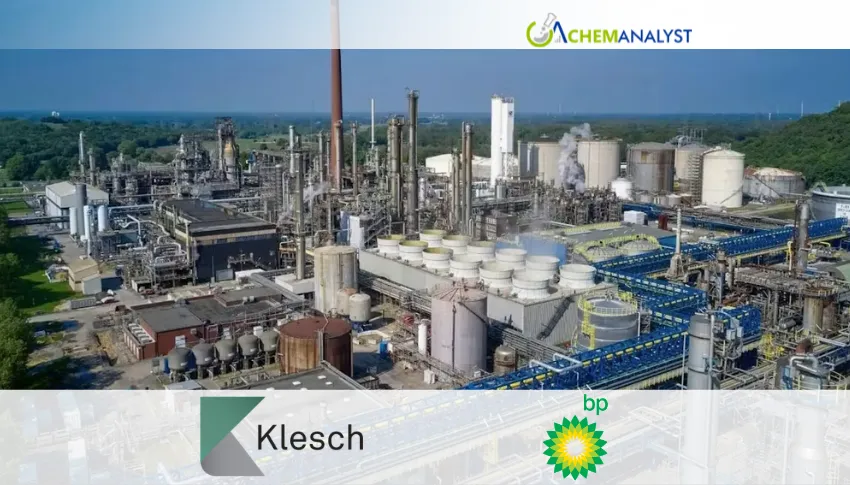
bp has completed the sale of its Gelsenkirchen refinery and related businesses in Germany to Klesch Group, marking another step in the company's strategy to streamline its downstream operations and improve capital efficiency. The transaction aligns with bp's long-term objective of concentrating investments on assets that offer stronger returns while reducing operational costs.
The company stated that the divestment supports its disciplined capital allocation strategy and is expected to reduce underlying operating expenses by nearly $1 billion. Based on the refinery's historical financial performance, the deal is expected to enhance bp's free cash flow while transferring all associated assets and liabilities to Klesch Group.
Richard Harding, bp's interim executive vice president of Downstream, said the transaction strengthens the company's financial position and simplifies its asset portfolio. He noted that bp aims to focus its investments on markets and assets where it can compete more effectively, enabling the company to build a stronger and more resilient downstream business. Harding added that bp remains committed to supplying customers with the fuels and products they depend on while improving overall business performance.
Patrick Wendeler, bp's head of country for Germany, highlighted the strategic importance of the Gelsenkirchen refinery in supplying fuels and petrochemicals across western Germany. He expressed confidence that Klesch Group, with its extensive refining expertise and established operations in Germany, is well positioned to guide the refinery through its next phase of development. Wendeler also emphasized that bp will continue serving customers in Germany through its existing businesses, including its Aral retail fuel network.
The sale follows bp's assessment that a different owner would be better suited to support the refinery's long-term development and competitiveness. As part of the agreement, employees working at the refinery and its associated businesses have transferred to Klesch Group, ensuring operational continuity under the new ownership.
Despite the divestment, bp maintains a significant refining footprint with five major refineries serving key regional markets. Its remaining portfolio includes the Cherry Point and Whiting refineries in the United States, along with the Castellón, Lingen, and Rotterdam refineries in Europe. The company continues to optimize its global downstream network while prioritizing investments in assets that align with its evolving business strategy and long-term financial objectives.
Impact on Products and Chemanalyst Chemical Commodity Prices
The ownership change is not expected to disrupt the production of fuels or petrochemicals in the near term, as Klesch Group is an experienced refinery operator committed to maintaining operations. Consequently, the availability of refinery-derived products such as naphtha, propylene, benzene, toluene, xylene, and other petrochemical feedstocks should remain stable. For chemical commodities tracked by ChemAnalyst, the immediate price impact is expected to be minimal because the transaction represents a change in ownership rather than production capacity. Over the longer term, any operational upgrades, efficiency improvements, or maintenance decisions under Klesch Group could influence regional supply dynamics and pricing trends in Europe.







Leave a Comment
Comments (0)