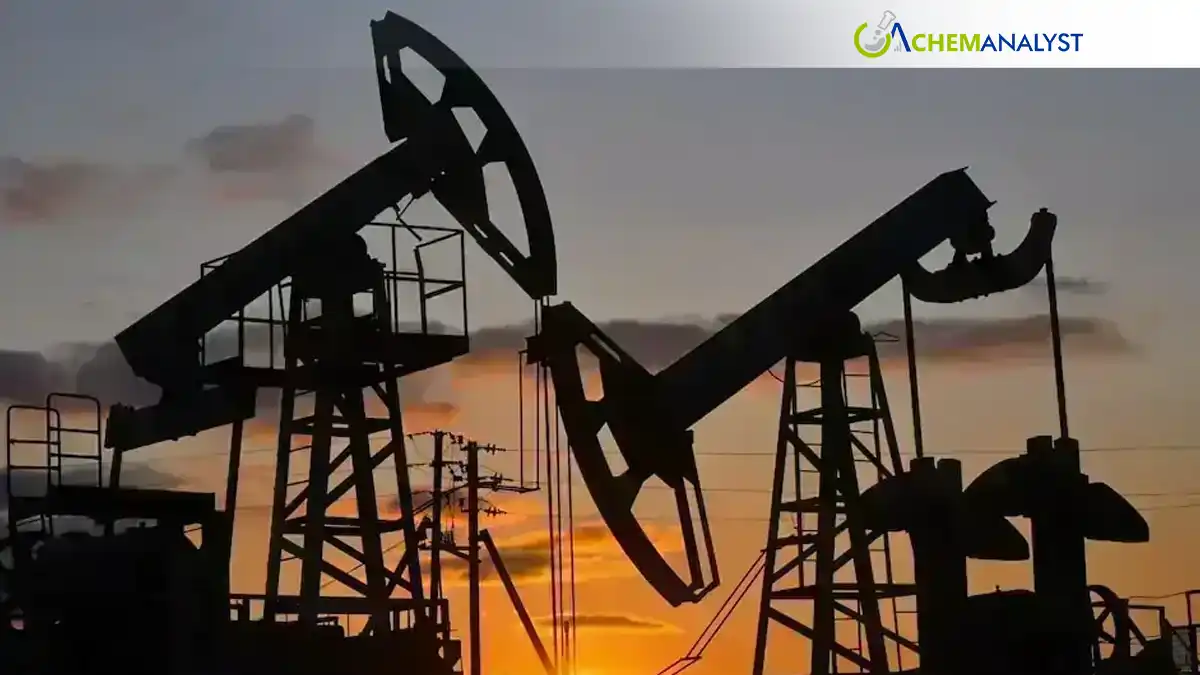
The global oil market remains highly volatile, with Brent crude futures experiencing significant price surges and fluctuations amidst escalating tensions and military actions between the United States and Iran, coupled with persistent uncertainty surrounding a potential peace deal. Recent US military strikes on Iranian targets, including military sites and vessels attempting to lay mines in the Strait of Hormuz, have intensified geopolitical risks, leading to an immediate increase in oil prices. Brent crude, the international benchmark, saw gains of up to 2% to 3% following these developments, reflecting investor anxiety over supply disruptions.
The primary cause of this market instability is the ongoing US-Iran conflict, which began with joint US-Israeli airstrikes across Iran on February 28. This conflict has severely impacted the critical Strait of Hormuz, a vital chokepoint through which approximately 20% of global energy supplies transited before the war. Disruptions and threats to shipping in the Strait, including instances of Iranian gunboats approaching US-flagged vessels and Iran's announcement of a new "Persian Gulf Strait Authority," have significantly slowed oil flows, removing an estimated 14 million barrels per day, or 14% of global supply, from the market. This has led to an alarming depletion of global oil inventories.
Despite diplomatic efforts, often mediated by Pakistan, progress towards a lasting peace agreement remains fragile and uncertain. While some reports indicated narrowing gaps in talks, divisions persist over Iran's uranium stockpile and control of the Strait of Hormuz. A directive from Iran's supreme leader reportedly hardened Tehran's stance, further complicating negotiations. This “headline-o-rama game” means oil prices are highly sensitive to every development, with optimism for a deal often quickly tempered by renewed hostilities or diplomatic setbacks.
The consequences of this prolonged instability are far-reaching. Economically, elevated oil prices are fueling concerns about global inflation and higher pump prices, particularly in the US ahead of midterm elections. The volatility also negatively impacts the overall global economic outlook. Geopolitically, the region remains highly unstable, with a fragile ceasefire repeatedly challenged by military exchanges. Industry-specific impacts on the oil and gas sector are severe; the conflict has caused what the International Energy Agency calls the "world's biggest oil disruption ever". Full oil flows through the Strait of Hormuz are not expected to normalize before the first or second quarter of 2027, even if the conflict were to end now. This sustained supply deficit has prompted entities like BMI (a unit of Fitch Solutions) to raise their average 2026 dated Brent price forecast to $90 from $81.50. Furthermore, the protracted crisis has left approximately 1,500 vessels stranded in Gulf waters, highlighting the severe disruption to global shipping.








 About ChemAnalyst
Leave a Comment
Comments (0)