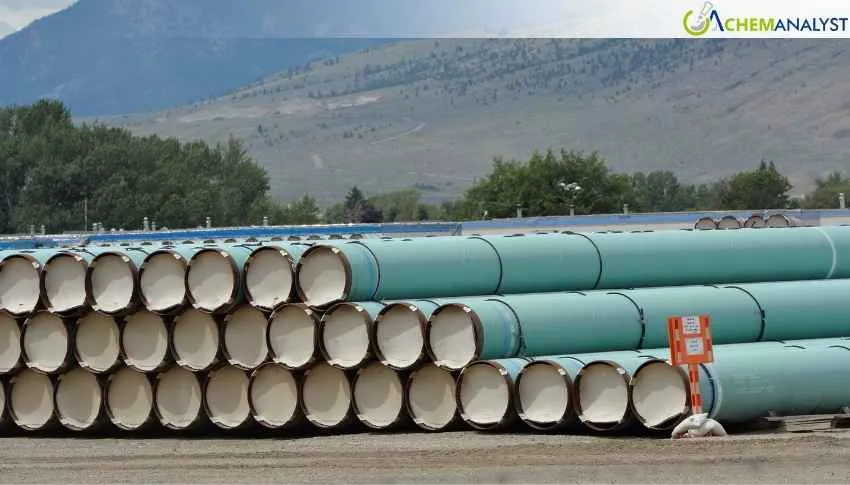
Canada is reconsidering its long-held intention to sell the Trans Mountain pipeline, a strategic asset that has become increasingly vital amid global energy market instability. Originally acquired by the federal government in 2018 for 4.5 billion from Kinder Morgan to ensure its expansion, the pipeline's cost subsequently ballooned to 34 billion. The initial plan was to divest the asset to the private sector once the expansion was complete and generating stable revenue. However, recent developments, including geopolitical turmoil and heightened demand for Canadian crude, are prompting a re-evaluation of this strategy.
A primary driver for rethinking the sale is the pipeline's designation as a "sovereign" and "incredibly strategic asset" for Canada. As the country's sole pipeline to the West Coast, it provides crucial access to Asian markets, diversifying export options beyond the United States. The ongoing conflict in Iran and the subsequent disruptions in the Strait of Hormuz have underscored the geopolitical importance of this direct access to the Pacific, making Canadian oil a more valuable alternative in global markets.
Economically, the expanded Trans Mountain pipeline has significantly improved Canadian oil producers' access to global pricing, reducing the historical discount on Western Canadian Select (WCS) crude compared to West Texas Intermediate (WTI). This has translated into billions of dollars in additional revenue for producers and increased government coffers. The pipeline is currently operating at a high utilization rate, between 85% and 96% capacity, reflecting strong demand for Canadian oil. Financially, officials argue that delaying a sale until the pipeline's capacity optimization projects are complete and a regulatory dispute over tolls is settled would secure a better sale price, ensuring taxpayers recoup the substantial investment. Selling prematurely, before these uncertainties are resolved, could result in a discounted price.
Furthermore, the process of ensuring Indigenous economic participation in the pipeline remains complex and is still underway, adding another layer of consideration to any potential divestment. While the pipeline offers significant economic benefits through market diversification and revenue generation, its near-full capacity also highlights a potential industry-specific challenge: the need for further infrastructure to maintain flexibility for producers and accommodate future growth. The ongoing debate reflects a shift in perspective, where the pipeline is increasingly viewed not just as a temporary government holding, but as a critical long-term strategic asset for Canada's energy security and economic leverage on the global stage.







Leave a Comment
Comments (0)