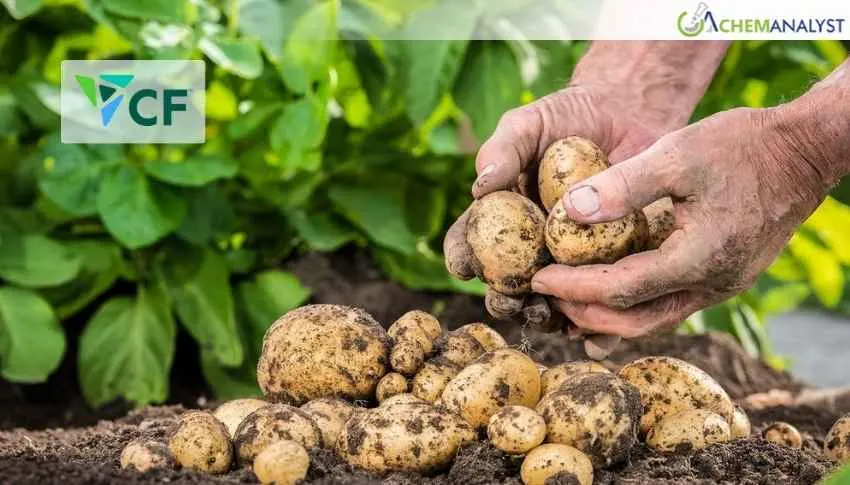
CF Industries and PepsiCo have joined hands to promote lower-carbon agriculture, beginning with potato farming, which plays a major role in PepsiCo’s food production system. Their new commercial agreement is designed to reduce greenhouse gas emissions in PepsiCo’s potato supply chain by using nitrogen fertilizer produced with a significantly lower carbon intensity compared to traditional fertilizer manufacturing methods. This partnership represents an important step toward building a more sustainable and climate-friendly agricultural system while ensuring that farmers can continue maintaining productivity and crop quality.
The agreement is especially significant because it marks the first commercial launch of CF Industries’ certified low-carbon urea ammonium nitrate (UAN) fertilizer. UAN is a commonly used nitrogen fertilizer in agriculture, especially for crops like potatoes. What makes this product different is that it is manufactured using advanced emission reduction technologies such as carbon capture and sequestration, along with nitric acid plant emissions abatement systems. These technologies help reduce the amount of carbon dioxide released during the fertilizer production process, resulting in a fertilizer product with a lower carbon footprint.
This certified low-carbon UAN will be made available to farmers who grow potatoes for PepsiCo’s Frito-Lay potato chip brands in the United States. Since potatoes are a key raw material for Frito-Lay products, improving sustainability at this stage can have a major impact on PepsiCo’s overall environmental goals. By introducing low-carbon fertilizer into the potato supply chain, PepsiCo can significantly reduce emissions associated with crop production while supporting farmers in their sustainability efforts.
The importance of this initiative lies in the fact that fertilizer production contributes approximately 15 to 20 percent of total greenhouse gas emissions in potato farming. Traditional fertilizer manufacturing is energy-intensive and often releases high levels of carbon emissions. By switching to fertilizers that have the same performance but are produced with lower emissions, farmers can continue using familiar agricultural practices without changing their operations. This means crop yields and potato quality remain stable, while environmental impact is reduced in a measurable and certified way.
Erik Mayer, Vice President of Clean Energy and Business Development at CF Industries, emphasized that this collaboration reflects the increasing demand for practical and scalable solutions that help agriculture reduce emissions without affecting farm productivity. He stated that connecting CF Industries’ low-carbon UAN with PepsiCo’s potato supply chain proves that low-carbon fertilizer solutions are already commercially possible. It also offers a clear and reliable way to measure and verify emission reductions across agricultural operations.
Similarly, Burgess Davis, Chief Sustainability Officer for North America at PepsiCo, highlighted that agriculture is central to PepsiCo’s business identity. He explained that the company is committed to creating a stronger, more resilient, and lower-carbon food system, starting with the crops that form the foundation of its products. According to him, working with CF Industries allows PepsiCo to reduce emissions across its potato supply chain while providing farmers with solutions that easily fit into their current farming methods.
CF Industries produces this low-carbon UAN at its Donaldsonville facility, where it uses carbon capture and sequestration systems and nitric acid emissions reduction technologies. Because of these innovations, the fertilizer has been certified as low-carbon by the Verified Ammonia Carbon Intensity Program, which ensures accurate measurement and verification of reduced emissions. The fertilizer is then distributed to agricultural retailers, who supply it to potato farmers growing crops for Frito-Lay.
Looking ahead, both companies plan to expand their efforts beyond potatoes and explore similar emission reduction opportunities across other crop systems. Their long-term goal is to create a larger ecosystem for low-carbon fertilizers involving producers, farmers, food companies, and reliable certification systems. This broader approach can help transform agricultural supply chains and support a more sustainable future for food production.








 About ChemAnalyst
Leave a Comment
Comments (0)